The ongoing war in West Asia has a direct bearing on food security across the world. Fertilisers, which are indispensable for modern agriculture, are critically linked to the petroleum economy. For India, the most populous country in the world, the headache is bigger. It is next to impossible to source food via imports for a country as large as India. How large are India’s fertiliser vulnerabilities? Here is what the data shows.
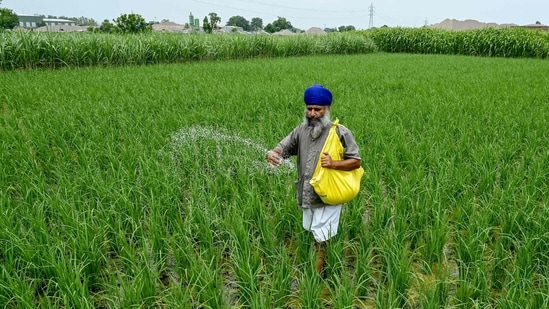
India will have to buy in spot markets to avoid being short on fertiliser
- India’s fertiliser import dependence is quite largeThe Economic Survey gives detailed data on production, import and consumption of fertilisers in India. In 2024-25, India consumed 32.9 million tonnes of fertilisers of which 8.8 million tonnes were imported. The import dependency was near total in potash-based fertilisers and the smallest for nitrogenous fertilisers. To be sure, even the nitrogenous fertiliser production is dependent on imports. Producing such fertilisers requires natural gas or other crude oil-based compounds, most of which are imported in India. For example, according to the ministry of petroleum and natural gas, India has used around 15,000-21,000 million metric tonnes (MMT) of natural gas in fertiliser industry from 2015-16 to 2024-25, of which domestic production share of natural gas was only 14% in 2024-25 (a figure holding true up to January in 2025-26), down from 60% in 2015-16. To be sure, India imports only half of its natural gas consumption, but diverting non-fertiliser gas supplies to make fertilisers is a zero-sum game. While some fertiliser plants can substitute natural gas with naphtha, a crude oil refinery output, almost 90% of India’s crude oil consumption is also dependent on imports.
- The seasonality in fertiliser production and import cycle is a small relief for India at the momentIndia is unlucky to have a war in its biggest energy import region. But it is relatively lucky that the war did not break out in the middle of a cropping season. Had that been the case, India would have suffered the most on its food production front. Government data on both fertiliser production and import bears it out. Both fertiliser production and imports peak in the second half of the calendar year and the quarters ending March and June are relatively lean season for these activities. This is best seen in the monthly trend in fertiliser availability for the past five years. Intuitively it makes sense since fertilisers are used only after the cropping season begins.
- This means a large impact can be avoided if things get better soon, but will they?Not being able to secure fertiliser supplies will adversely affect food production in India. It can also create unrest among millions of Indian farmers. That the war is some time away from peak fertiliser demand for India is a relief. But will things get better by then? India has very little say in when the war will end. But even if it were to end tomorrow, the real question as far as India’s ability to secure fertiliser supplies or the inputs required to make them at home is concerned, will depend on two things: securing inputs such as natural gas to produce nitrogenous fertilisers in the country and securing alternative fertiliser supplies. The success or failure of any such strategy requires an understanding of India’s overall position in the global fertiliser markets. Food and Agricultural Organisation’s (FAO) database on agricultural use, production, export, and import of fertilisers offers an important insight in this dynamic. FAO’s database shows that India was the third largest producer of fertilisers, second largest user of fertilisers, and the third largest importer of fertilisers in the world with almost negligible exports. As has been discussed above, India’s domestic production of fertilisers also depends crucially on sourcing supplies such as LNG, which have been badly hit because of the war’s disruption of traffic in the Strait of Hormuz. At a time when one of the most important fertiliser and fertiliser feedstock producing regions in the world has seen a disruption to its production and export activity, securing additional fertiliser or inputs which go into making fertiliser supplies for a country which is as large as India will not be easy. A lot of countries, rich and poor will be trying to do the same by attempting to outbid each other in what will be a significantly supply constrained market. In the commodity market lexicon, a lot of this outbidding will take place in spot markets compared to long-term or future markets.
Unlock a world of Benefits with HT! From insightful newsletters to real-time news alerts and a personalized news feed – it's all here, just a click away! -Login Now!
Unlock a world of Benefits with HT! From insightful newsletters to real-time news alerts and a personalized news feed – it's all here, just a click away! -Login Now!
Advertisement
{{/htLoading}}{{#usCountry}}