
 E-Paper



Inflation in 2024-25 in four charts | Number Theory
.
Published on: Apr 23, 2025, 09:41:04 IST

 Prefer HTon Google
Share via


Copy link

With the March inflation numbers out last week, we now have annual inflation data for 2024-25. What was the inflation situation in the fiscal year that was? How was it different from the historical trend? Here are four charts which answer this question.
Inflation in 2024-25 in four charts
 Retail inflation went down while wholesale inflation climbedRetail inflation, as measured by Consumer Price Index (CPI) grew at 4.6% in 2024-25, a fall compared to the 5.4% print in 2023-24. Wholesale inflation, as measured by Wholesale Price Index (WPI) grew at 2.2% in 2024-25, an increase from the 0.7% contraction in 2023-24. Why did retail and wholesale inflation really move in opposite directions in 2024-25? CPI and WPI baskets are very different in their composition. CPI is designed to capture a household’s consumption basket while WPI tracks prices of food items and commodities which would be a part of producer price index. A look at the CPI and CPI indices rather than the annual growth (which is what is described as inflation) shows that WPI index has largely been flat since 2022-23 while the CPI index has been increasing in both these years. The increase in wholesale inflation is largely a result of base effect kicking in.
- Food was the primary driver of inflation in 2024-25This is perhaps the most important takeaway from the annual inflation numbers. CPI has a 39% weight for food while the food component of WPI has a 24% weight. Retail and wholesale food inflation in 2024-25 was 7.3% and 7.2% respectively. Non-food retail and wholesale inflation in 2024-25 was just 2.8% and 0.2% respectively. While the non-food retail inflation number is the lowest since 2012-13, the earliest year for which annual data is available under the current series, non-food wholesale inflation has actually been in contraction zone in three out of the 13 years since 2012-13.
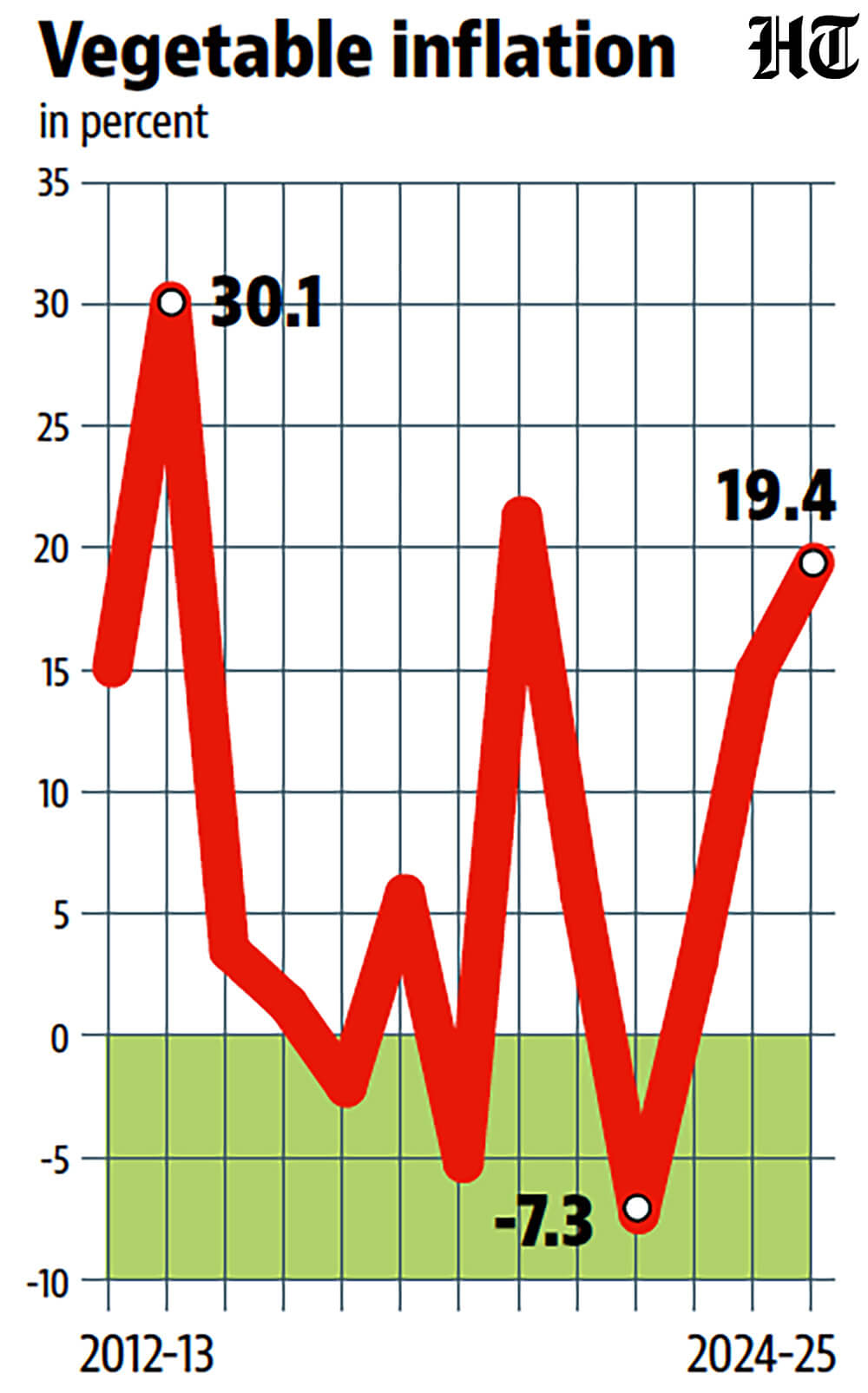
- And vegetables were the main reason for high food inflationAt 19.4%, annual vegetable inflation in the CPI was the third highest in 2024-25 since 2012-13. Food inflation, which came in at 7.3% in 2024-25 was the fifth highest in the series. Had vegetable inflation not been this high, food inflation would have been far more benign. If one were to exclude vegetables, retail food inflation would have been just 4.9%, the tenth highest since 2012-13.
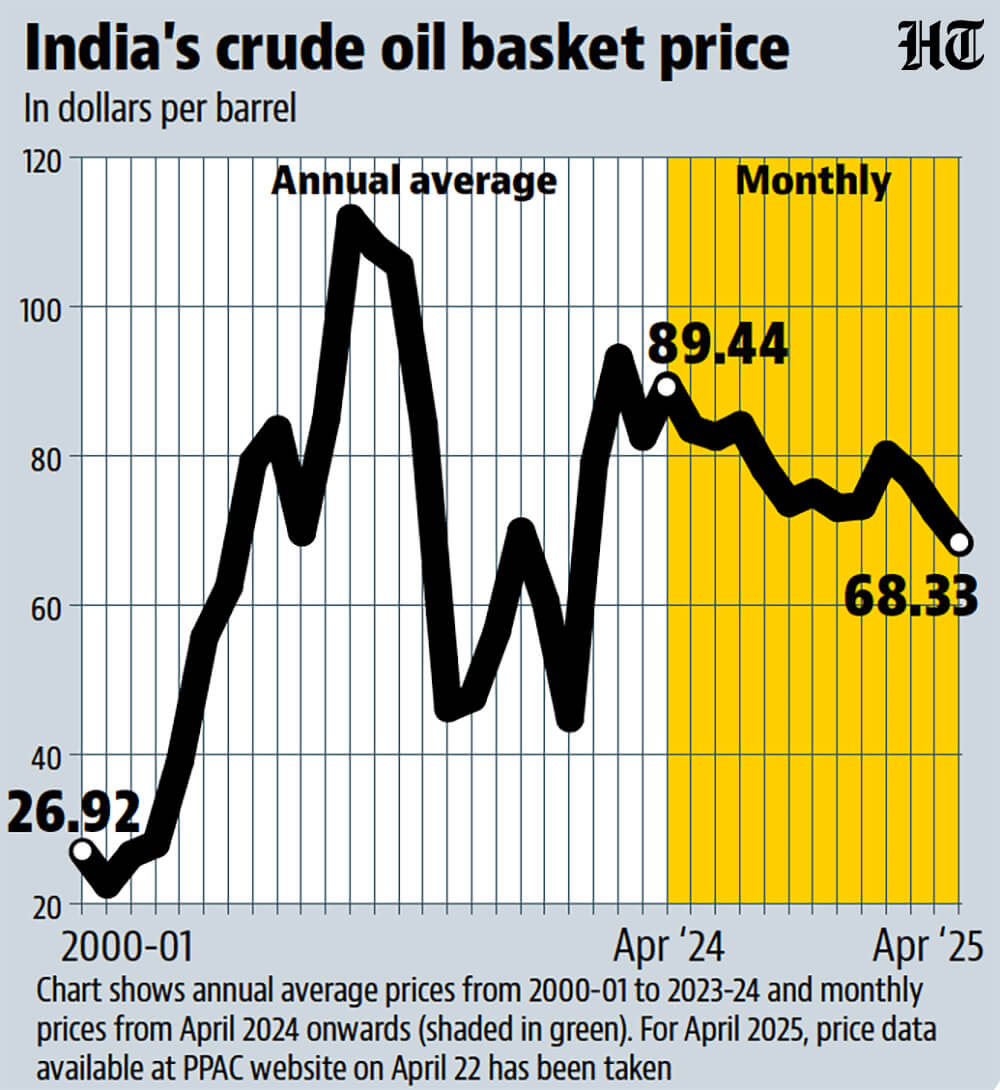
- More inflation relief could be coming India’s wayTrade war unleashed by the Trump administration is likely to lead to a reduction of half a percentage point in global growth according to the latest World Economic Outlook released by the IMF on Tuesday. A global slowdown in growth will likely bring down commodity prices in international markets even though inflation increases in some counties because of tariffs and the value chain disruptions which follow. Some of the evidence of the moderation in commodity prices can already be seen in prices of items such as crude oil. The average price of India’s crude oil basket, for example, has fallen sharply from an average of $80.2 per barrel in January 2025 to $68.2 per barrel on 17 April. A fall in crude prices – India imports 80% of its petroleum – amounts to a favourable terms of trade shock on the Indian economy. To be sure, growth, rather than inflation might be a bigger problem for the Indian economy at the moment.




Unlock a world of Benefits with HT! From insightful newsletters to real-time news alerts and a personalized news feed – it's all here, just a click away! -Login Now!


