E-Paper



Number Theory: 2024 was a tough year for incumbents
The charts below answer this in detail, taking insights from a recent report published by the Pew Research Center on December 11.
Published on: Dec 13, 2024, 09:28:04 IST

 Prefer HTon Google
Share via


Copy link

The year 2024 has been dubbed as the super year of elections, as it witnessed polls in more than 60 countries. In a year marked by economic hardships, deepening conflicts in Europe and West Asia, and political upheavals in several countries across the globe, what has been the overall trend in elections worldwide? The charts below answer this in detail, taking insights from a recent report published by the Pew Research Center on December 11. (https://www.pewresearch.org/global/2024/12/11/global-elections-in-2024-what-we-learned-in-a-year-of-political-disruption/).

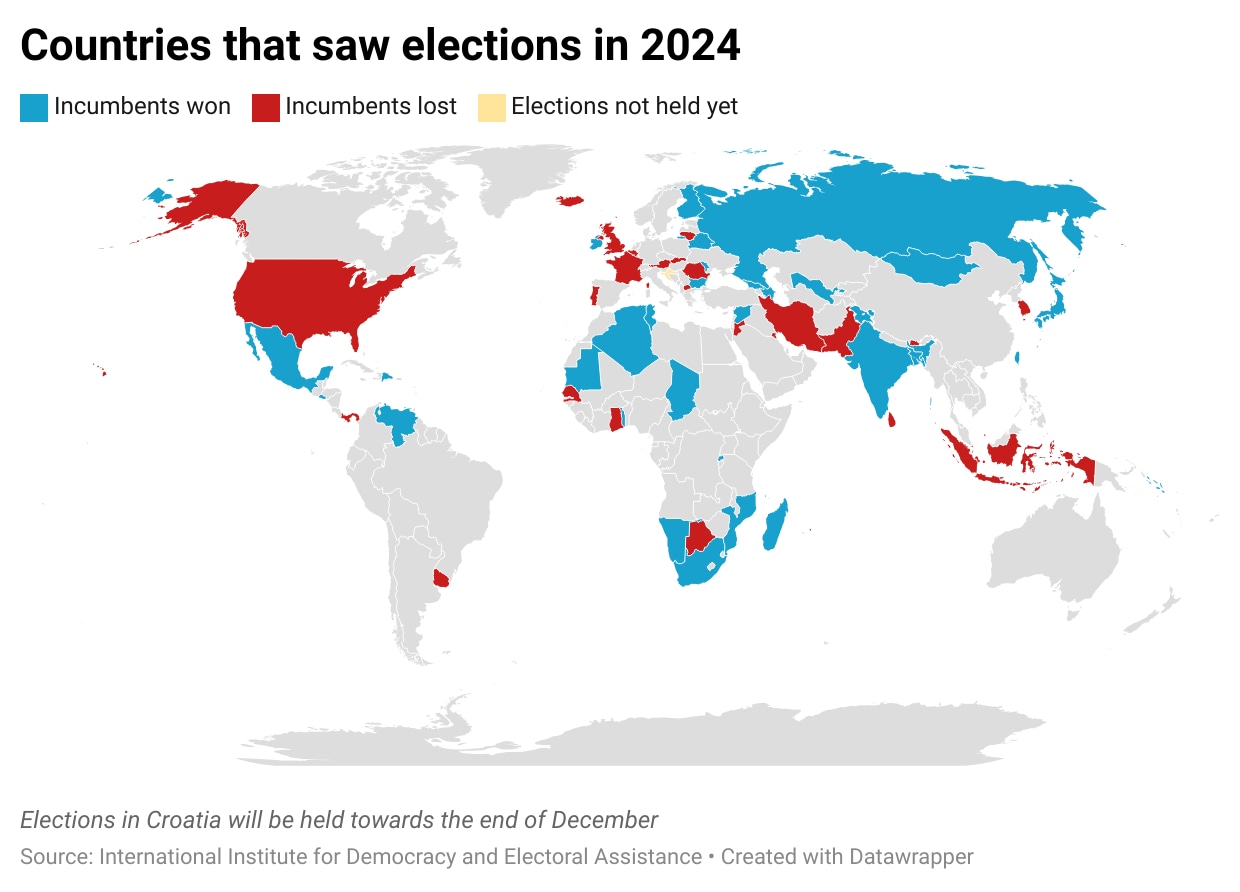
 Ruling powers had a hard timeAlthough the BJP-led NDA was able to retain power in India, its seat tally fell from 353 in 2019 to 293. But worldwide, incumbent parties had an even tougher year. Incumbents lost power in at least 27 of the 62 countries which held elections in 2024. To be sure, several countries where elections were held, also saw allegations of unfair practices by the ruling party to retain power, without which they could have lost. In the US, Donald Trump defeated vice president Kamala Harris, flipping the presidency back to Republicans, who also gained control of Congress along with the House of Representatives. This marked the third consecutive presidential election in the US where the incumbent party lost. Meanwhile, the UK saw a leftward shift as Labour ended 14 years of Conservative rule with a decisive parliamentary majority. Elsewhere, long-standing ruling parties faced historic defeats. Botswana’s Democratic Party lost power after nearly 60 years. In South Africa, the African National Congress had to enter a coalition for the first time since the end of apartheid in 1994. Japan’s Liberal Democratic Party and coalition partner Komeito lost their parliamentary majority. Presidential and parliamentary elections in Sri Lanka this year were notable as the voters rejected the mainstream parties in favour of the Anura Kumara Dissanayake-led Leftist coalition. Opposition parties also rose to power in nations such as Ghana, Panama, Portugal, and Uruguay. Then there are countries such as Bangladesh where election victories turned out to be pyrrhic for the incumbent leader. See Chart 1
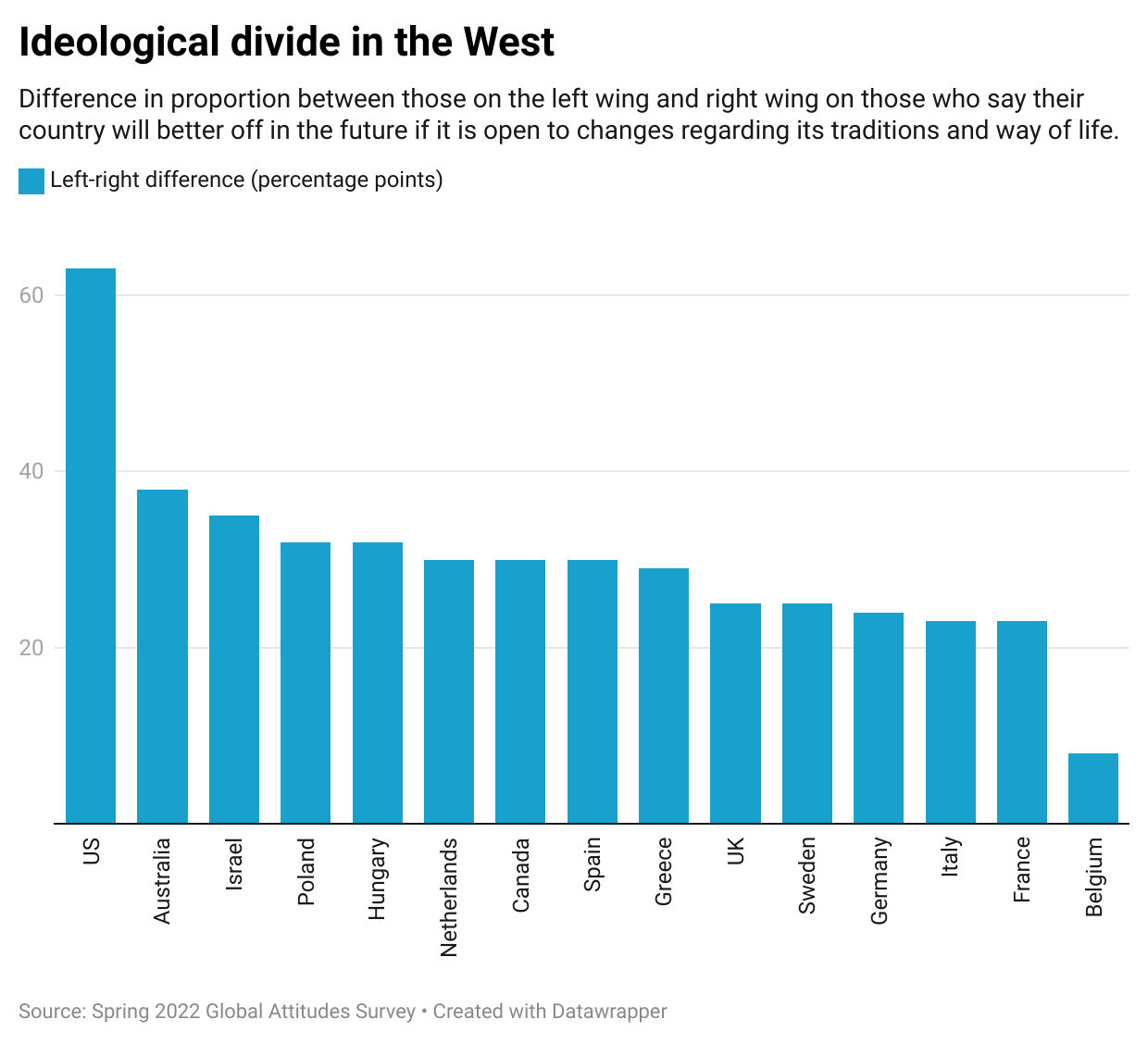
- Political divides over culture and identity have deepenedThis was especially seen in elections held in Western countries, where topics such as immigration, abortion rights and LGBTQ+ rights became prominent and polarising political issues. In 15 of the 16 nations where Pew did a survey on ideology, there was a significant difference between the ideological Right and Left. The gap was the largest by far in the US, where 91% of liberals believe the country benefits from embracing change, compared to just 28% of conservatives. Trump or his running mate were not the only people milking such differences. France’s Marine Le Pen and her National Rally framed immigration as a threat to French culture. Those such as Austria’s Freedom Party and Germany’s AfD also focused heavily on opposing immigration, particularly from Muslim-majority nations. Chart 2
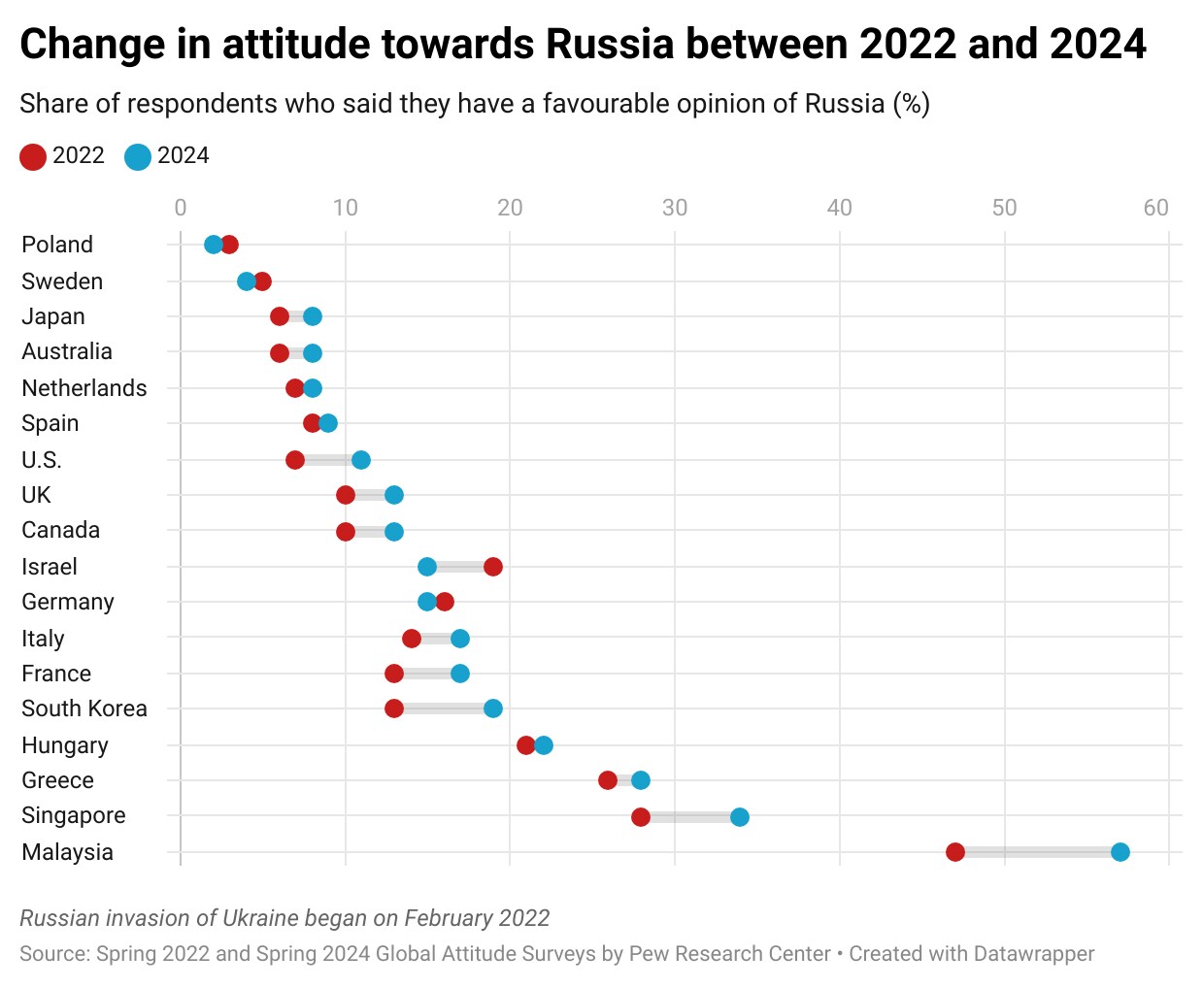
- International conflicts played a role in elections in many countriesInternational conflicts such as the Russia-Ukraine and Israel-Hamas wars had an impact on the global political landscape this year. Ideological divides over Ukraine were evident, with Right-wing parties in Austria, Germany, and the US voicing scepticism about supporting Kyiv. Slovakia elected Peter Pellegrini, an ally of pro-Russia Prime Minister Robert Fico, as president. Meanwhile, the Israel-Hamas war exposed rifts on the Left. In the UK, Labour’s few losses were to Left-wing critics of Keir Starmer’s pro-Israel stance. In the US, polling shows that many young liberals opposed the Biden administration’s approach to the conflict, highlighting divisions within the Democratic Party. Chart 3
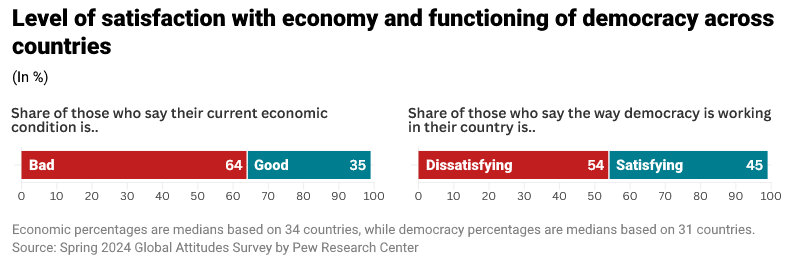
- Populists have been able to capitalise on voters’ frustrations at the cost of CentristsFrustration with elites has fuelled the rise of populist movements, particularly on the Right. Austria’s far-Right Freedom Party won a record vote share of 29% in September, though it’s unlikely to join a governing coalition. In Germany, AfD became the first far-Right party to win a state election since World War 2. Populism thrived beyond Europe as well. In the US, Donald Trump’s MAGA movement now dominates the Republican Party, transforming it into a populist force far removed from its pre-2015 identity. On the Left, Mexico’s Morena party has risen rapidly, securing majorities in Congress and electing Claudia Sheinbaum as the country’s first female president. Across the spectrum, 2024 saw populist parties tapping into widespread discontent, portraying establishment leaders as disconnected from ordinary citizens, and in the process cementing their position in politics worldwide. To be sure, rise of such populism might have been fuelled by economic hardships. A Pew survey of 34 countries found 64% of respondents describing their national economies as poor. Additionally, dissatisfaction with democracy has fuelled discontent. In 31 nations, a median of 54% expressed dissatisfaction with how democracy is functioning Chart 4