E-Paper



Number Theory: Hathras and the gaps in emergency health infra
Among the most important requirements for hospitals when it comes to dealing with a Hathras kind of tragedy is what is called 'surge capacity'.
Updated on: Jul 12, 2024, 08:17:08 IST

 Prefer HTon Google
Share via


Copy link

“This (Hathras) disaster shows how vulnerable we are. We need better infrastructure, more staff, and proper emergency plans to handle such situations”, Dr RK Verma, the medical superintendent at Sikandra Rao Trauma Centre -- it did most of the heavy lifting after tragedy struck in hathras -- told HT a day after one of the worst ever stampede tragedies in the country. An HT analysis of health care statistics and studies shows that Hathras is a grim reminder of the deficiencies in our first response medical infrastructure. Here are four charts which summarise this problem.

Hathras and the gaps in emergency health infra
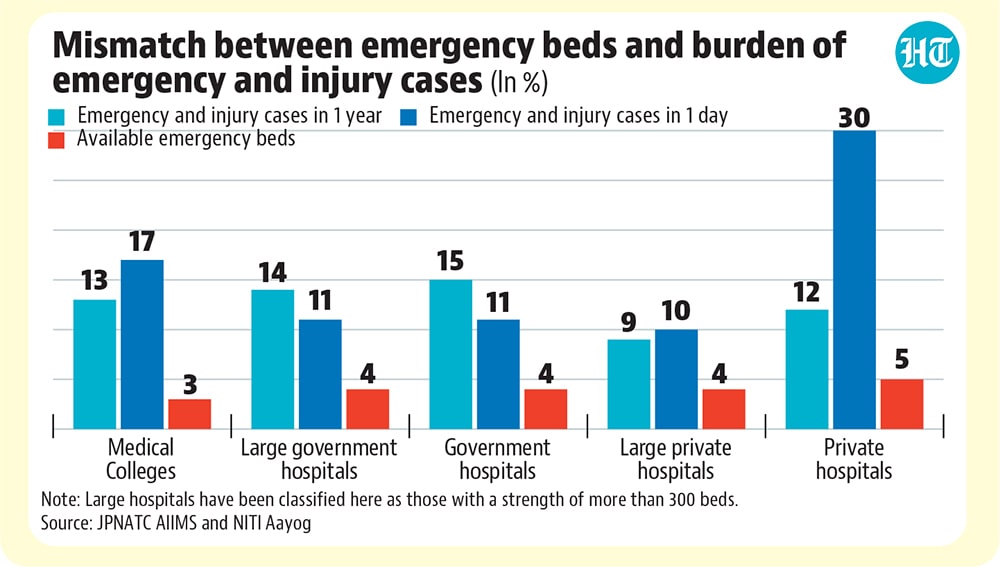
 Trauma is one of the biggest components of emergency cases but infrastructure to provide emergency care is lacking in most hospitalsA 2020 report based on a survey of 100 healthcare facilities across the country which was prepared by Jayaprakash Narayan AIIMS Trauma Centre for NITI Aayog shows this clearly. The report found that live observations conducted for 24 hours at the designated facilities put the share of trauma and road traffic injuries at 24% (largest) among all cases brought to emergency departments of hospitals. Most hospitals were found lacking to deal with such cases. “Even though 91% of hospitals had in-house ambulances, trained paramedics needed to assist ambulance services were present only in 34%”, the report says, flagging further problems such as lack of demarcated triage area, pre-hospital arrival notification system, and most importantly lack of adequate beds for patients coming to the emergency department. The report shows that the share of emergency hand injury cases across hospitals was around ten percentage points more than the share of beds available for emergency patients.
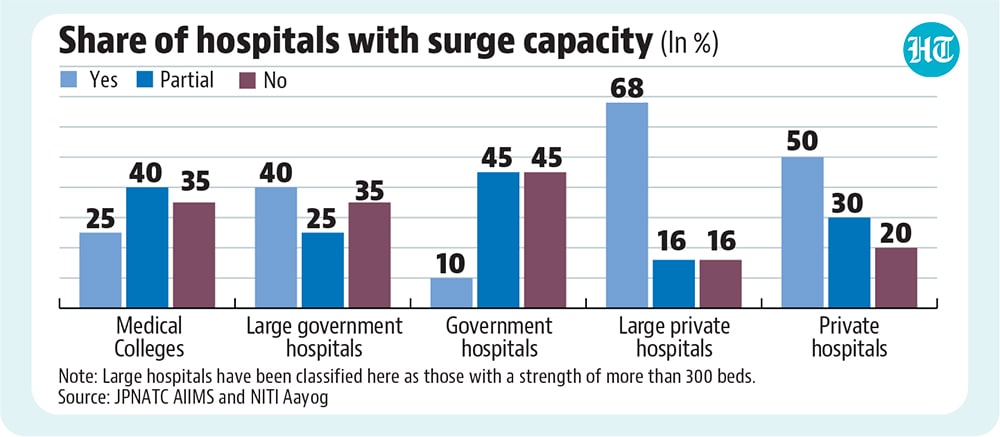
- Smaller government hospitals have the lowest surge capacityAmong the most important requirements for hospitals when it comes to dealing with a Hathras kind of tragedy is what is called surge capacity. This basically means the hospital being able to evaluate and care for a markedly increased volume of patients in situations that challenge existing capacity of hospitals. NITI Aayog found that government hospitals fared poorly compared to their private counterparts in terms of surge capacity and the smaller government hospitals – the kind which had to be the first responder in the aftermath of the stampede at Hathras – had the worst score on this count.
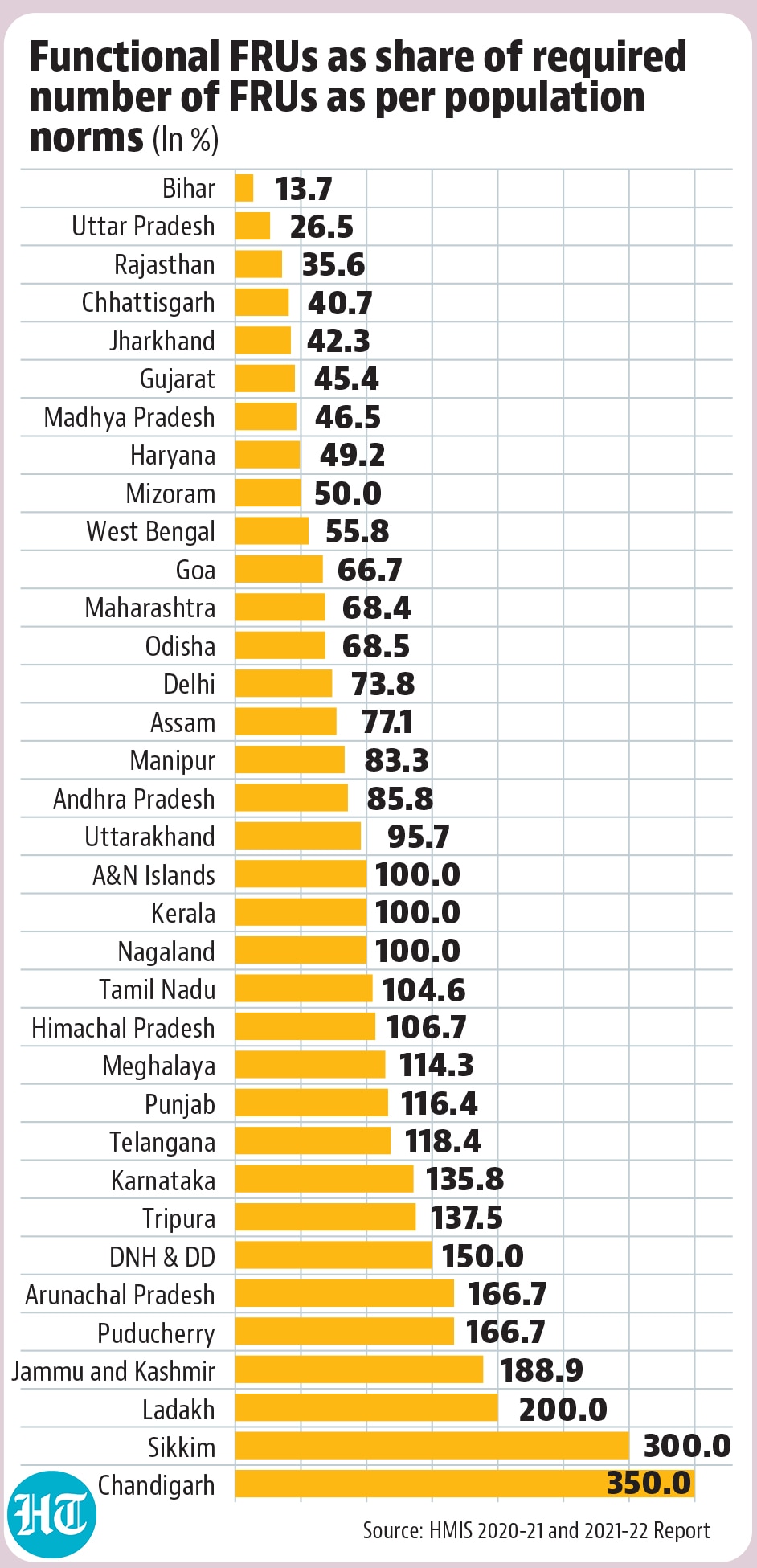
- At the root of the problem are overworked and often dysfunctional first response units of medical careIndia’s health care system has long been criticised for ignoring basic facilities and being obsessed with speciality hospitals. The risks of this top-heavy infrastructure are most acute when tragedies such as Hathras take place when there is no functional and effective care facility at nearby places. “Healthcare delivery in India has been envisaged at three levels namely Primary, Secondary and Tertiary. The secondary level of health care essentially includes Community Health Centres (CHCs), constituting the First Referral Units (FRUs) and the Sub-district (SDH) and District Hospitals (DHs). CHCs were designed to provide referral healthcare for cases from the Primary Health Centres level and for cases in need of specialist care approaching the Centre directly”, the Health Management Information System (HMIS) report of the ministry of health says. While Uttar Pradesh does relatively better on the number of FRUs required for the state’s population, a large number of these FRUs were dysfunctional which means that the number of required FRUs being fulfilled means very little when the need arises. As per norms, an FRU unit should be there for every five lakh population. According to HMIMS, as many as 18 states and union territories don’t have the required number of functional FRUs as per their population. Among these, Bihar, Uttar Pradesh and Rajasthan have the least share of functional FRUs as compared to the number of required FRUs at 13.7%, 26.5% and 35.6% respectively. Unless these deficiencies are addressed, our medical infra will continue to get overwhelmed when tragedies like Hathras strike.