E-Paper



Number Theory: The China+1 opportunity: How India can capitalise
Although India hasn’t been able to reap the full benefits of C+1 so far, recent data signals that this could be changing.
Published on: Jul 16, 2024, 09:27:38 IST

 Prefer HTon Google
Share via


Copy link

Failing to increase the output and employment share of manufacturing has been one of India’s biggest economic policy failures since independence. The growing China+1 (C+1) sentiment – global manufacturers looking to diversify their production facilities out of China – offers an important opportunity to India to correct this historic failure. How has India performed on this regard? Here are four charts which answer this question.
The China+1 opportunity: How India can capitalise
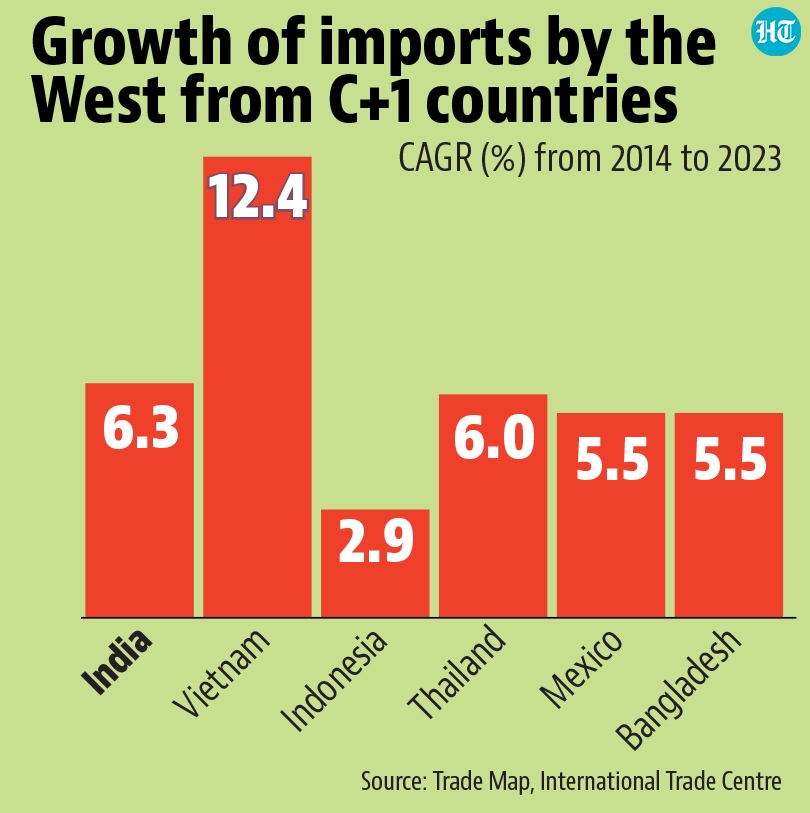
 Vietnam has been the prime beneficiary of C+1 so farIf one were to go by outcomes, the biggest proof of success in exploiting the C+1 sentiment should be seen in the growth of exports to advanced countries such as US and in Europe. The C+1 strategy was first coined in 2013. From 2014 to 2023, imports by the US, UK and European Union (EU) from Vietnam have shown a compound annual growth rate (CAGR) of 12.4%, compared to the 6.3% CAGR of imports from India. To be sure, in absolute terms, imports by the 27 EU countries and the UK from India is currently higher than that of their imports from Vietnam, according to data from the International Trade Centre (ITC). The EU and the UK’s imports from India stood at $ 88.9 billion in 2023, compared to $ 72.1 billion worth of imports from Vietnam. It’s different for the US. Imports by the US from India and Vietnam stand at $ 87.3 billion and $ 118.9 billion respectively. “We expect Vietnam to remain a major beneficiary of GVC (global value chain) reorientation. Since its accession to the World Trade Organization in 2007, Vietnam’s higher degree of openness, alongside favourable demographics and low labour costs, among other factors, has boosted its status as a strong FDI destination,” said a report by Nomura released in May.
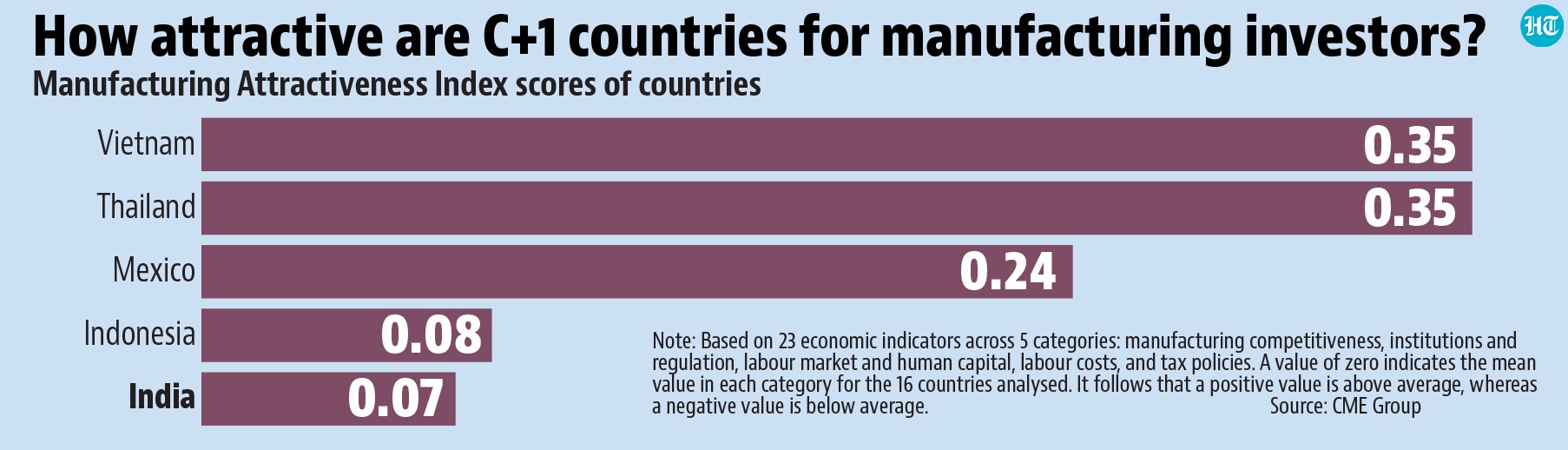
- Why hasn’t India become the default alternative?To be sure, India has benefited from C+1. Imports by the West from the country have seen the second-highest growth among the six nations analysed. However, the fact that a smaller economy such as Vietnam has been able to attract more Western industries than India shows that the latter could have done better. This has been acknowledged even in official reports. A report by the Parliamentary Committee on Commerce tabled in the Rajya Sabha in March 2023 on C+1 said that, “despite availability of resources and planning, India has not been able to create a positive impression amongst the businesses which are moving away from China.” The report also added that smaller Asian countries such Vietnam and Thailand have been bigger beneficiaries of C+1. What is preventing India from exploiting this opportunity? The old problems of the ease of doing business and the impact this has on manufacturing competitiveness. A ranking by the CME Group of countries by their attractiveness to manufacturers on the basis of manufacturing competitiveness, quality of institutions and regulations, tax policies, human capital and labour costs, shows that India is placed lower than countries such as Thailand, Vietnam, Mexico and Indonesia.
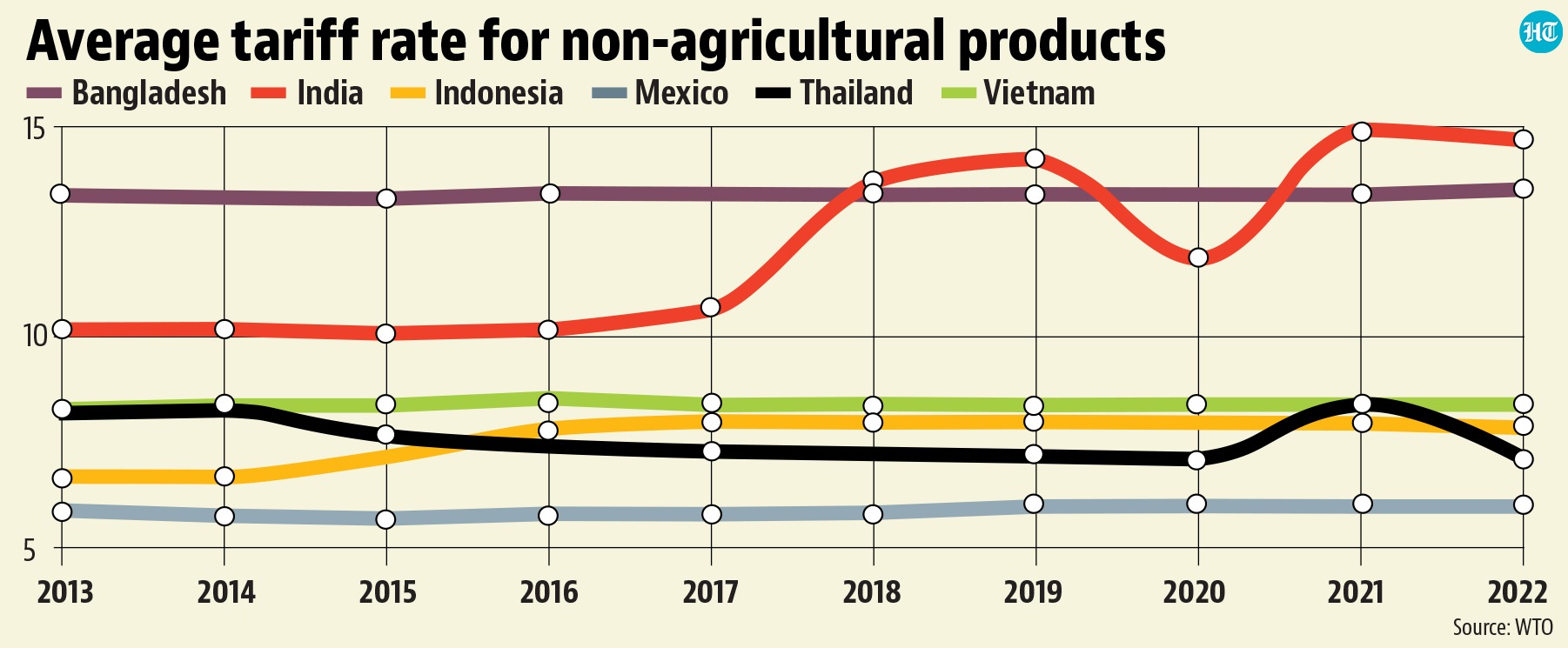
- And high tariffs have not helpedIndia’s higher tariff rates compared to other emerging economies have had an adverse effect on its competitiveness as a destination for Western investors. Average duties levied by India have seen a considerable rise since 2018 and the average tariff rate for non-agricultural products currently stands at 14.7%, the highest among the countries analysed. The higher tariff rates can lead to an inverted duty structure where the tax levied on imported raw materials of a product could be higher than the tax levied on the final product itself. “The increased costs drive exporters to raise the prices for their final goods. However, this puts domestic exports at a disadvantage as compared to cheaper, foreign goods in the international markets. Export turnover is thus, negatively impacted,” said a report published by Export Credit Guarantee Corporation of India in February this year. An analysis by OECD’s METRO trade model also corroborates the impact high tariffs have on exports. According to the OECD, India’s exports would increase by as much as 7.7% by reducing its tariff rates unilaterally to that of lowest G20 level. The rise in exports due to tariff rates could be as high as 8.6% if done unilaterally, where all the countries involved lower their tariff rates to the lowest G20 level.
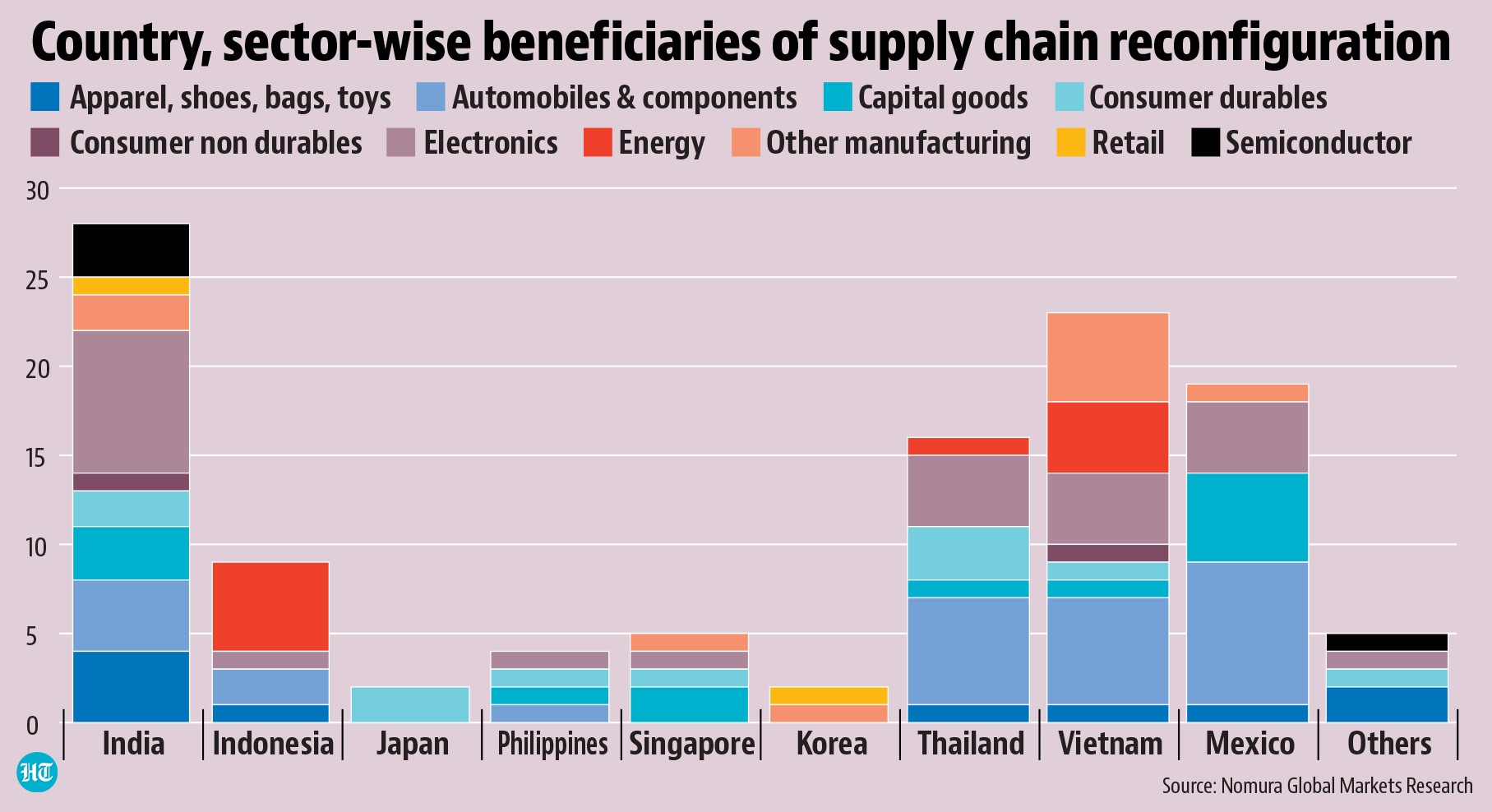
- Promising future prospectsAlthough India hasn’t been able to reap the full benefits of C+1 so far, recent data signals that this could be changing. An analysis by Nomura of as many as 130 companies that are either planning to relocate their production out of China or are looking to invest in new production facilities in Asia or elsewhere, shows that the highest number of them (28) are interested in setting up their facilities in India. This is followed by Vietnam that has attracted interest from 23 such firms. As many as eight out of the 28 firms with plans to invest in India are from the electronics sector, in which the country has lagged behind Vietnam till now.