E-Paper



Number Theory: Tracking rain across four states affected by flooding
In the 1971-2020 average for June-September rain, Rajasthan, Andhra Pradesh, Gujarat, Telangana are ranked 3rd, 8th, 10th, 11th driest among 33 states and UTs.
Updated on: Sep 3, 2024, 08:48:53 IST

 Prefer HTon Google
Share via


Copy link

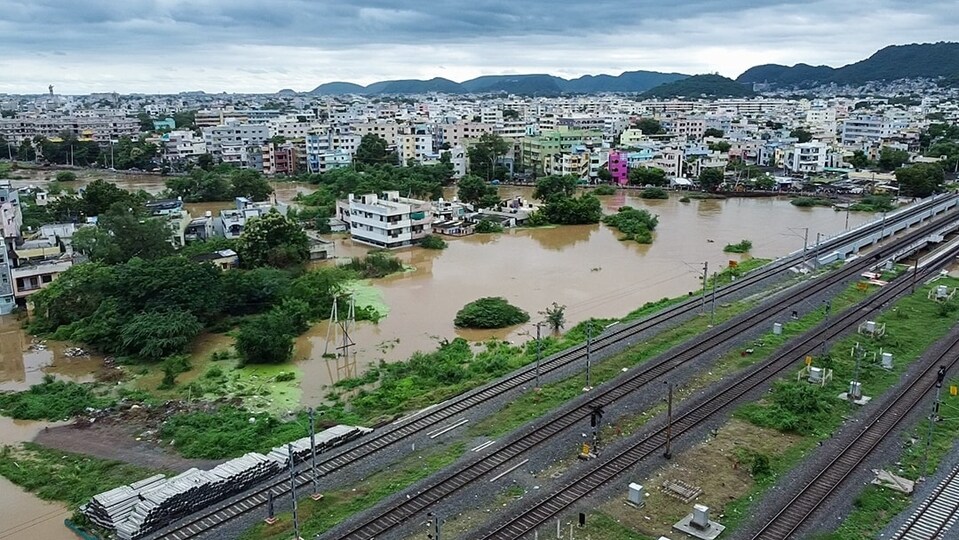
Floods in the western states of Gujarat and Rajasthan and the peninsular states of Andhra Pradesh and Telangana are the latest rain-related disasters reported this monsoon season. They might also appear out of place in states not known for receiving too much rain from the southwest monsoon . However, an HT analysis of shows that this perception may not be helpful in the future. This is because all four states have become rainier in the southwest monsoon season. Even the proximate cause of the floods this year (cyclone-like weather systems) is a factor that is undergoing long-term changes. Here are four charts that show this.
Tracking rain across four states affected by flooding
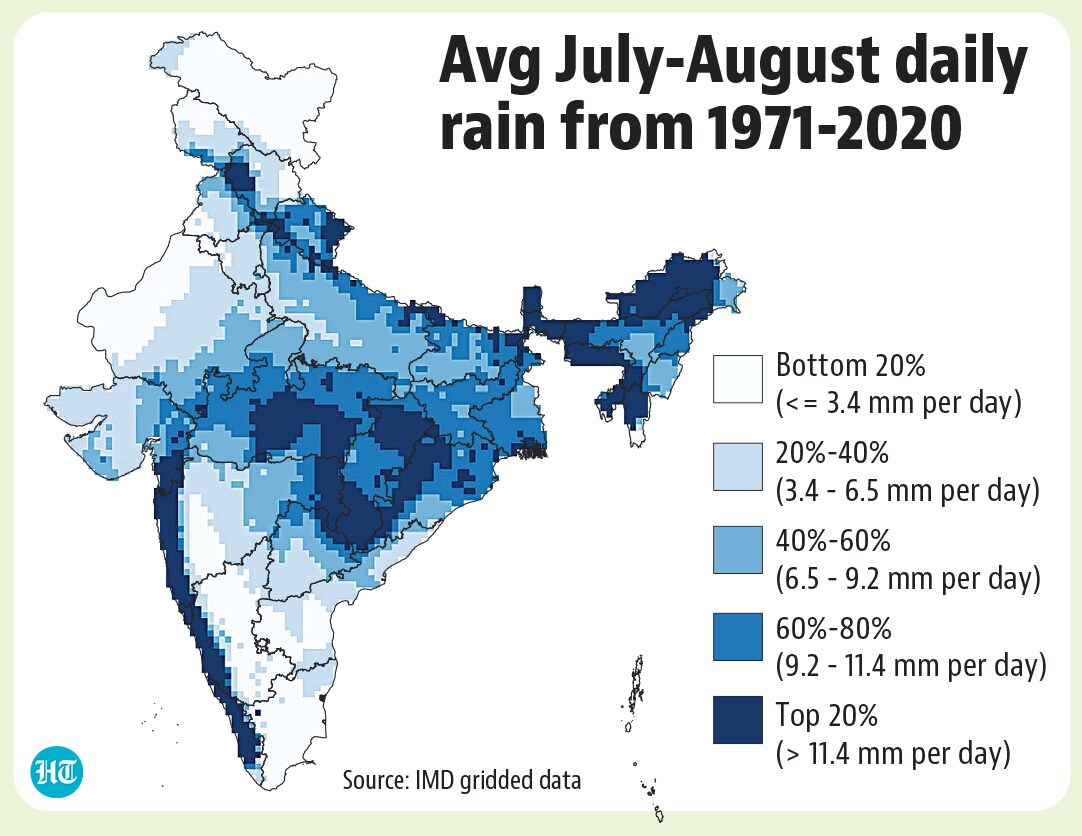
 There is no doubt that these states were relatively drier in the past…In the 1971-2020 average for June-September rain, Rajasthan, Andhra Pradesh, Gujarat and Telangana are ranked third, eighth, 10th and 11th driest among 33 states and Union territories for which this calculation is possible using India Meteorological Department’s (IMD) gridded data. These ranks are not very different even if one looks at annual rainfall. IMD considers the 1971-2020 average as the Long Period Average (LPA) for rain currently and the June-September period is the southwest monsoon season. To be sure, states are not always geographically homogeneous. Therefore, HT also checked what proportion of these states is relatively drier during the wettest monsoon months of July and August. This shows that 42% to 86% of these states was among the 40% driest regions in the LPA. On the other hand, less than 10% of all four states was among the wettest 20% regions in the LPA. To be sure, this is especially the case for Andhra Pradesh and southern Telangana because they also receive rain in the October-December northeast monsoon season, which is limited to peninsular India.
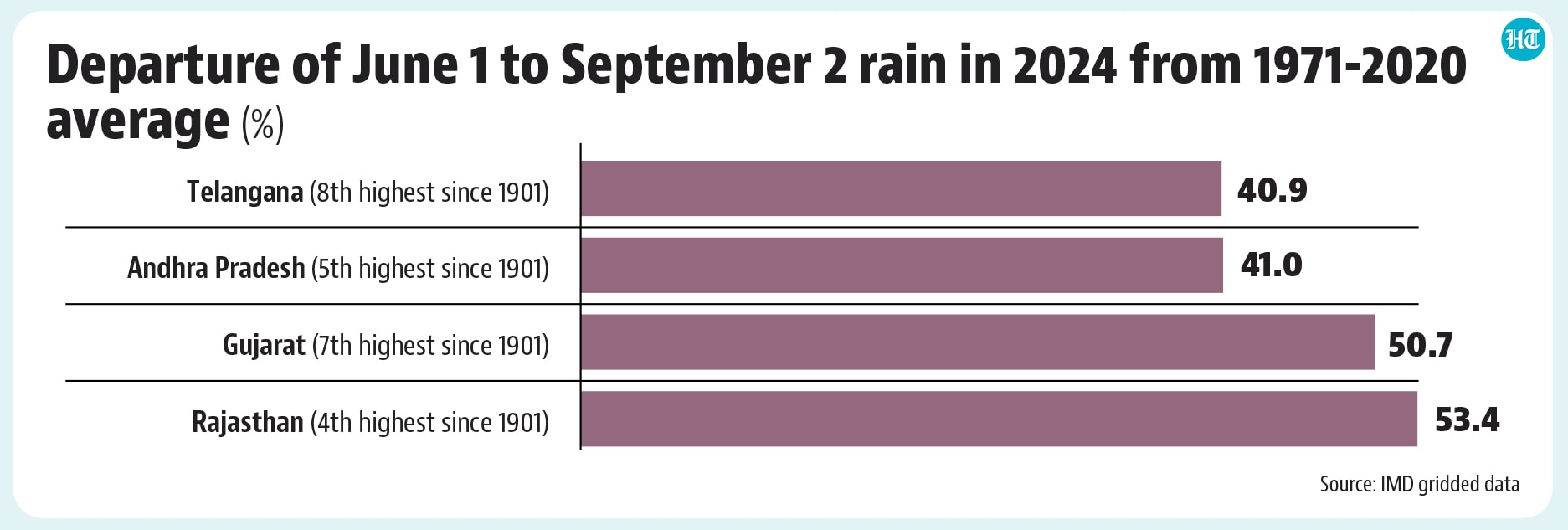
- …Or that the rain they have received this year is record-breakingIt is not always necessary that floods are caused by an unusually large amount of rain. They can also be caused by concretisation, poor drainage, or a dam upstream releasing water. But this year, record-breaking rain does have a role in the floods in these states this year. For the period of monsoon up to 8.30am on September 2, the rain this year is ranked in the top ten since 1901 for each of these states. As expected from this, these states are also not as dry relative to other states this monsoon as they were in the past. In the LPA, June 1-September 2 rain in Rajasthan, Andhra Pradesh, Gujarat, and Telangana is ranked third, fifth, tenth and eleventh lowest respectively among states and UTs. This year, the rainfall in these states is ranked only tenth, ninth, nineteenth and seventeenth lowest, respectively.
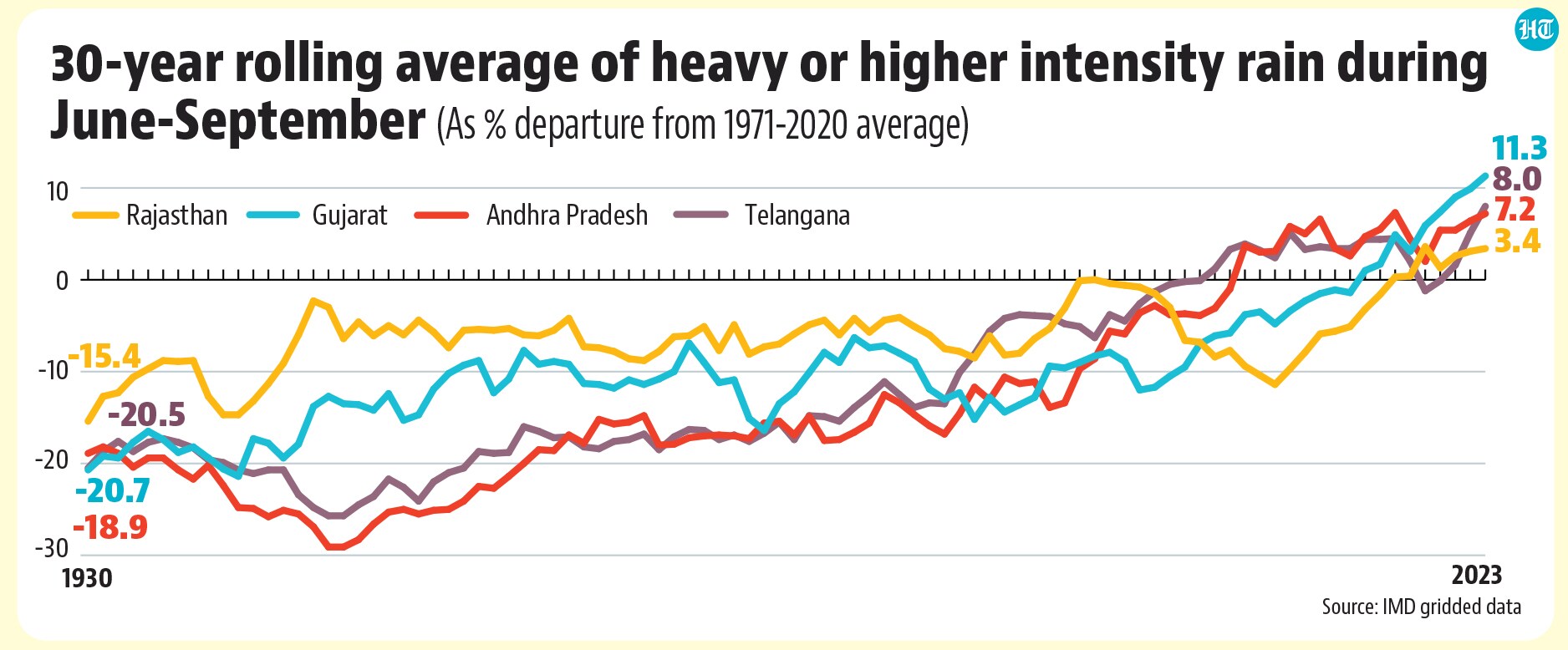
- But it should not be surprising that the four states are breaking rainfall records now...To be sure, record-breaking rain cannot be an excuse for loss of lives and property in even these states. This is because the monsoon was becoming rainier in these states even before 2024. The 30-year rolling average of monsoon rain was at its highest or second highest level in all four states in 2023. While total monsoon rain can increase even with light rain spread out over a number of days, that is not the case in these states. Rain of heavy or higher intensity has also increased in all four states. The 30-year rolling average of rain of such intensity was also either the highest or the second highest in all four states in 2023. Clearly, record-breaking rain or intense rain in the June-September monsoon should no longer surprise these states.
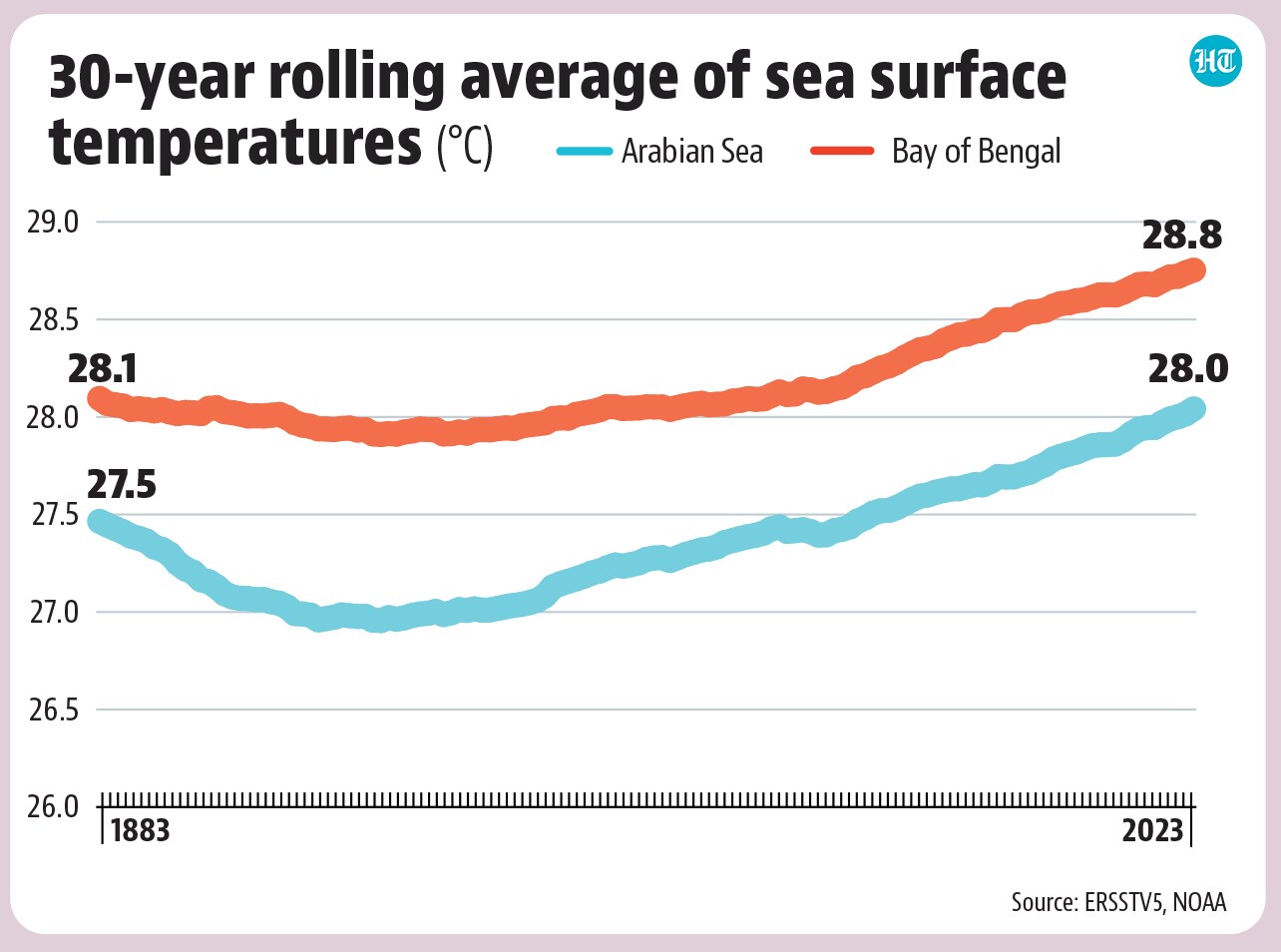
- ...especially when cyclones and depressions are becoming more frequent or intenseThe proximate reason for intense rains in all four states, especially in the past week, has been a depression. A depression is a low-pressure area similar to a cyclone in its structure, but with lower wind speeds than a cyclone. These weather formations, which often bring intense rain, are also undergoing long-term changes. Counting depressions and cyclones together shows that they have increased long-term in the Arabian Sea, but decreased in the Bay of Bengal during the June-September monsoon season. This means that at least the western states will do well to prepare for more frequent rain-related disasters in the future. A decreasing frequency of depression and cyclones in the Bay of Bengal, however, does not mean that the two peninsular states are off the hook. The Bay of Bengal is also warming up long-term, which scientists believe can lead to intensification of cyclones. This means that all four states need to prepare for a rainier future.