E-Paper



Number Theory: Unravelling the nuts and bolts of Phase 5 of Lok Sabha polls
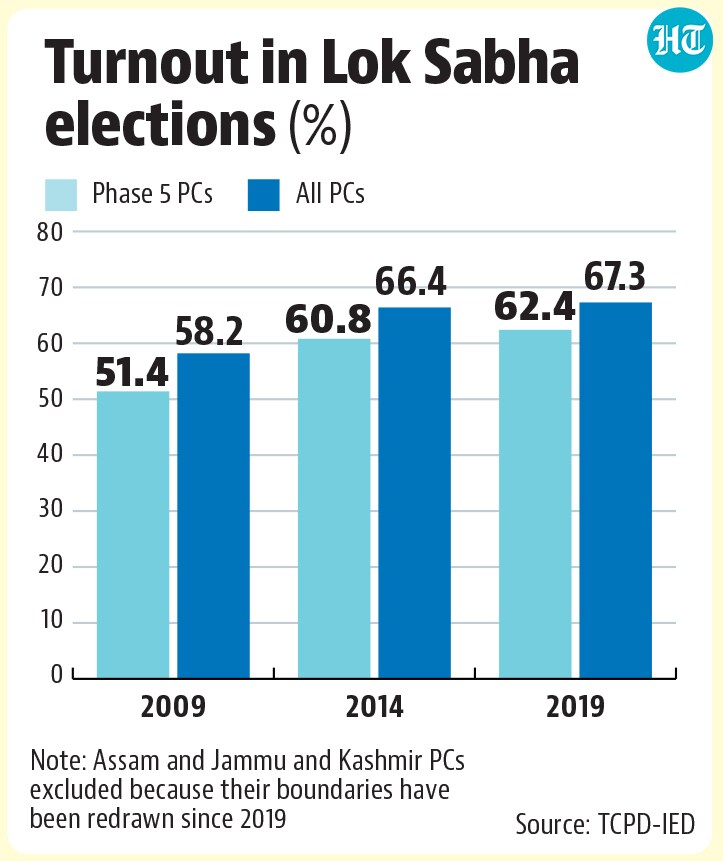
Among the seven phases of this election, the fifth phase PCs have had the lowest turnout in all the past three Lok Sabha elections.
Published on: May 20, 2024, 09:56:39 IST

 Prefer HTon Google
Share via


Copy link

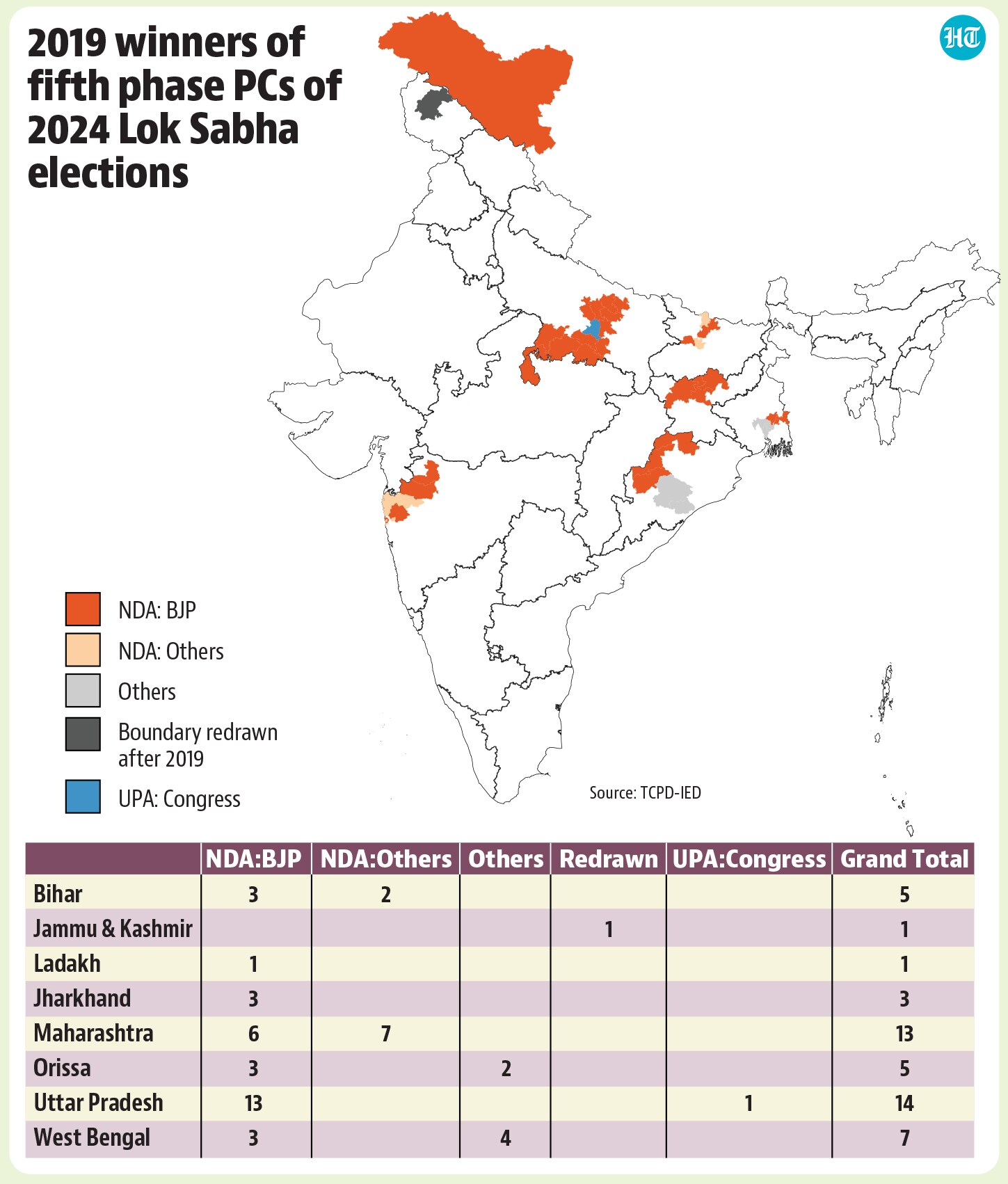
Forty-nine parliamentary constituencies (PCs) across six states and the union territories of Jammu and Kashmir and Ladakh will vote on Monday in the smallest of the seven phases of the 2024 Lok Sabha elections. This will conclude voting in overall 428 (including Surat, where no voting took place) of India’s 543 PCs. At the state level, voting will be over in Maharashtra after today’s polling. Overall, this will conclude voting in 24 of India’s 36 states and UTs. In another four states — Uttar Pradesh, Bihar, West Bengal, and Jharkhand — the number of PCs that have finished voting will cross the halfway mark today. Here is a look at the past trends in the PCs voting today.
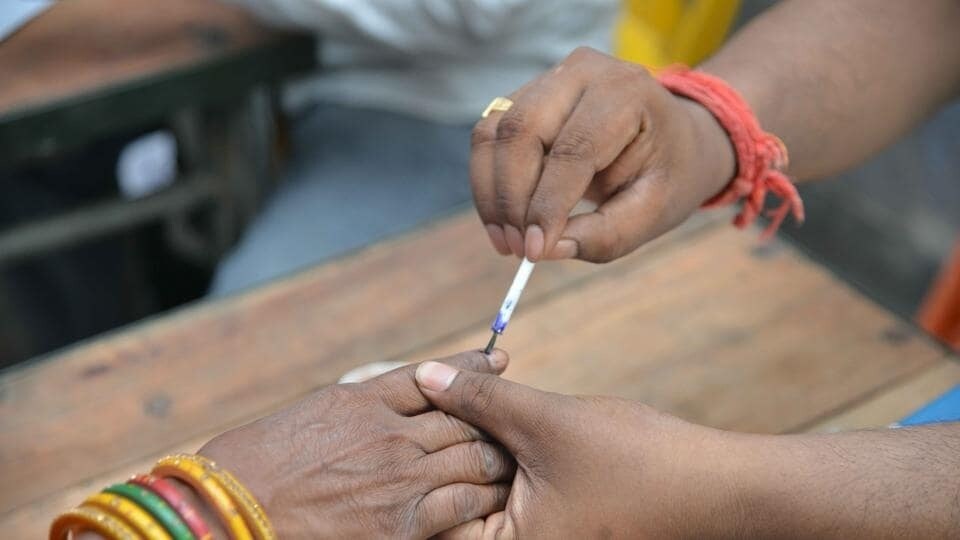
Unravelling the nuts and bolts of Phase 5 of Lok Sabha polls
 One of the most challenging PCs for the Congress since 2014Past results are available for 48 of the 49 PCs voting today because the boundaries of Jammu and Kashmir PCs have been redrawn since the 2019 Lok Sabha elections in a delimitation exercise. Congress had won just one of these 48 PCs in 2019 (Rae Bareli) and two in 2014 (Rae Bareli and Amethi). Its allies had won no PC in either 2014 or 2019. This makes these 48 PCs one of the most challenging for the Congress. To be sure, the nearly nil tally of the Congress and allies in this phase does not mean that the Bharatiya Janata Party (BJP) and allies won everything else. Together, BJP and allies had won 41 of the 48 PCs in 2019 and 35 in 2014. The BJP on its own had won 32 and 27 PCs of in 2019 and 2014. Who won the remaining PCs? In both 2014 and 2019, all the remaining PCs were won by the Biju Janata Dal (BJD) and the All India Trinamool Congress (TMC). Neither of these two parties have a formal seat sharing arrangement with either the BJP or the Congress even in 2024. To be sure, these trends are partly a reflection of the fact that 35 of the 49 PCs voting today are in Jharkhand, Bihar, Uttar Pradesh, and Maharashtra, all states that BJP and allies nearly swept in 2019. Another 12 PCs are in Odisha and West Bengal, where the BJP’s challenge is the BJD and TMC rather than the Congress.
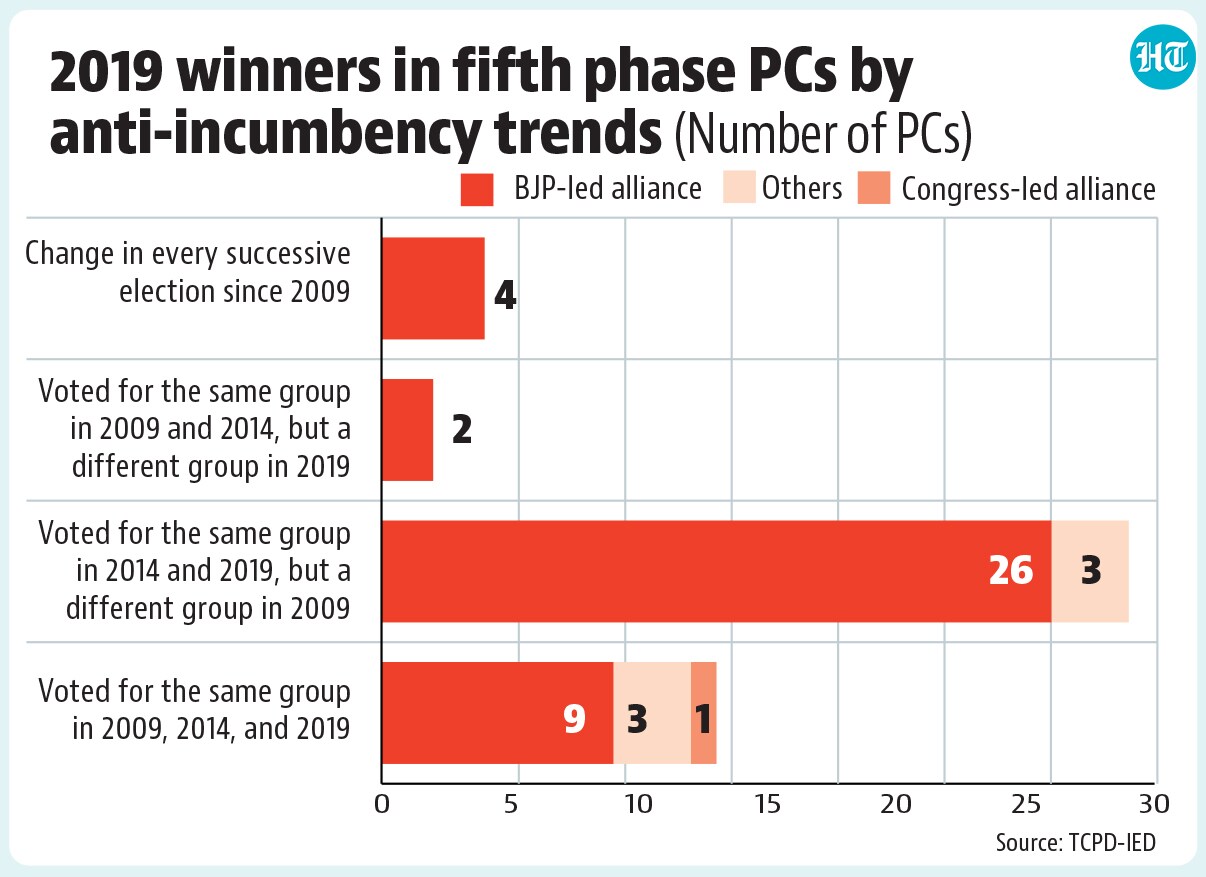
- Large share of incumbent parties was voted out in 2014 in these PCs, but not in 2019While the BJP performed well in these PCs in 2014 and 2019, this was not the case in 2009. The BJP had won just five of these PCs in 2009 and its allies had won another four. This means that these PCs are a relatively recent stronghold of the BJP and allies. Therefore, the 48 PCs show high anti-incumbency in 2014 and low anti-incumbency in 2019 if parties are grouped as part of a BJP-led alliance, a Congress-led alliance, and others. 29 of the 48 PCs voted for the same group in 2014 and 2019, but voted for a different one in 2009. BJP and allies won 26 of these 29 PCs in 2019, while the others group won three. To be sure, 13 PCs were still won consistently by the same group since 2009, the earliest year up to which Lok Sabha elections can be tracked at PC-level. BJP and allies won nine of these PCs in 2019, others three, and the Congress has won Rae Bareli consistently since 2009. Another six PCs have either changed their group in every successive election since 2009 or changed it in 2019 after voting for the same group in 2009 and 2014. All these six PCs were won by the BJP and allies in 2019.
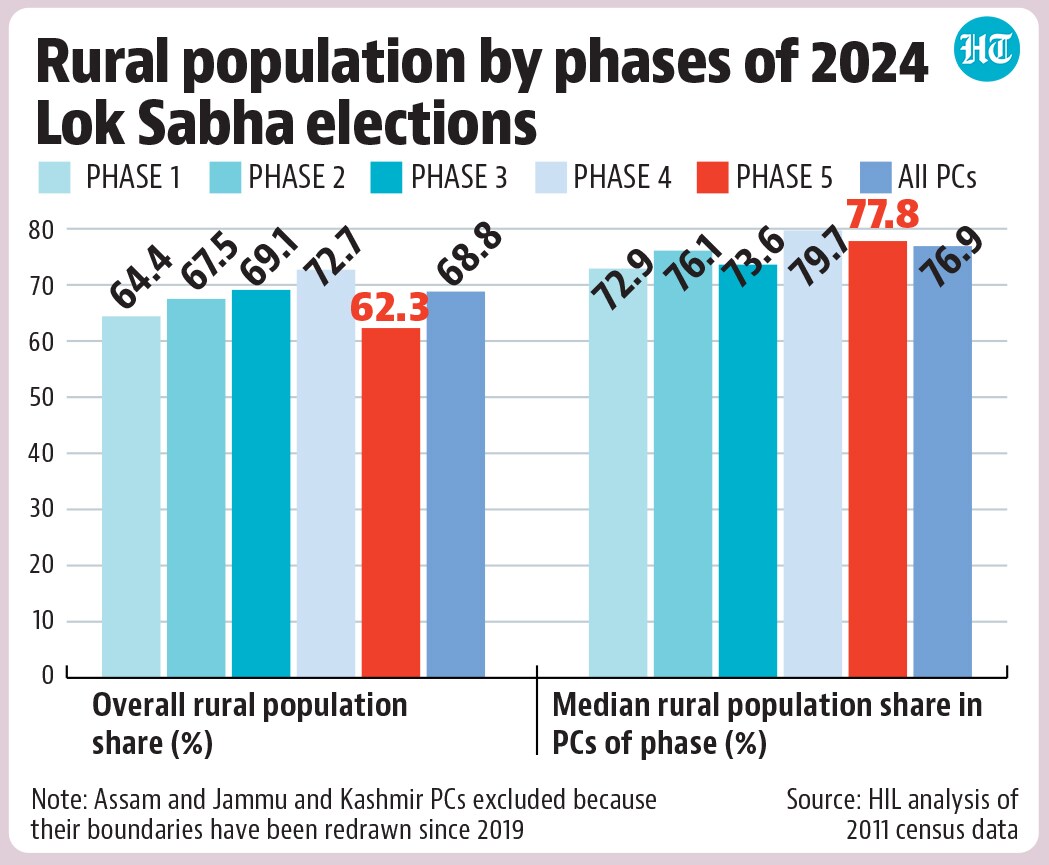
- Least rural phase on average, but only because of some big urban centresAccording to 2011 census data aggregated to PC-level by How India Lives, the overall share of rural population in the PCs voting today is 62.3%, below the all-India average of 68.8% and the lowest among all the seven phases of the 2024 election. However, this is largely because Mumbai PCs are voting today, which are almost as populous as any other PC but completely urban. Other PCs in Maharashtra and West Bengal voting today are also more urban than the average Indian PC. However, at least half the PCs voting today are very rural. The median rural share in the PCs voting today is 77.8%, higher than the all-India level median of 76.9%.
- These PCs have had very low turnout in the past three electionsAmong the seven phases of this election, the fifth phase PCs have had the lowest turnout in all the past three Lok Sabha elections. To be sure, the turnout in these PCs has converged with the national average over time. The gap from the national average was 6.8 percentage points in 2009, which decreased to 5.6 percentage points and 4.9 percentage points in 2014 and 2019.