E-Paper



Number Theory: Why November 20 polls may be a watershed moment for Mumbai
.
Published on: Nov 18, 2024, 08:33:46 IST

 Prefer HTon Google
Share via


Copy link

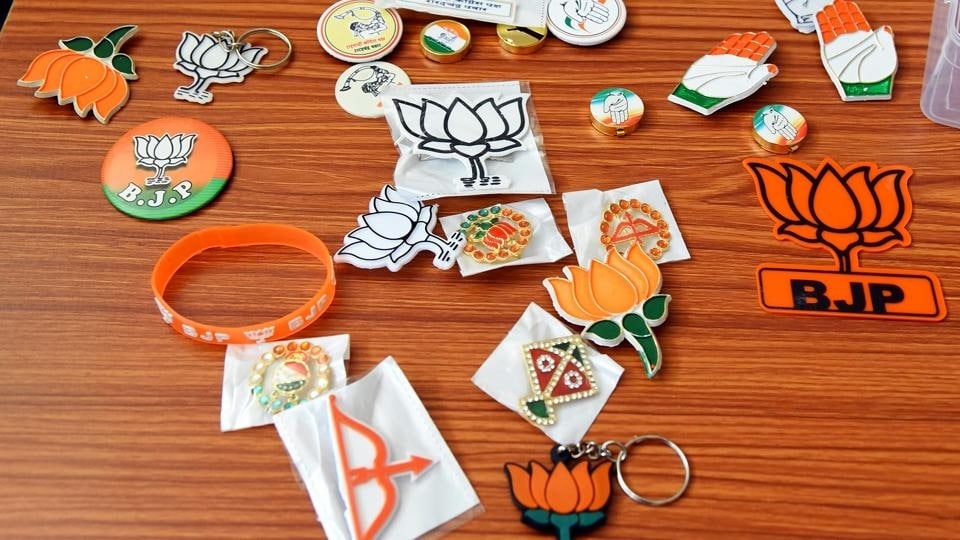
Mumbai is not just India’s largest and richest metropolis, it is also the first megacity to give birth to a nativist party that went on to become a force to reckon with in both state and national politics. With the Shiv Sena (SHS) facing a vertical split in June 2022, and the two factions allying themselves to the Congress and the Bhartiya Janata Party (BJP), the 2024 assembly elections could well be a watershed event in the political life of Mumbai. Here are four charts that explain this in detail.
Why November 20 polls may be a watershed moment for Mumbai
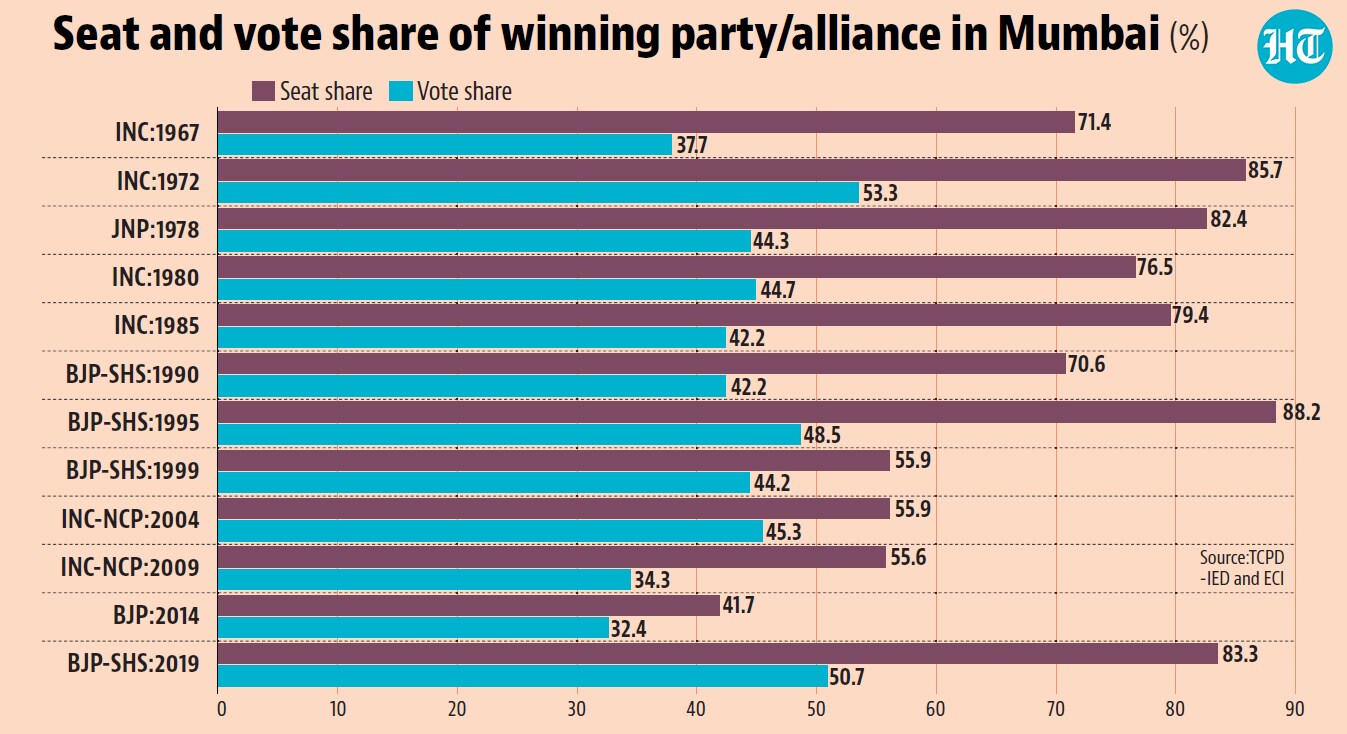
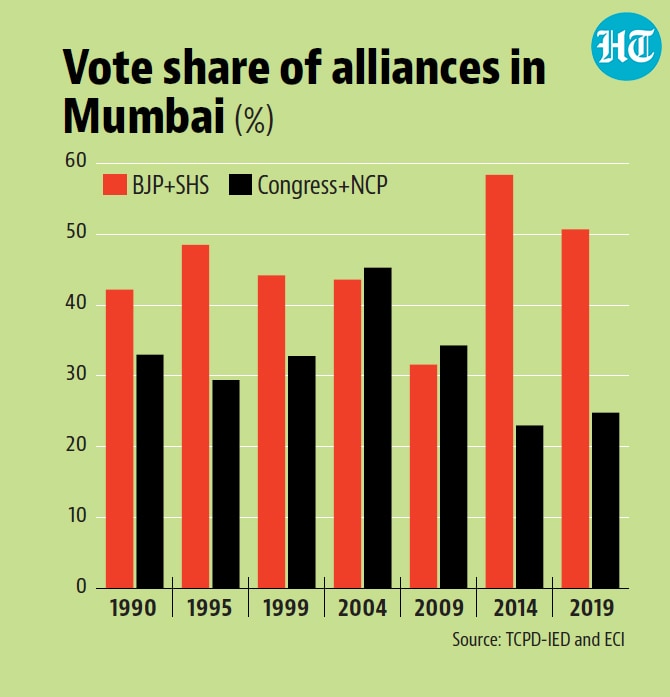
 It took a Shiv Sena-BJP alliance to finish the Congress’s dominance in MumbaiThis analysis has included 36 assembly constituencies (ACs) in the Mumbai Urban and Mumbai Sub-urban districts- the two districts that largely comprise the Mumbai Metropolitan Region. To be sure, the number of ACs in Mumbai has changed over time because of delimitation of AC boundaries. This number used to be 28 between 1967 and 1977 and 34 between 1978 and 2008. An analysis of seat shares in Mumbai shows that the Congress used to dominate its politics in the initial days. Between 1962 and 1985 elections, the Congress never won less than 70% of ACs in Mumbai barring the post emergency election of 1978 when it drew a blank in the city. This dominance came to an end from 1990 onwards when the Shiv Sena – it was formed in 1966 and contested its first assembly election in 1972 – forged an alliance with the BJP for the first time. The 1990 and 1995 elections saw the Sena-BJP turning the tables on the Congress with seat share of 71% and 88% in Mumbai. While the contest became slightly more equal between 1999 and 2009 with the Congress and the then united Nationalist Congress Party (NCP) alliance finishing ahead of the BJP-SHS, 2014 and 2019 saw the return of SHS-BJP dominance in the city once again. To be sure, the BJP and SHS contested separately in the 2014 assembly elections but their combined tally was significantly higher than that of the Congress and its traditional allies.
- Can the Congress alliance regain its majority with a part of the Shiv Sena vote share?This is the most important question in the coming elections. Because the Sena has suffered a split and one faction is now in an alliance with the Congress, it will partly undo the Congress’s disadvantage in Mumbai. In the recently concluded Lok Sabha elections 2024, BJP and SHS had a vote share of 28.37% and 21.07% while Congress and SHS (UBT) had a vote share of 14.24% and 31.4%. In terms of seats, SHS (UBT) bagged 15 ACs followed by BJP, SHS (Eknath Shinde), and Congress at 9,7, and 5 ACs. If the Lok Sabha results were to hold, the Congress led alliance would have an advantage in Mumbai.
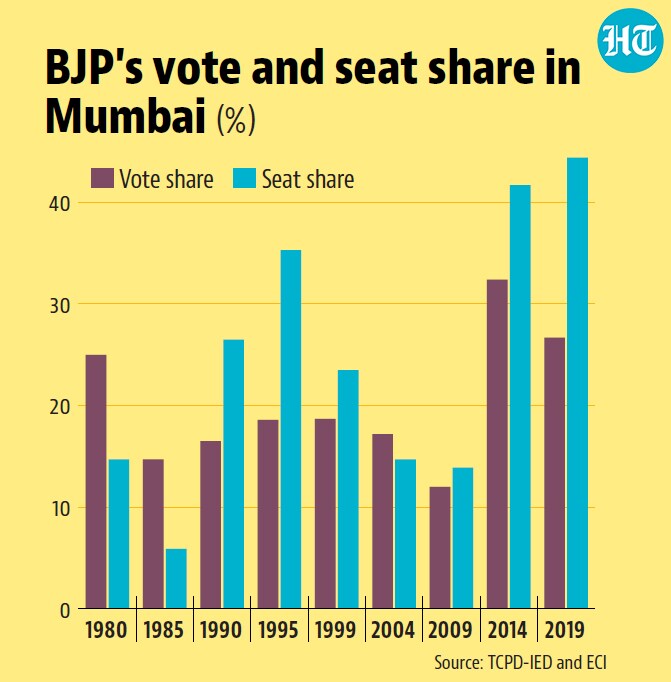
- Or will the BJP build on its largest party status in the past two assembly elections?This is another important statistic in Mumbai’s political arithmetic. The BJP finished as the largest party in Mumbai in both 2014 and 2019 assembly elections. In the last BMC elections which were held in 2017 and the BJP and Sena contested separately, BJP got 82 seats while SHS was ahead just by 2 seats at 84. This is a marked difference compared to the 1990s when SHS used to finish ahead of the BJP in terms of seat share. Will the BJP be able to retain its recent dominance in Mumbai along with the official faction of the Sena? We will know after the results.
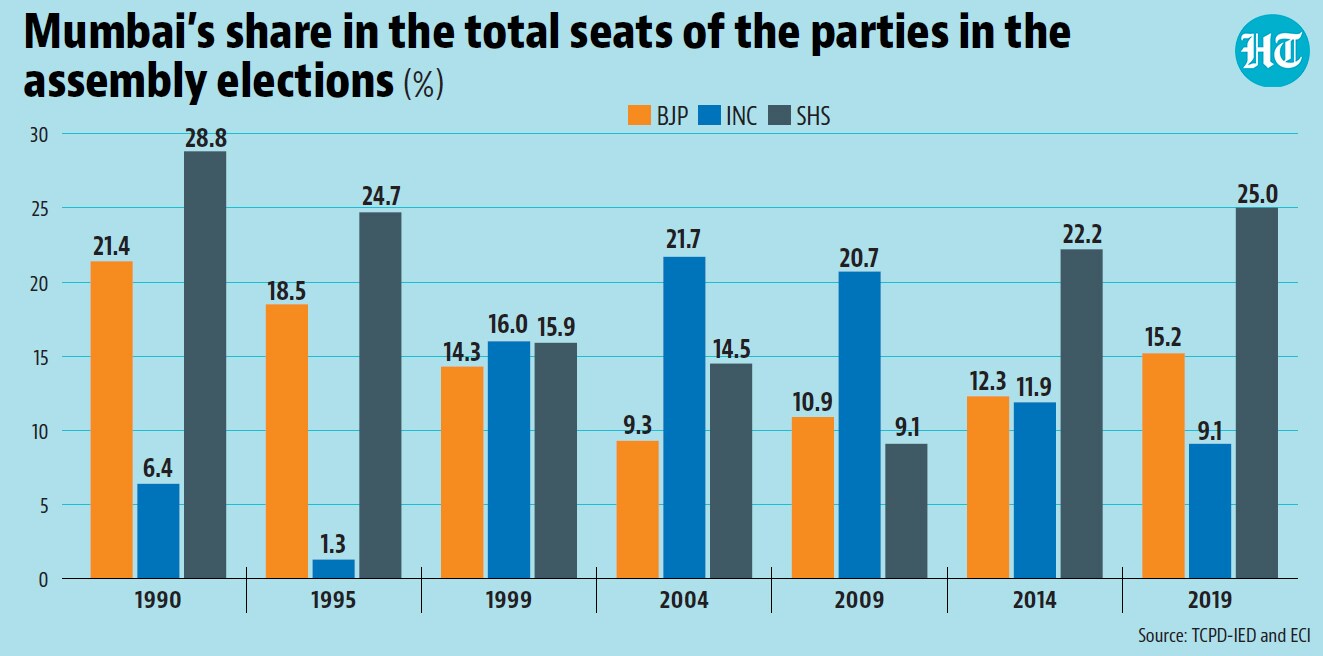
- Sena factions have the highest stakes in the Mumbai battleThe best way to explain this is to look at the share of ACs won from Mumbai in the total ACs won by major political parties in Maharashtra. In 2014 and 2019 assembly elections, 22.2% and 25% of Shiv Sena’s MLAs came from Mumbai. This number was significantly lower for the BJP, Congress and the Nationalist Congress Party. The political fate of the two Sena factions will depend a lot on how they perform in Mumbai. Victory of either of these factions will have a deep effect on Mumbai’s politics.