
 E-Paper



Problematics | Sibling novelty
Brothers and sisters don't always like the same novels. Who buys which book, wrapped in each colour?

 Prefer HTon Google


For people who like to read, having someone with similar tastes in the household can be sometimes helpful, but not always. When my family and I go into a bookstore, for example, each one of us often ends up buying books that does not interest the other two. That is why, in the following puzzle, we have three pairs of siblings buying different books, with none of the brothers having any interest in his sister’s book, and vice versa.
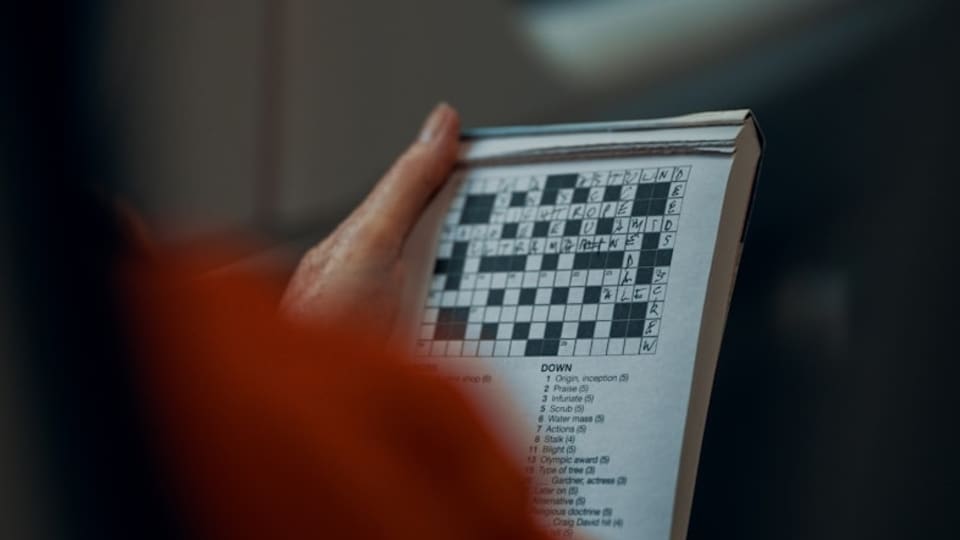
#Puzzle 194.1
Six preteens—three pairs of siblings—buy a novel each at a book fair, choosing from among Black Beauty, Little Women and Oliver Twist. Two copies of each book are thus bought, with no brother buying the same book as his sister. The three packages are wrapped in red, blue and yellow, in whichever order.
(1) The girl in the Pandey family buys Black Beauty, wrapped in yellow along with her brother’s book
(2) The girl in the Pathak family buys the same book as the brother of the girl who buys Black Beauty
(3) Pritha Prasad does not play chess
(4) Pankaj buys Little Women, which does not interest Piyush
(5) Pranav dislikes Dickens, but he often plays chess with the girl who buys Oliver Twist
(6) Pavika and her brother’s books are wrapped in red
(7) The blue package is not for Paanvi and her brother’s books
I think the solution is unique, but there have been a couple of previous occasions when I have failed to seal that aspect, with readers later pointing out that there are two (or more) possible solutions. If you again find more than one solution, do list them all; otherwise let me know if I have successfully ensured a unique answer.
Who is whose sibling, what are their surnames, and who buys which book wrapped in which colour? As always, I will find it easier to process your answers if you send them in tabular form.
#Puzzle 194.2
I have an admission to make, with an apology: I made a mistake in the statement of the numerical puzzle last week. That said, a solution was still possible, as readers have shown. However, there was only one possible solution to the puzzle in the given form, and not two as I had asserted.
The good thing is that the wrongly stated puzzle remained a good puzzle. However, to make amends, here is the puzzle that I originally intended last week:
xy = ab + cd
xy² = abcd
Once again, a, b, c, d, x and y stand for single digits. The a in the first equation is the same as the a in the second equation, the b in both equations is the same digit, and so also for all the other variables. I still think there are two possible sets of values that satisfy both equations simultaneously, but I will not commit myself this time.
What values satisfy the two equations? Different variables may or may not represent the same digit.
MAILBOX: LAST WEEK’S SOLVERS
#Puzzle 193.1

Hi Kabir,
Ms Singh owns the yellow striker. All details of the striker used by each player in each game are given in the table. In the fourth game, every player uses his or her own striker.
— Shishir Gupta, Indore
#Puzzle 193.2
Hi Kabir,
The given equations are:
ab + cd = xy
ab² + cd² = abcd
Rather than trying all possible values of a, b, c and d, the search can be reduced by the following analysis.
Let A and C be the two-digit numbers expressed as ab and cd respectively. We need to find A and C such that:
A + C < 100
A² + C² = 100A + C
From the second equation we get
C² – C – A(100 – A) = 0
Or, C² – C – AA' = 0, where A' = 100 - A
C = ½ [1 + √(1 + 4 AA')]
This defines C in terms of A, and we need to find a value of A for which this equation gives an integer value of C. For solutions, we just need to check if 1 + 4 AA' is a perfect square. For A in range 10 to 50, this condition is satisfied only for A = 12. Correspondingly, C = 33. It can be seen that 12² + 33² = 144 + 1089 = 1233. Further, A + C = 12 + 33 = 45. Therefore, a = 1, b = 2, c = d = 3, x = 4 and y = 5.
Since A and A' are interchangeable in the equation defining C, if A is a solution, so is A'. Therefore, A = 100 – 12 = 88 with C = 33 is also a solution to the second equation and it can be seen that 88² + 33² = 7744 + 1089 = 8833. However, A + C = 88 + 33 = 121 which is not a two-digit number.
— Professor Anshul Kumar, New Delhi
Dr Sunita Gupta and Yadvendra Somra have offered the alternative solution 88² + (– 33)² = 8833, and 88 + (– 33) = 55, which probably works if you stretch the conditions to accept c = –3.
Solved both puzzles: Shishir Gupta (Indore), Professor Anshul Kumar (Delhi), Dr Sunita Gupta (Delhi), Yadvendra Somra (Sonipat), Vinod Mahajan (Delhi), Ajay Ashok (Delhi), Sabornee Jana (yellow)
Solved Puzzle 193.1: Anil Khanna (Ghaziabad), Dr Vivek Jain (Baroda), Kanwarjit Singh (Chief Commissioner of Income-tax, retired)


