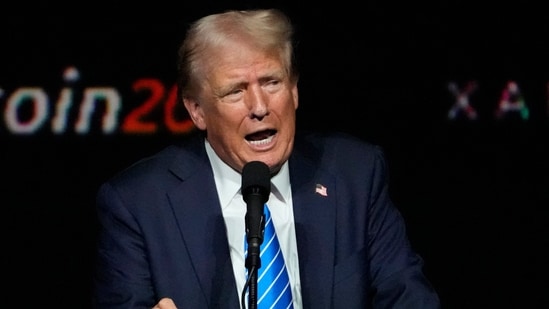
Less than two months from now, Donald Trump will face the most important political challenge of his second presidency – the mid-term elections in the US. Irrespective of what happens in the elections, things are pretty bad for him on the economic front. Crude oil and fuel prices have risen sharply, 10-year US bond yields crossed the psychological 5% threshold on Monday and hit a two-decade high on Tuesday. The Federal Reserve is expected to increase interest rates later today.
Some of US economy’s recent problems predate Trump’s second Presidency
On Wednesday night, the US Federal Reserve will announce interest rates. Markets widely expect the central bank to increase interest rates, something which Trump has been publicly speaking against, intruding into what is seen as the realm of an independent monetary policy in the US. Personal consumption expenditure inflation has been above the US Fed’s mandated target of 2% for 65 months now, a streak that began amid pandemic-era fiscal stimulus and supply-chain disruptions but has persisted long after those initial pressures eased. The Federal Reserve raised its benchmark interest rate by 5.25 percentage points between March 2022 and July 2023, one of its sharpest tightening cycles in decades, putting upward pressure on retail borrowing costs such as mortgage rates. Although the Fed has cut rates since the end of 2024, borrowing costs remained elevated and could rise further, something Trump believes could hurt him politically.
But Trump’s West Asia misadventure has really worsened things
The immediate macroeconomic situation in the US would not have been so unfavourable had Trump not started a war in West Asia. Post-pandemic inflation had been coming down gradually until February 2026 when it came in at 2.4%. On 28 February, the US and Israel launched a war against Iran and the latter managed to successful shut maritime traffic in the Strait of Hormuz, effectively choking energy supplies from the Persian Gulf. This gave a fillip to energy prices and overall inflation once again and US inflation climbed to 4.2% by May 2026. While it came down to 3.4% in August, it could rise again given the record surge in retail fuel prices in the past couple of weeks, following attacks by Iran-backed Houthi rebels effecting a large disruption to Saudi oil supplies from the Red Sea . Yields on 10-year-US-treasuries have also surged above the critical 5% threshold in the past couple of days; they had gone below the 4%-mark after a long time just before the Iran war started. All this has added to inflation and also increased pressure on the Fed to hike rates.
And made America’s longer-term economic challenges more difficult
The immediate obsession with interest rates, fuel prices, bond yields and Trump’s political theatrics against the technocrats managing these things notwithstanding, US has a longer-term economic problem. This is the growing unsustainability of the fiscal trajectory of the world’s largest economy, which is running higher deficits and adding to its debt at a rapid pace. The root of this problem is to be found in the higher spending on populist programmes and tax-cuts both of which are rooted in political populism, which the likes of Trump have only encouraged. Trump’s latest announcement of giving every American adult $5000 if the Republican Party were to win the mid-term is another such fiscal misadventure.
A sensible political strategy, from Trump’s perspective would have been to focus on bringing down inflation in the US which would have allowed him to enjoy political tailwinds from lower interest rates. Whether he was hoodwinked into believing – perhaps by the Israeli regime and his lateral entry advisors rather than the US’s traditional intelligence apparatus – that the Iranian regime would collapse in a matter of days and the war would not cause any large inflationary pressures is now a matter of counter-factual debate. The war’s economic effects are already affecting the US and the rest of the world. Even if Trump were to decide to end hostilities by forcing the Israelis into agreeing to it, it would entail a significant loss of US power in the West Asian region. If he were to decide to let things go on like they are, he risks losing significant political capital at home. The world, right now, is facing the consequences of an American president who has fallen between the two stools of the US acting a global super power and its leader trying to retain political power at home. It is this contradiction which is also testing countries such as India, which is what the second part of this series will discuss.
{{^htLoading}}{{/htLoading}}{{#usCountry}}{{/usCountry}}