
 E-Paper



The new risks in global energy security – 2 | Number Theory
.
Updated on: Dec 25, 2025, 23:03:39 IST

 Prefer HTon Google
Share via


Copy link

The first part of this two-part series showed that not only is energy demand growing, energy is also increasingly electric and comes from renewable sources. This is changing the nature of energy security. While supply of primary energy is still important – a drought can affect generation from hydropower, for example – more renewable use and electricity use has added another kind of risk to energy security. This source of energy requires minerals, whose reserves and refining is concentrated, which creates another set of risks.
This is the second and final part of a two-part series on the changing nature of energy security risk.
The new risks in global energy security
 The world has become too dependent on China for energy-related strategic mineralsThe world’s clean energy transition rests heavily on Chinese manufacturing and processing capacity, the International Energy Agency’s World Energy Outlook 2025 report shows. For example, China has over 80% manufacturing capacity share at every stage of the solar PV supply chain. This concentration holds true even when looking at a wider set of 20 energy-related strategic minerals. IEA in its report notes that “China is the dominant refiner for 19 of the 20 minerals analysed, holding an average market share of around 70%”.
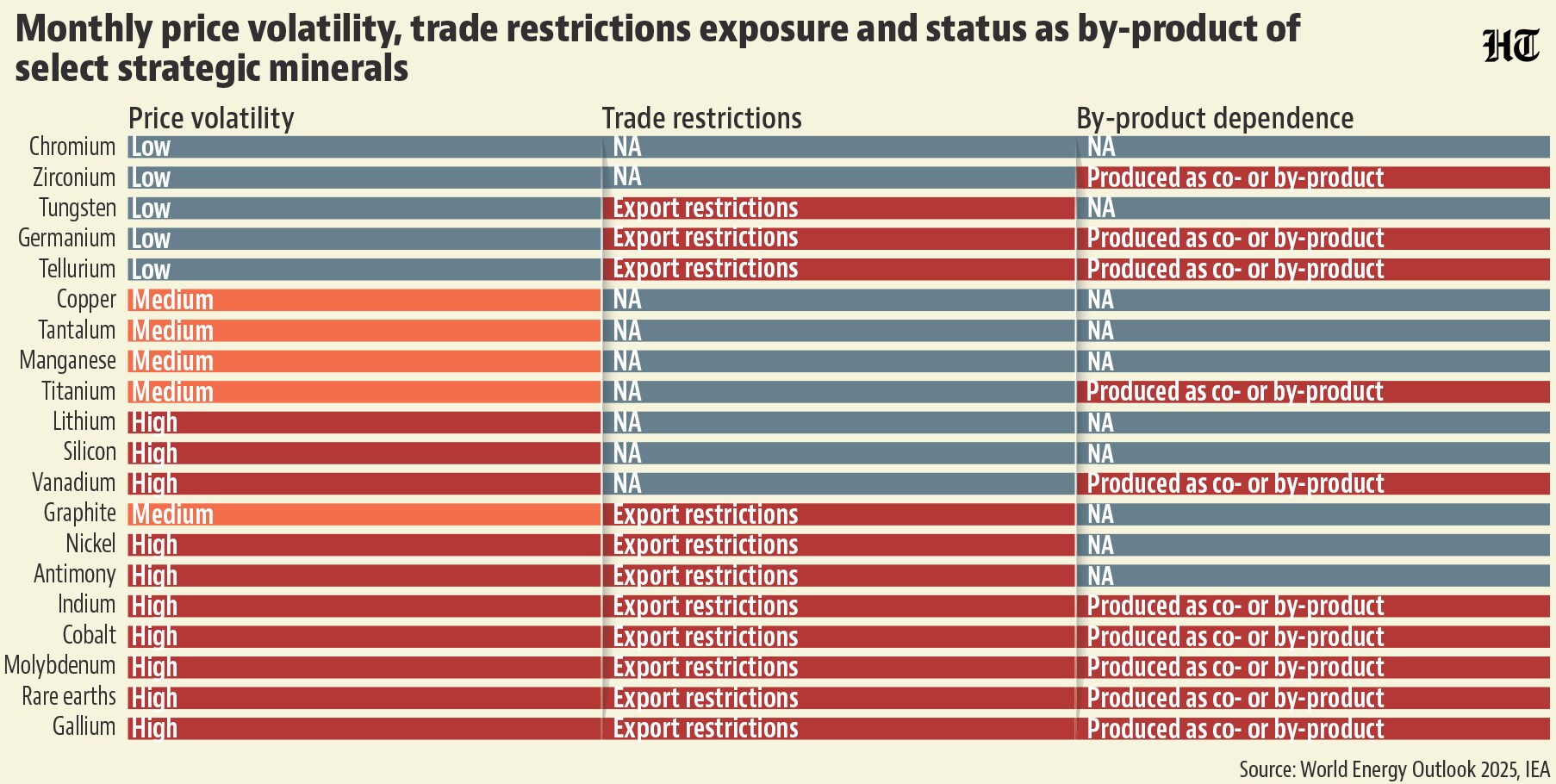
- Half of the 20 key minerals are now under export restrictionsJust like the concentration of cheap fuel leads to its use in diplomatic wars, the concentration of reserves and mining capacity of minerals is also now used as a bargaining chip in global diplomacy. Rare earths, for instance, were one of the first casualties of the US-China trade war, when Beijing signalled it could curb supplies to American manufacturers, and later introduced licence requirements for exports of certain rare earth products. China is not alone in doing this. The Democratic Republic of Congo too imposed export restrictions on cobalt in February to arrest falling prices. According to IEA, more than half of the 20 energy-related minerals are now subject to some form of export controls, which gives producing countries significant leverage. They also face risks other than supply concentration, such as price volatility and by-product dependence, the last referring to cases where minerals are produced only as secondary output from mining other ores. The price of, say lithium, cobalt, and nickel – used in battery manufacturing – may not matter for near term usage of clean energy, but can slow down transition, which needs to happen fast to prevent catastrophic climate change. By-product dependence can prevent supply from adjusting to shifts in demand.
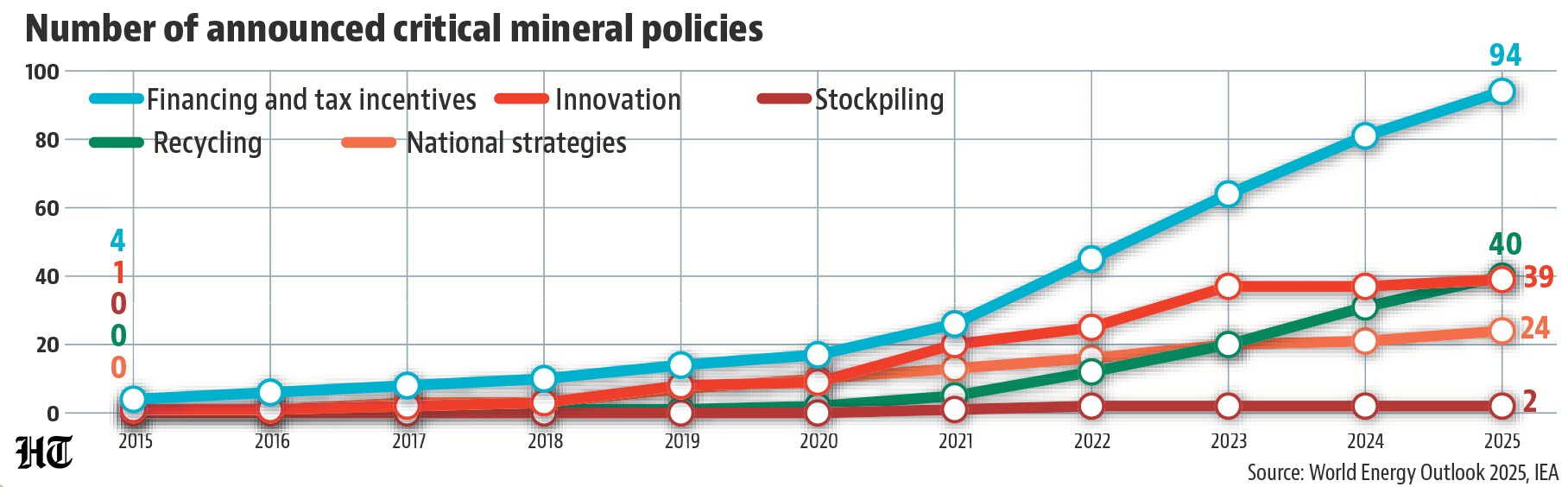
- Even with new projects and policies, concentration will continue up to 2035To be sure, governments have responded to supply chain risks with a wave of critical mineral policies, from subsidies for domestic processing to strategic stockpiles and friend-shoring agreements. For example, the United States, the EU, Australia and Japan have announced large investment programmes to build refining and midstream capacity, while resource holders in Africa and South America are pushing for more local value addition. However, it is not easy to catch up with China quickly because the country already controls refining infrastructure, skilled labour, processing technology, and integrated manufacturing demand that keeps costs low. “By 2035, the average share of the top-three refined material suppliers is projected to decline only slightly to 82%, effectively returning to the concentration levels seen in 2020,” the IEA report says.
- China’s refining dominance has implications beyond energyAs IEA itself notes, “the minerals in question are vital for power grids, batteries and electric vehicles (EVs), but they also play a crucial role in AI chips, jet engines, defence systems and other strategic industries”. This overlap means that disruptions in refining capacity can spill simultaneously into clean energy deployment, semiconductor manufacturing, and defence production, sectors that are increasingly viewed by governments across the globe as crucial for their national security and strategic autonomy.



Unlock a world of Benefits with HT! From insightful newsletters to real-time news alerts and a personalized news feed – it's all here, just a click away! -Login Now!


