
 E-Paper



What can a caste census tell us? | Number Theory
While it will provide a lot of information which was not available earlier, the broad contours of India’s caste composition are not exactly unknown
Updated on: May 2, 2025, 11:16:20 IST

 Prefer HTon Google
Share via


Copy link

The next census will also enumerate caste data, as per a decision by the Union Cabinet on April 30. The last time the census did a caste count was in 1931. What exactly can a new caste census tell us? While it will provide a lot of information which was not available earlier, the broad contours of India’s caste composition are not exactly unknown. Here are four charts which explain this.
What can a caste census tell us?
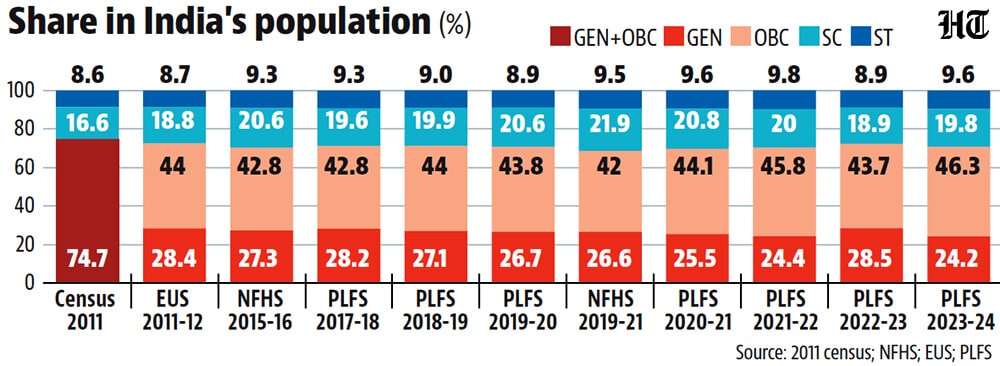
 The census does give a count of SC-ST populationWhile the census stopped counting all castes after independence, it did count persons belonging to Scheduled Castes (SCs) and Scheduled Tribes (STs) both at the aggregate and disaggregate (sub-caste) level. According to the 2011 census (latest data), SCs and STs had a share of 16.6% and 8.6% in India’s population, which means that almost three-fourth of India’s population was either OBC or non-SC-ST-OBC. To be sure, there do exist official estimates of the OBC and non-SC-ST-OBC population in the country as well. These are found in various official surveys such as the National Family and Health Surveys (NFHS) or those conducted by the National Sample Survey Office (NSSO). While these surveys show some variation in the social composition of the population across various rounds, they do give us an estimate of the share of OBCs and non-SC-ST-OBC in the population. These numbers are around 45% for OBCs and just over 25% for non-SC-ST-OBC groups.
- But population shares show a large variation across statesOnce again, this is something which is known for the SC-ST population in the country from the census data. For example, a state like Punjab had a 32% share for SCs, while four north-eastern states have more than 67% STs in their population. Survey-based estimates suggest that even the OBC population shows a large variation across states. This number is as high as three-fourth in states such as Tamil Nadu and just about one-fifth in states such as Punjab and West Bengal.
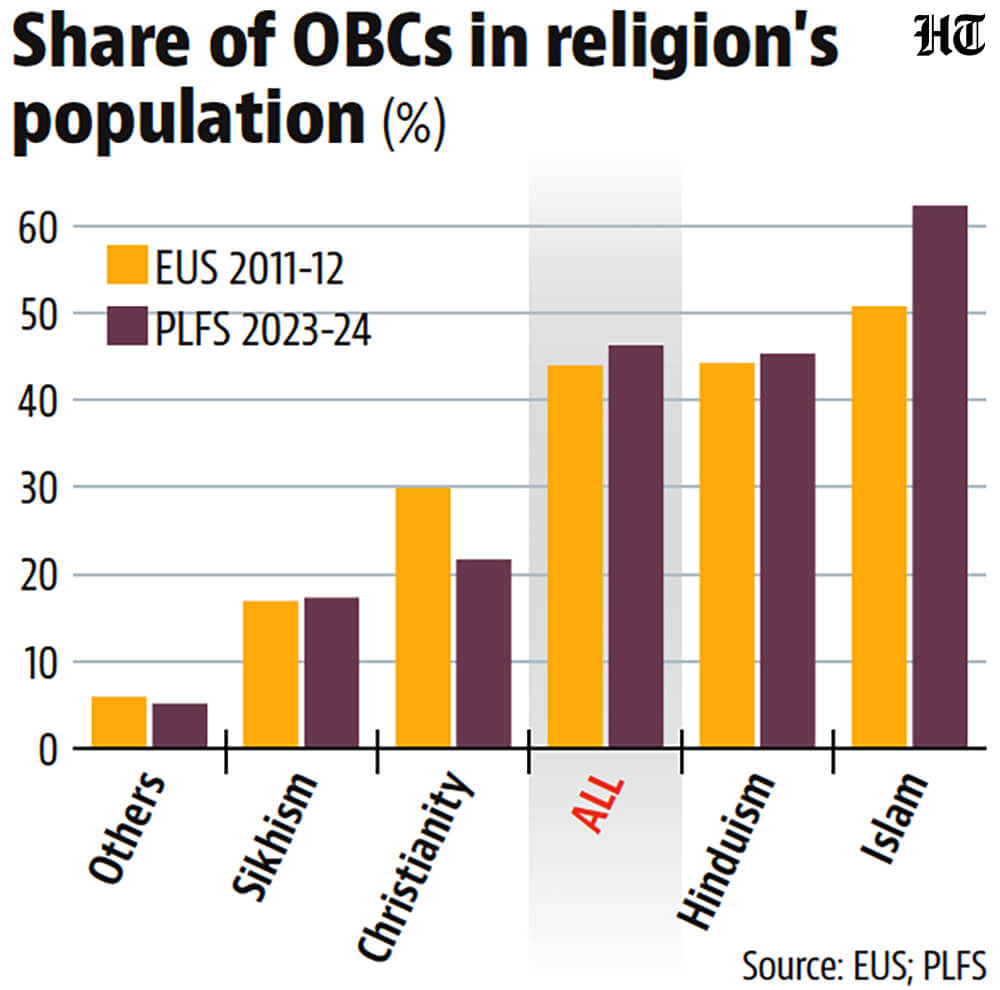
- The religion-wise dynamic among OBCsThere is a religious angle as well to the caste census debate. Only Hindus, Sikhs, and Buddhists contribute to the pool of SCs in India, and whether or not Muslims and Christians can be recognised as SCs is currently before the courts. However, all religious groups are allowed OBC recognition in the country. A break-up of the OBC population by religion from NSSO surveys shows that the share of OBCs is the highest among Muslim population in the country. Share of OBCs among Hindus is close to the national average, as expected from the group’s overwhelming share in the total population.
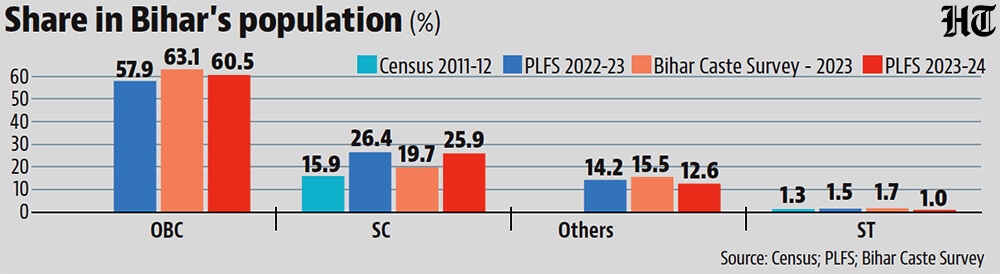
- How credible are survey-based estimates of caste-composition of population in India?This is perhaps the most important question, apart from the share of various sub-castes in the different caste categories, which a caste census will be able to answer. One way to answer this question is to compare the results of the Bihar caste survey – it is the only state-wise caste survey for which granular data was released – with the estimates from NSSO surveys. The comparison shows that the divergence was much smaller for OBC and non-SC-ST-OBC population than for the SC population. To be sure, the share of SCs estimated in the Bihar caste survey is much closer to the 2011 census numbers than the NSSO numbers. One reason for more noise in NSSO data could be that the sampling frames themselves have become obsolete with no new census data to update them.
- Why caste census?The short point is that a caste census’s broad numbers on the social composition of India’s population may not be something very surprising. However, it will offer the most robust data on caste composition of India in the last hundred years. If the census comes with demographic data at the sub-caste level, it will add a whole new layer to the existing knowledge on social demographics of the country.




Unlock a world of Benefits with HT! From insightful newsletters to real-time news alerts and a personalized news feed – it's all here, just a click away! -Login Now!


