E-Paper



Youth's population share peaked earlier but aspirations still rising | Number Theory
India of 2026 is significantly more urban, educated, and wealthy than it was in the mid-1970s. Census and government survey data shows this clearly.

 Prefer HTon Google


Indian politics has always been highly sensitive to students’ protests. There is good historical reason for it. Much of the country’s current political leadership, especially those who came of age opposing the Congress, can trace the roots of their political careers to the anti-Emergency movement of the 1970s. While multiple forces came together to unseat the Congress for the first time in 1977, students’ protests played a critical role. Many of those protestors went on to become prominent political leaders.
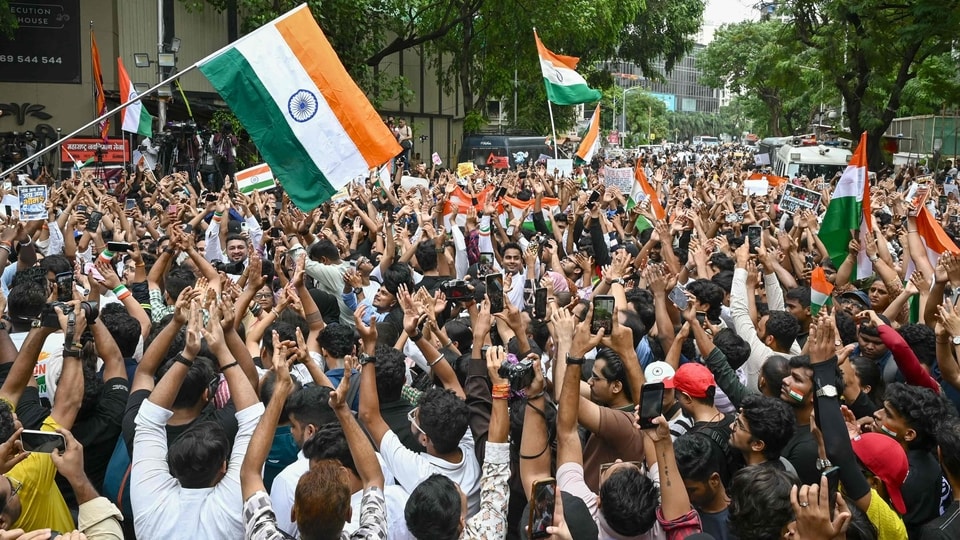
With the protests over the NEET paper leaks that concluded on Saturday, the question is back in focus: how important can students and their larger demographic cohort, the so-called Gen Z – those born after 1996 – be in shaping Indian politics today? Here is what the data shows.
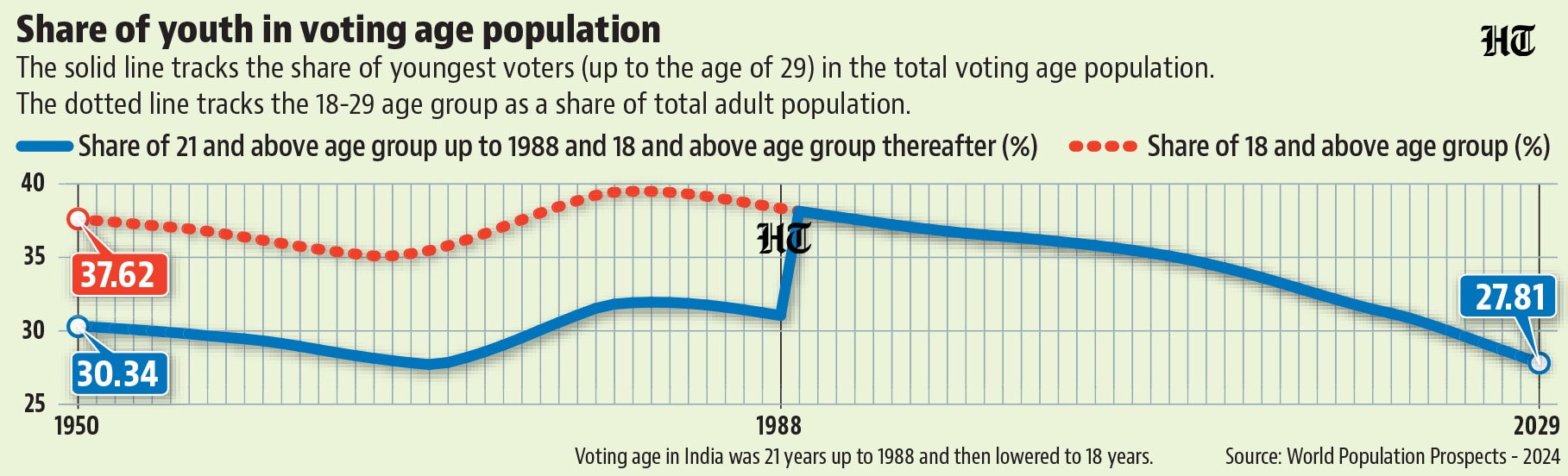
 As a share of voters, the importance of 18-29 age cohort is decliningThis age group accounts for a substantial 29% of India’s voting age population in 2026, according to United Nations projections, and is expected to be account for around 28% even in 2029. But this is not the largest electoral presence the cohort has had in independent India. Since 1950, its highest share in the 18 and above population came in 1980, when their share was 39.5%. In 1977, the year when India elected its first non-Congress government after the Emergency, and when a lot of current BJP leaders were youth leaders, and when leaders such as Narendra Modi were in the 18-29 age cohort, the share of this age group was 38.9%. This number is the ninth-highest in the 1950-2029 period, but was at its highest and still rising at that time. To be sure, the voting age at the time was 21 years, but the share of 21-29 age group also was still highest until then and expanding.
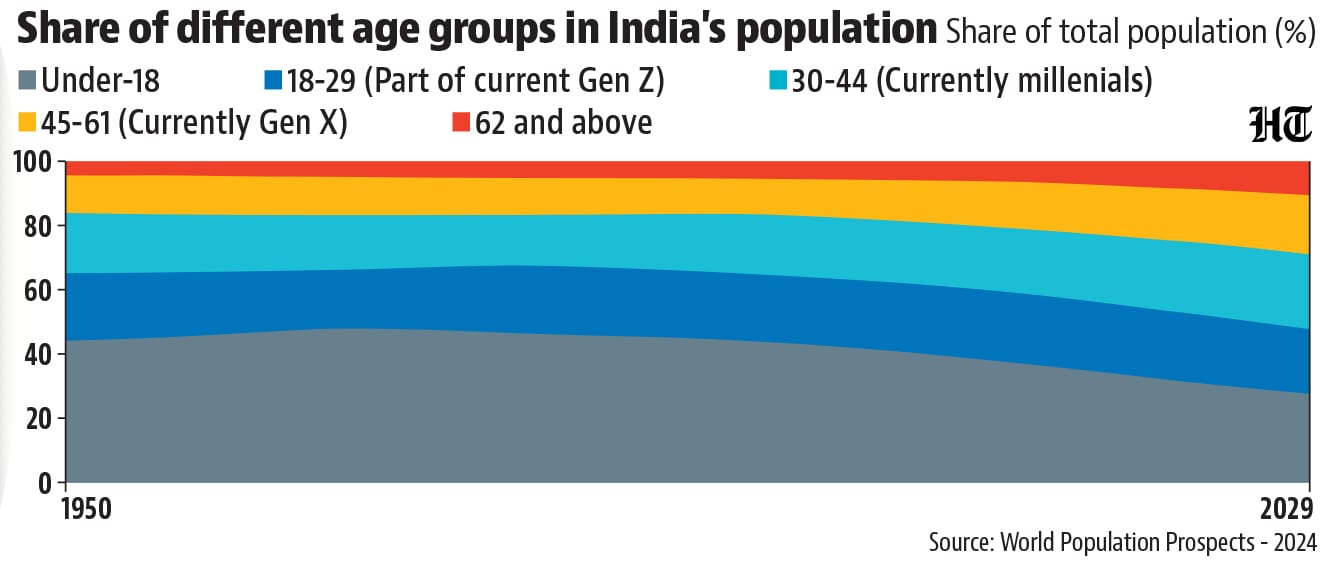
- As a share of overall population, Gen Z and its younger peers are a smaller group than other age groupsAnnual population estimates and projections by the UN show this clearly. Indian demographic today has a much larger share of population which is at least 30-year-old or above. This means that in pure demographic terms, the political weight of young voters or younger prospective voters is significantly smaller than it has ever been in the past.
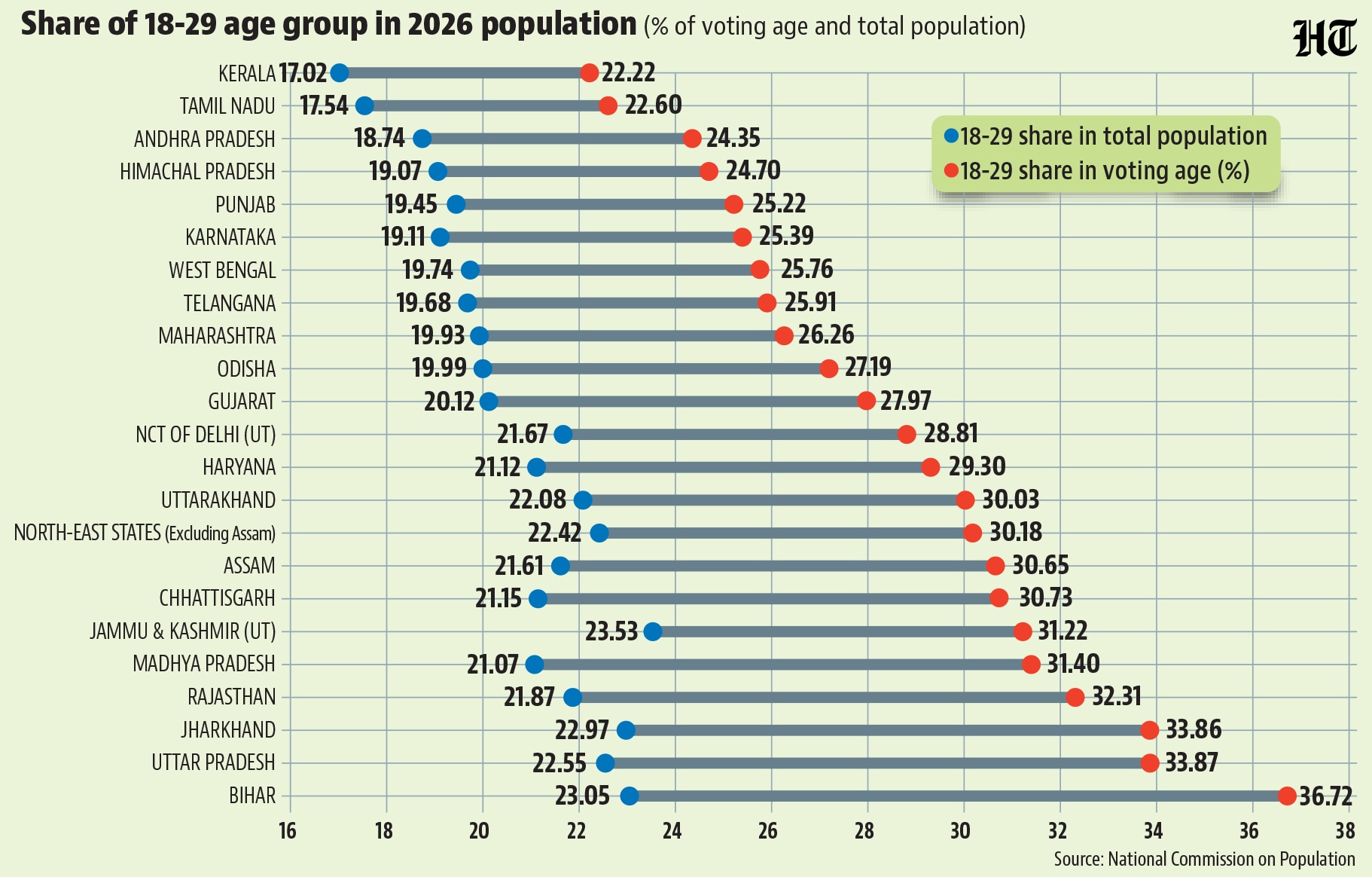
- To be sure, there are widespread regional differences in this trendThose who are aware of India’s geographical demographic divergence will not be surprised. In Bihar, 18-29 age group’s share in voters is still as high as it was in India during the Emergency. In Tamil Nadu, the number is less than significantly lower, just above one-in-five. That said, recent elections in Tamil Nadu suggest that what the younger voters perhaps lacked in numbers, they compensated for in persuasion. The state elected a debutant political party formed by a film star with large following among younger voters, who, if anecdotal evidence is to be believed, persuaded their parents to vote for him.
- But what could be significantly higher for the Gen Z is aspirationsIndia of 2026 is significantly more urban, educated, and wealthy than it was in the mid-1970s. Census and government survey data, while patchy, shows this clearly. The share of 20-29 old population which was graduate has increased drastically in the more recent past. In 1991 only 5.9% of the age group had finished college with at least a graduate degree. This number increased to 12.8% by 2011 census and could now be as high as 26.5% if recent survey-based estimates from government are to be believed. Education also means that this generation of younger voters believe that they deserve better in their professional lives. With education not translating into good job opportunities, they are becoming angry. While their share might have fallen in India’s population, their absolute number has only increased.