
 E-Paper



Tamil Nadu assembly election: For the DMK, the importance of Trichy
Trichy has nine assembly constituencies. But beyond that, the district has played a key role in the rise of the DMK historically and current rifts reflect both the opportunities and challenges for the party

 Prefer HTon Google


On Sunday, the road to Dravida Munnetra Kazhagam (DMK)’s mega party conference on the Trichy highway was dotted with party flags and larger-than-life cut-outs of Dravidian movement leaders — E V Ramasamy popularly known as Periyar, C N Annadurai, M Karunanidhi and current president M K Stalin. Besides them, it was only the party’s youth wing secretary, and MK Stalin’s son, Udhayanidhi Stalin who shares the limelight with his father in two giant cut-outs, a reflection of the rise of DMK’s third generation, particularly in Trichy.
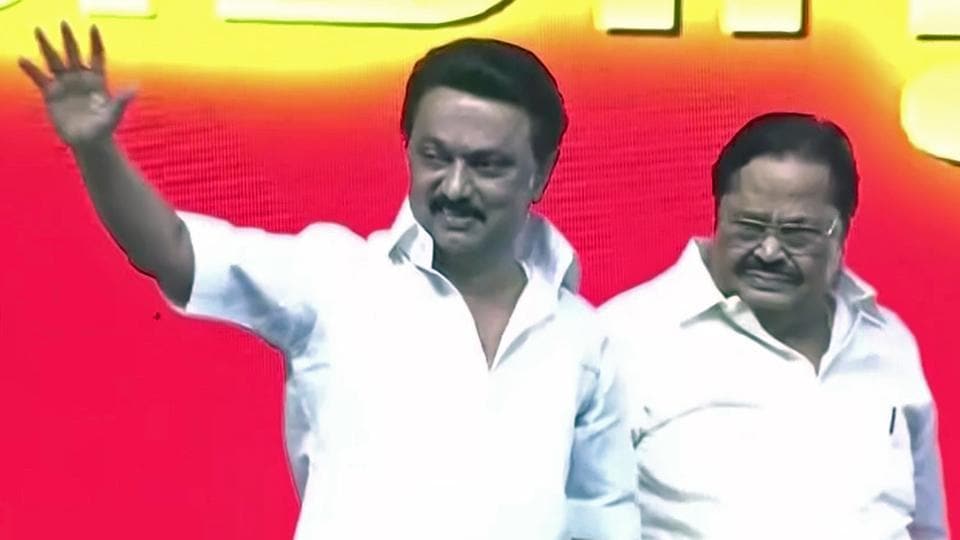
Trichy evokes nostalgia within the DMK, as home to 10 other such mega conferences of the party in the past — but this was the first presided by Stalin after his father, M Karunanidhi, died in August 2018. At the meeting, Stalin recalled that DMK held its first meeting in Trichy in 1956 under Annadurai where the crucial decision to enter electoral politics was taken. DMK formed the government in 1967. “Trichy showed us the way,” said Stalin at the grand venue set up across 35-acres.
This time, Stalin chose the district to unveil his 10-year-vision for Tamil Nadu. This included poll promises of ₹1,000 for women heads of household every month, one million jobs and broadband connectivity for villages. Explaining the rationale of the venue for key announcements, a DMK leader said, “Trichy is a bridge between north and south Tamil Nadu, and making major announcements here helps for cadre to be mobilised and as well as for the message to reach people across the state.”
Stalin directed the cadre to be up on their feet and take a vow repeating after him that the DMK will run a government that is for everyone in a transparent, corruption-free manner. “Nobody can defeat the DMK if this reaches people. Take my vision to crores of Tamil Nadu people before April 6 (polling date in the state),” Stalin told his cadre at the event, which was organised by DMK’s principal secretary and Tiruchirappalli West constituency MLA K N Nehru and district secretaries, with poll strategist Prashant Kishore’s Indian Political Action Committee (I-Pac) tasked with roping in vendors and micromanaging the event.
Also Read | Kamal Haasan’s MNM alleges DMK has copied its poll promises
Trichy is a mix of a modern district, a business hub with several small industries, running along the Cauvery delta where farming is a primary occupation; it also has several education institutions. It was here that a large segment of Congress cadres shifted to the DMK when it entered electoral politics. “DMK enjoys good support in the district for the coming elections, but the challenge is how Stalin would manage the friction that is within the DMK leaders in Trichy,” says Ramu Manivannan, head of political science department in the University of Madras.
As principal secretary, Nehru is number four in the pecking order in the DMK’s organisation but his strongman status as Tiruchirappalli district secretary, which he has held for three decades, is being challenged within his party from the growing clout of younger leaders such as Udhayanidhi Stalin and his close aide Thiruverumbur MLA Anbil Mahesh Poyyamozhi. Mahesh’s grandfather, Anbil Dharmalingam, played an important role in DMK’s growth in Trichy and was a close associate of Karunanidhi. Following Nehru’s elevation to the party headquarters in Chennai in 2018, the DMK trifurcated Trichy and Mahesh was appointed as one of the three district secretaries.
Both Nehru — whose son is vying for a ticket — and Mahesh received high praise from Stalin at the event, which he claimed was five-times the size of DMK’s previous conferences. The DMK leader’s statement is being seen as an attempt to take along both the old guard and the new generation. The venue was set up like a rock concert with three stages, enveloped by 500-feet long LED screens, fireworks and a DJ blaring DMK’s campaign song. Stalin waved to the crowds walking on a one-kilometre ramp designed like the DMK’s rising son symbol. Nehru followed him on the ramp.
However, the loudest cheer from the cadre was reserved for Stalin’s son, Udhayanidhi. The speakers at the event were constantly interrupted by the noise from his supporters and, at one point, an announcement was made asking Udhayanidhi to control them. Some workers from the youth wing even began climbing on one of the stages where Udhayanidhi was seated along with MP Kanimozhi and other legislators. “Udhayanidhi and Mahesh are very close and the youngsters consider them as ‘mass’,” said a Trichy DMK cadre G Arumugam. In the local lingo “massl is a status attributed to actors and politicians who have the following of the masses. Udhayanidhi entered Tamil cinema as a producer and distributor for Red Giant Movies and played the role of a hero in several films before making a full switch to politics. He is one of the star campaigners of the DMK camp.
Trichy has nine assembly constituencies — Tiruchirappalli East, Tiruchirappalli West, Thiruverumbur and Srirangam, Manapparai, Lalgudi, Manachanallur, Musiri and Thuraiyur (reserved) — of which DMK has four MLAs and five others were elected from the All India Anna Dravida Munnetra Kazhagam (AIADMK) in 2016. Late AIADMK Supreme and former chief minister J Jayalalithaa was elected from Srirangam constituency in 2011 and had said that her ancestors lived there.
DMK workers said that the district had traditionally supported the party, except in the 2011 assembly elections when AIADMK came to power as DMK was facing charges in the 2G-spectrum scam. Accusations of money and muscle against Nehru, who was also former transport minister, saw him lose in Trichy West in 2011 to the AIADMK’s Mariam Pitchai. But in 2016, Nehru won. In the 2019 election, senior leader S Thirunavukuarasar won the Tiruchirappalli parliamentary seat for the Congress.
“After ten years, it would be good to have a change of leadership in the state. Maybe they (DMK) will support us in our angst against price hikes in fuel and vegetables,” said a waiter S Selvakumar near the Trichy tollgate. Last month, Nehru, Mahesh, and other local leaders spearheaded a protest against the fuel price hike and charged that the AIADMK copied DMK’s waiver for education loans, crop loans and education loans. But there are also other voices. The district has seen inward migration of young people from other districts seeking better job opportunities. “I belong to Tirunelveli where my family traditionally votes for the AIADMK and I’ll do the same,” said K Harish who helps his brother in running a small artifacts shop.
DMK’s historical edge in Trichy gives the party a head start in the 2021 polls, but the politics of the district also reflects the factionalism and generational divide in the state. How the party manages its opportunity and possible challenges will shape its prospects.


