E-Paper



In Bengal’s Jangal Mahal, a political battle driven by deprivation and identity
Many people agree that the government has helped their village with pucca roads, social schemes and power connections. But they complain that it couldn’t give them the thing they need the most — jobs

 Prefer HTon Google


The thick forest of Sal that separates Nilmani Murmu’s hut from the former Maoist stronghold of Lalgarh also sustains her livelihood. At sunrise, the 50-year-old walks into the forest to collect leaves; and spends the rest of the morning stitching them into bowls. By the end of the day, she makes ₹50.
In the middle, she has to take breaks to fetch water for the family. Her village has only one submersible pump, water is scarce and Murmu has to walk a couple of kilometres with her pot to get clean drinking water. But she doesn’t mind; it has always been this way, she says.
She has lived in Bhangadali, a tribal-dominated village in the West Medinipur district of West Bengal, all her life. Home to around 190 tribal families, Bhangadali has seen rapid political change — a mainstream Left stronghold became a Maoist hotbed, then turned into a Trinamool Congress (TMC) bastion, and now is fast becoming a fortress of the Bharatiya Janata Party (BJP).
But she rues that her living conditions have not kept pace with political dynamics. Neither her children nor anyone else in the village have permanent jobs. “Didi gave us rasta (road), but we live in hope for a chakri (job),” she said.
Her neighbour Kunaram Murmu has a different worry. The 60-year-old is still saddled with a criminal charge from the Left-era, when policemen stormed tribal villages and allegedly committed atrocities as reprisal for a Maoist bombing in 2008. The record prevents him from applying for any job, though he admits that his two sons have had no luck at landing formal employment either. “They do manual labour at nearby cities or go to Kolkata. We can get ₹120 a day if lucky,” he said. “I am desperate for a job.”
Many young people in the village amble about idly on the days contractors aren’t able to provide work. Some people have parcels of land, but rice only grows once a year. They agree that the government has helped their village with pucca roads, social schemes and power connections. But they complain that it couldn’t give them the thing they need the most — jobs. “Plus, water is our perennial problem,” said Singhrai Hansda, a villager.
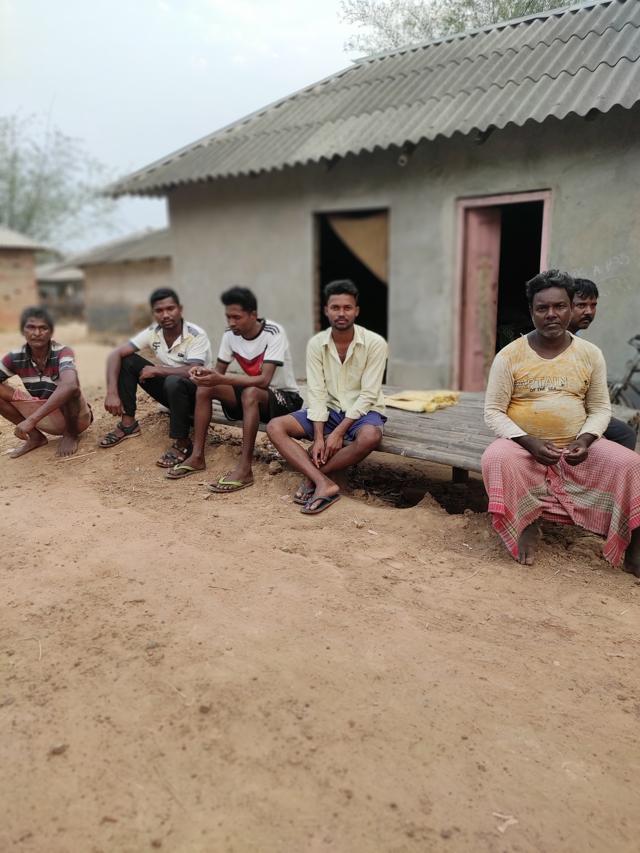
Together, the Santhals in Bhangadali represent the crisis in the under-developed tribal belt that stretches across four districts and is loosely called Jangal Mahal, a British-era reference to the thick canopy of forests that forms the backbone of tribal sustenance. “There remains a disconnect between political promises that haven’t kept pace with local aspirations,” said political analyst Narayan Samat.
The political shifts in the region
The Jangal Mahal region, which goes to polls in the first and second phase of the high-stakes elections in Bengal from Saturday, was a citadel of the erstwhile Left Front government even as it nursed resentment about under-development and inadequate attention to local cultures.
Also Read | Bermuda to Pak: TMC and BJP leaders’ remarks stir up a row
This alienation burst forth in November 2008, when Maoists attempted to bomb the convoy of then chief minister Buddhadeb Bhattacharya and Union minister Ram Vilas Paswan. Two days later, police picked up three young boys on suspicion of being Maoists and allegedly tortured them. Enraged, the locals blockaded the region for weeks. The Maoists also grew in strength in the region, on the back of government distrust.
In the middle of this tumult, Mamata Banerjee swept to power in 2011. One of her main poll promises was to bring the “smile” back in Jangal Mahal. Later that year, state forces gunned down Koteshwar Rao, alias Kishenji, who headed the Maoists in the region. The balance of power shifted to the government, and the TMC.
Local residents describe this phase as one of rapid consolidation of political power. A pucca road was built through the thick forests to Lalgarh, a bridge was constructed over the Kangsabati river, and schools and hospitals came up in the region.
In 2012, the government announced it would promote Santhali language and started setting up Santhali medium schools. “We saw a lot of change; we never thought we would see a metaled road,” said Biren Hansda, a local resident. In 2016, on the back of a pro-incumbency wave, the TMC swept the polls in the region.
The break came during the violent panchayat elections of 2018, when the BJP unexpectedly won village council elections in Purulia and Jhargram. Then in 2019, the BJP won five of the six Lok Sabha seats in the region — a gain the party is desperate to hold on to this time.
Also Read | ‘Goons from UP donning saffron clothes destroying Bengal’s culture’: Mamata
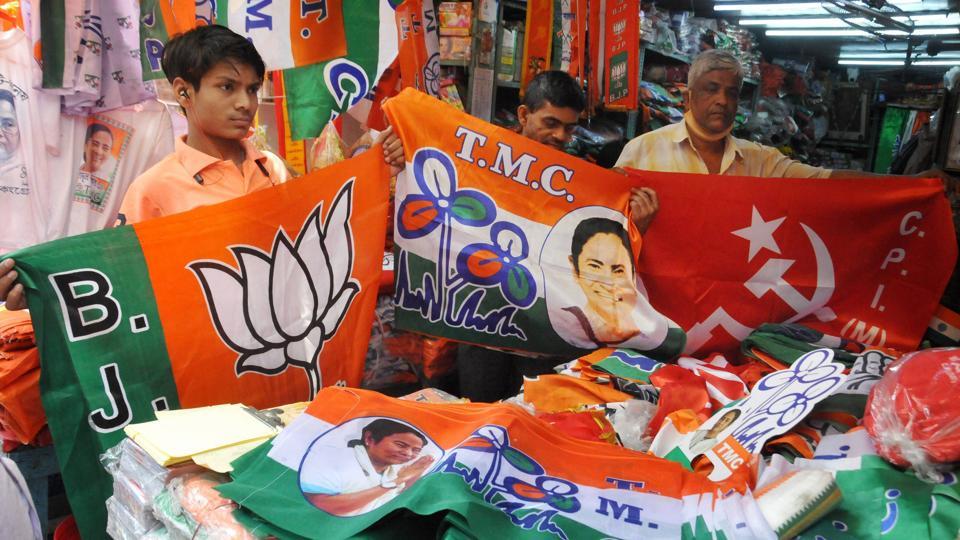
Much of this transformation is due to grassroots workers such as Rajesh Mondal and Bablu Murmu, who shifted from the Left to BJP in 2018 and are campaigning in far-flung villages usually out of reach for the opposition party. Even remote tribal hamlets this time have BJP wall writings, flags and slogans — a traditional barometer of a party’s rural penetration in the state. “We are explaining to the people that BJP is not communal, it is the party of development,” Bablu Murmu said.
Through aggressive campaigning, the party has also created a somewhat loyal constituent of voters. Kailash Mahato is one of them. A resident of Purulia, Mahato doesn’t think he is driven by communalism but wants his community – not “others” – to progress. “Look at the condition of this town. Will anyone but Modiji be able to help?” he asked.
The TMC is aware of this support and local leaders said it has chosen its candidates carefully and avoided factional fights. In addition, Banerjee has made former Lalgarh activist Chhatradhar Mahato, who was released from jail in 2019, her political lieutenant in the region. And she retains personal appeal in the region despite resentment against her local leaders.
Take Kanu Bag for example. The tea seller hit the headlines in 2008 when Banerjee stopped for rest at his stall during her protest in Lalgarh. He complains that local TMC leaders have never come back to listen to him but is convinced that Banerjee would resolve his problems. “I will tell her to give me a pucca house,” he said.
The identity dimension
For decades, the politics of Jungle Mahal has been shaped by the rivalling demands of the tribespeople and the Kudmi people, who form nearly a third of the region’s population and belong to the other backward class (OBC) – though they identify differently from the Kurmis of Uttar Pradesh and Bihar.
The Kudmi people, who often share the surname Mahato, trace their lineage back to tribal roots and say they were left out of the scheduled tribe list unfairly in 1950. Many of them worship nature and traditional gods and celebrate community events such as Tusu, a harvest festival. They are a farming community that populates the countryside who have been hit hard by the agrarian distress and lack of jobs.
This community has three main demands: Inclusion in the scheduled tribe category, official recognition for their language Kurmali and religion, Sarna. “We want ST status to show that we are the original inhabitants of this area, we are not outsiders,” said Birendra Mahato, Jhargram chief of the All India Kurmi Samaj.
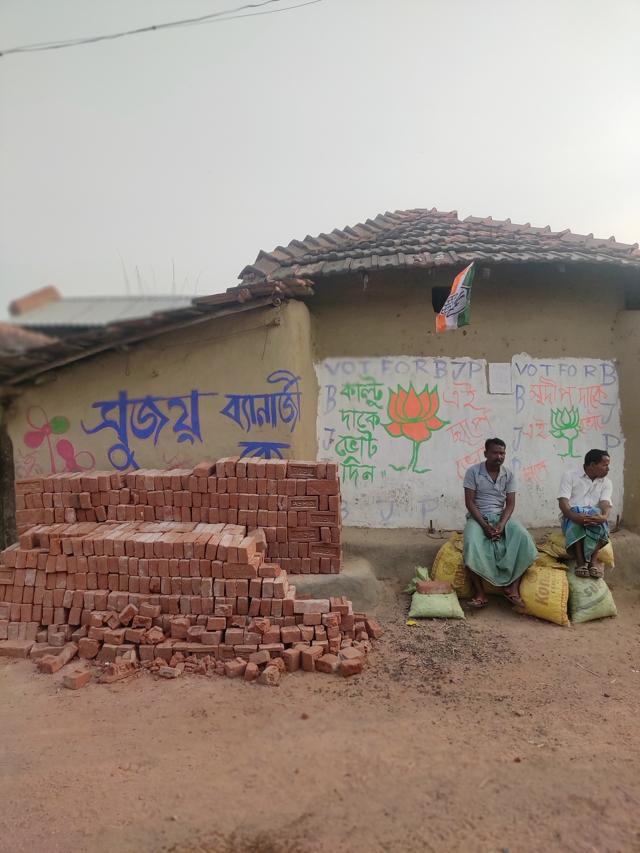
Community leaders say in the absence of protections, the community has lagged behind in education and jobs despite its numerical strength. In Purulia district’s Dumdumi village, local residents complain that their land is drying up because there is not enough irrigation.
The village of 1,500 people has few pucca houses and most of the young men work as manual labourers in nearby Purulia town. “We get paddy once a year and monsoon is our only hope,” said Gopal Mahato, who owns four acres of land.
His neighbour, Manindranath Mahato, spent his savings on educating his two sons, only to see them sit at home and finally become migrant labourers. “I starved to educate them. Now we are labourers because we will die otherwise,” he said. No one from the village has a permanent job.
The community shifted en-masse to the BJP in 2019 after some perceived the TMC candidate from Jhargram, Birbaha Soren, to be against Kudmi interests. Since then, the TMC has worked hard to woo them back, setting up a Kudmi cultural and development board and starting the process of getting them ST status.
“But it is not moving fast enough for the community’s satisfaction,” said Swapan Kumar Mahato, a professor at Balrampur College.
The demand for ST status is fraught in a region that has traditionally lagged behind on development and industrial indices. The Santhals, for example, oppose any proposal to give ST status to the Kudmis.
“The Mahatos are more developed than us. If they are included in ST, we will lose out and they will reap all the benefits of reservation,” said Dilip Mandi of the Bharatiya Jakat Manjhi Pargana Mahal, an apex tribal body.
The tribespeople have their own set of demands. They acknowledge TMC’s role in setting up Santhali medium schools, which have been crucial in creating an educated group of young Santhal people. But many of these schools are poorly staffed and have no infrastructure.
Other demands include official recognition or their faith, Sari, and top court, Sutan Tandi, and expedited processing of claims under the forest rights act.
“The BJP was quickly able to fill the discontent among Santhali people about local TMC leaders and their high-handedness. But since then, the BJP’s push to call adivasis Hindus has also annoyed many tribals,” said Sasikanta Murmu, a political analyst.
There are other factors. The scheduled caste communities, dominated by the Bauris, are numerically smaller but concentrated and can influence results in Purulia. A network of schools and hostels with links to the Rashtriya Swayamsevak Sangh has deep roots in the countryside as the only institutions providing educational support in the impoverished region. And, the TMC is hoping that Banerjee contesting in neighbouring Nandigram will have a positive impact.
Overall, the campaign in Jangal Mahal is markedly different from the rest of Bengal. Religious polarisation is not overt, mainly because Muslims form less than 10% of the population. The TMC’s Bengali nativist pitch is subdued because many tribals and OBCs feel a sense of alienation from the Bengali upper-caste dominated Kolkata.
The BJP’s campaign is more focused on corruption and, unlike the rest of Bengal, it is the opposition party that is using the nativist tone by branding many of its candidates “bhumi putra” (son of the soil). Concerns about jihad” and “Hindu lives” are largely concentrated to social media. In the hinterlands, though, everyday concerns dominate.