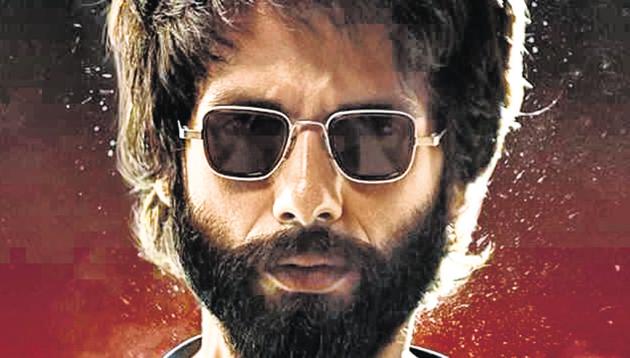
In the last two weeks, many of the artistes I’ve interviewed are lingual multitaskers, which means that they straddle several film industries at once. Rana Daggubati, a third-generation producer, actor and entrepreneur, has worked in Telugu, Hindi and Tamil cinema. Director Sandeep Reddy Vanga reworked his monster Telugu hit Arjun Reddy into the even more successful (and controversial) Hindi blockbuster Kabir Singh. A Tamil remake, Adithya Varma (helmed by his erstwhile assistant director Gireesaaya), is on the way. And Rakul Preet Singh, a Punjabi girl from Delhi, is a star in Telugu cinema and is also making waves in Hindi and Tamil.
These artistes reflect the increasingly porous borders between film industries in India. Traditionally, Hindi cinema has either taken stories and remade them, or co-opted leading ladies from the South. Now, the creative osmosis between the many industries seems to be escalating. There are actors and directors who ably negotiate many movie worlds. Or, as Rakul put it, like Ajay Devgn’s famous split in Phool Aur Kaante, she is riding two motorcycles at once.
Styles of working are still markedly different. Sandeep has said that he would arrive at the Mumbai office at 9 am and be surprised to find that no one, not even the cleaning lady, showed up that early. Rakul said Mumbai’s paparazzi culture and the accompanying pressure take some getting used to. Rana spoke of the difference in resources (Bollywood has too much money) and business strategies (Telugu cinema actively nurtures the theatre-going public with fixed ticket prices while Hindi cinema relies more on the opening day box office). But the urge to create stories that stick is a unifier.
The Baahubali franchise has proved that a filmmaker’s imagination and talent can be bigger than any star or language barrier. It’s a sign of the times that director SS Rajamouli’s new film, RRR, features Telugu superstars Ram Charan and NT Rama Rao Jr, Alia Bhatt and Ajay Devgn. In the last few years, business barons in Mumbai have also started to recognise the pan-India power of non-Hindi films. Karan Johar played a key role in the Hindi release of the Baahubali movies. Excel Entertainment (led by Ritesh Sidhwani and Farhan Akhtar) helped to propel the Kannada film KGF: Chapter 1 in Hindi. Reliance Entertainment and Anurag Kashyap championed the brilliant Tamil film Super Deluxe.
{{/usCountry}}The Baahubali franchise has proved that a filmmaker’s imagination and talent can be bigger than any star or language barrier. It’s a sign of the times that director SS Rajamouli’s new film, RRR, features Telugu superstars Ram Charan and NT Rama Rao Jr, Alia Bhatt and Ajay Devgn. In the last few years, business barons in Mumbai have also started to recognise the pan-India power of non-Hindi films. Karan Johar played a key role in the Hindi release of the Baahubali movies. Excel Entertainment (led by Ritesh Sidhwani and Farhan Akhtar) helped to propel the Kannada film KGF: Chapter 1 in Hindi. Reliance Entertainment and Anurag Kashyap championed the brilliant Tamil film Super Deluxe.
{{/usCountry}}OTT platforms have also helped break down barriers. These films are available on Netflix, Amazon Prime Video, JioCinema and others. You may never travel to a theatre to see a subtitled film in a language you don’t speak, but when it’s in your living room, you are more likely to give it a shot. I’ve only recently started watching non-Hindi Indian films regularly and it’s been an enriching experience. So many of them — Aamis (Assamese), C/O Kancharapalem (Telugu), Virus (Malayalam) — are exceptional. The content is brave. The craft takes risks. The makers trust both their stories and their viewers.
Hindi cinema has long dominated the Indian film landscape. But there is so much exciting work being done outside Mumbai. Bollywood can only gain from this exchange of vision and talent. I hope some magic transpires.