
 E-Paper



How dangerous is Donald Trump’s “endangerment” decision?
Trump scraps EPA’s endangerment finding, threatening US climate rules and triggering legal battles over greenhouse gas regulation


 Prefer HTon Google


It was the “single largest deregulatory action in US history”, claimed Lee Zeldin, the head of America’s Environmental Protection Agency (EPA). The decision is “now endangering…all of us”, lamented the Environmental Defence Fund (EDF), a green NGO. On February 12th President Donald Trump announced the termination of the “endangerment finding”, a piece of legalese that underpins American greenhouse-gas regulation.
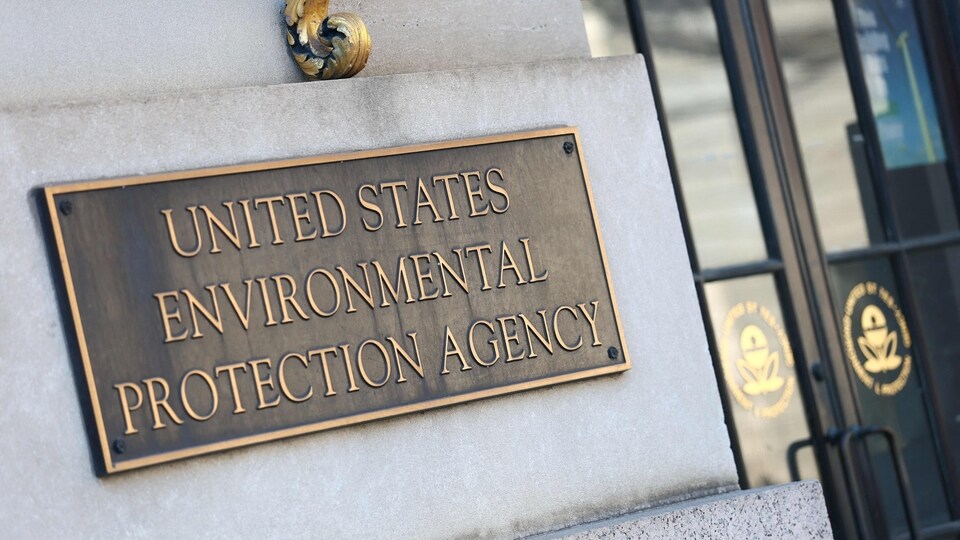
Adopted in 2009, the EPA’s endangerment finding concluded that emissions of six greenhouse gases, including carbon dioxide, methane and hfcs, posed a threat to human health and wellbeing. Backed by reams and years of scientific evidence, the finding became the keystone on which many of America’s federal climate regulations rest. This is because the Clean Air Act requires the EPA to regulate pollutants that pose a threat to human health.
Thus, the endangerment finding compelled the agency to introduce vehicle-emissions standards and limits on greenhouse-gas emissions from oil and gas infrastructure. By denying the threat to human health—hey presto!—Mr Trump has made the mandate to regulate greenhouse gases disappear.
Expect legal challenges. Evidence that greenhouse-gas emissions harm human health has become broader and stronger since 2009. America’s National Academy of Sciences said as much in September last year. The EDF and the Union of Concerned Scientists, another non-profit, filed a first lawsuit against the federal government in August, claiming that its consultation process lacked the transparency that is legally required.
More lawsuits are on their way that may block the change temporarily. The case could ultimately reach the Supreme Court, where two previous rulings may come into tension. In 2022, in West Virginia v epa , the court struck down President Barack Obama’s Clean Power Plan, reasoning that a federal agency cannot claim sweeping powers without clear authorisation from Congress. This principle, known as the “major questions doctrine”, is often cited by those, such as the Trump administration, who think the EPA has exceeded its legal powers in its efforts to fight climate change.
However, the Supreme Court has also ruled, in 2007, that greenhouse gases are pollutants that fall under the EPA’s regulatory mandate. This ruling, Massachusetts v EPA , set the wheels in motion for the endangerment finding. Having been told that greenhouse gases fell within its purview, the agency then had to determine whether they posed a threat to human health.
The EPA says that repealing the endangerment finding will save Americans more than $1.3trn, by reducing the burden on fossil-fuel-burning industries and reducing the need for Americans to buy electric cars. Critics object that the epa fails to take proper account of the costs. These include more money spent on petrol for cars and trucks—as much as $1.7trn more by 2035, by one estimate.
American lungs will also suffer. Greenhouse gases raise air pollution by fostering more frequent and intense wildfires and by accelerating the formation of ground-level ozone. The EDF estimates that repealing the endangerment finding will result in tens of thousands of extra premature deaths by mid-century. And that is not saying anything of the more indirect damage due to faster climate change, such as storms, heatwaves, fires and rising sea levels.
American carmakers began shifting their portfolios back to combustion-engine vehicles in the second half of last year, in anticipation of the repeal. “There is no longer a support system for electric vehicles” in America, says Philippe Houchois, an analyst with Jefferies, an investment firm. He notes that Electric Vehicle (EV) sales in America began dropping in September 2025. Some worry that American carmakers will lose ground to those in China and Europe, which are electrifying rapidly. Others say they can catch up later, perhaps after the next administration changes the rules again.
It is far from clear that scrapping the endangerment finding will be popular. Mr Trump called it “a disastrous Obama-era policy”. But a Yale poll found that three-quarters of registered American voters think the government should regulate carbon dioxide as a pollutant.


