
 E-Paper



Maharashtra: Pollution from tarballs needs urgent attention, say Palghar fisherfolk
Fisherfolk have also alleged that oil from tarballs -- which melt and spread out when exposed to the sun -- is hampering the reproduction of commercially important fish that can be caught in the intertidal areas on the coast

 Prefer HTon Google


Though it is common to find them strewn along most of India’s west coast during the monsoon season, the beaches of Palghar district are seeing what locals say is an unprecedented level of pollution this year from tarballs. These are blobs of weathered petroleum mixed with debris and sand, and are presently awash in large quantities across the beaches of Kelwe, Thembi, Vadrai, Shirgaon, Kore, Wadhavan, Dativare, Edvan, Bhaadve and Usarni, among others.
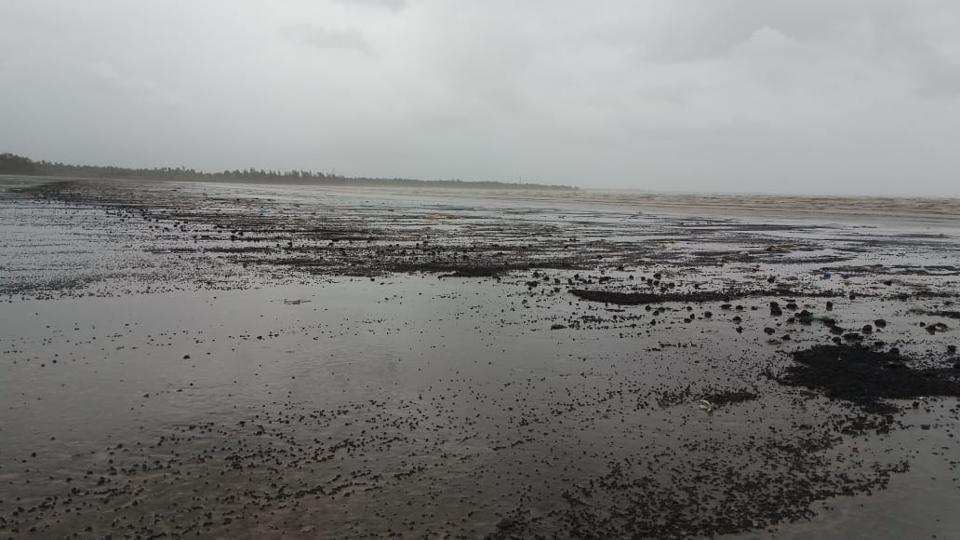
The origin of these tarballs, which have been showing up on shores between Gujarat and Karnataka for decades, is still ambiguous. A 2013 paper by the National Institute of Oceanography had linked tarballs found in south Gujarat to offshore drilling rigs in Bombay High. Bunker oil and ballast water discharged into the open sea, for example, can also lead to the formation of tar balls, which can be as small as coins or as large as footballs. In other instances they may emanate naturally from seepages in the ocean bed.
However, due to a dearth of publicly available studies, and the lack of any official response plan at both central and state level, fisherfolk and experts can only venture calculated guesses as to where they come from. But these origins are only half the concern.
Also Read | Extreme weather linked to climate crisis shrivels farms
“What officials should perhaps be more worried about is ecological impact. At Vadrai, tarballs melting on the beach has led to a reduction in the number of sand-bubbler crabs. Where you could see several dozens of burrows, there are only a few left. The tar is also melting over the roots of mangroves and has already killed off multiple swathes of them in Palghar,” said Dhwani Shah, an independent environmental researcher working with coastal communities in Palghar district.
Fisherfolk have also alleged that oil from tarballs -- which melt and spread out when exposed to the sun -- is hampering the reproduction of commercially important fish that can be caught in the intertidal areas on the coast, including prawns, crabs, squid, oysters, snails, shellfish, bamboo sharks and others.
“As the tarballs melt they are washed back into the ocean during high tide. The emanate a foul smell and the oil from them spreads out over the sand and the water’s surface. Hundreds of people are actively fishing on these beaches, for income and also for food. There is no doubt that the pollution would be impacting them and their health, but authorities have so far not taken any concrete steps toward either studying the impact or cleaning up the ecology,” said Bhushan Bhoir, a zoologist and marine researcher from Palghar, who emphasised that the situation this year is particularly worrisome.
“I have been seeing tarballs wash up on the beach all my life. But this year in particular, they are much more in number and also much larger. There are parts of the beach near my house where you cannot walk because the tarballs are melting. The oil sticks to your slippers, and if you accidentally touch it, it’s very hard to wash off. Imagine what it is doing to the health of people who eat fish from the same vicinity,” said 76-year-old Purnima Meher, a resident of Mahim and state woman president of the National Fishworker’s Forum.
Appeals to the Maharashtra Pollution Control Board by fisherfolk have yielded little action. On June 29, in response to a letter written by Vadrai residents, the MPCB conducted a site visit to the area and collected samples of tarballs for laboratory analysis. The MPCB (in a report dated July 8) later recommended that the tarballs be disposed by incineration, but has not so far put in place any mechanism to regularly clean up and safely transport the pollutants for disposal. Instead, locals from Mahim village have been organising clean up drives with the help of the local gram panchayat and volunteers. The collected tarballs are currently stored on the beach itself.
Officials in the Maharashtra Pollution Control Board were quick to dismiss the occurrence as a “routine phenomenon”, and pointed out that they do not have a mandate to either monitor or resolve complaints of marine pollution. Yashwant Sontakke, joint director (water) at MPCB, said, “They are a natural occurrence, and tarballs are not only seen in Palghar or Maharashtra. I am not denying that there is an impact on fishing, but that is not the MPCB’s inquiry to make.
“Since we don’t know where they come from, cleaning and safe disposal is the only solution for this problem. What we require is some sort of national-level action plan which gives us a framework and resources to contain the pollution,” Sontakke added.


