E-Paper



Rare cyclones cause devastation in South Asia, warming oceans aided genesis
Inter-tropical Convergence Zone is a low-pressure belt near the equator where trade winds from the Northern and Southern Hemispheres converge.

 Prefer HTon Google


Two extremely rare cyclones in November devastated parts of Sri Lanka, Indonesia, Malaysia and Thailand, killing nearly 1000 people. While meteorologists are taken aback by the unusual location of their genesis, climate scientists are seeing a clear global warming signature.
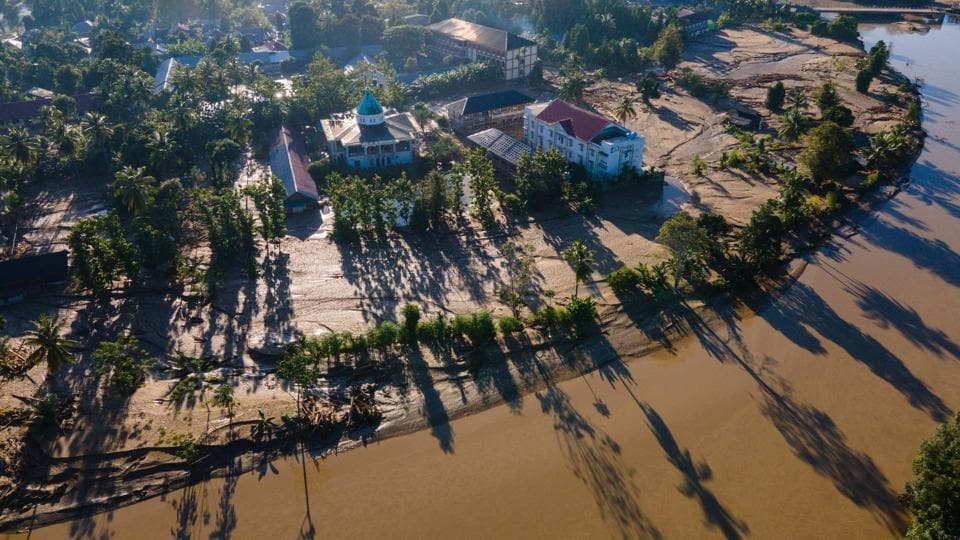
Cyclone Senyar emerged as a low pressure area over the Strait of Malacca and the adjoining South Andaman Sea on November 22. On November 26, Cyclone Senyar developed over the Strait of Malacca and adjoining Northeast Indonesia. It moved west-southwestwards and crossed Northeast Indonesia around. Interestingly, Senyar gradually recurved south-eastward and emerged back into Malacca Strait. Then while moving nearly eastwards, entered into Malaysia on November 27 and moved across Malaysia and Northwest Pacific.
“This is an extremely rare cyclone. At least I have not come across such a location of the cyclone, but it was a very marginal cyclone. The wind speed was only 35 knots,” said Mrutyunjay Mohapatra, director general, India Meteorological Department (IMD).
“I want to say that one thing, in recent times, there is better monitoring and better prediction systems also. We could provide forecasts to Indonesia and Malaysia. But as far as monitoring is concerned, this type of cyclone, we have not seen,” Mohapatra added.
The second cyclone, ‘Ditwah’, which devastated Sri Lanka with flooding rains and landslides emerged as a low pressure area over Comorin and adjoining Southwest Bay of Bengal (BoB) and Sri Lanka. It intensified into a cyclone on November 27 and moved nearly northwards close to Tamil Nadu-Puducherry coasts and weakened into a deep depression on November 30 and depression on Monday.
“This was also unusual. The frequency of cyclones affecting Sri Lanka is quite less. So human memory of such a cyclone may not be very prominent but Sri Lanka has been affected by cyclones in the past. Why did it happen? Both the cyclones occurred almost back to back,” Mohapatra said, explaining that “low pressure systems developed almost simultaneously.
The first system developed over the Strait of Malacca, followed by the second one over Comorin and Southwest Sri Lanka. The Inter-tropical Convergence Zone (ITCZ) was quite active. Convectively coupled equatorial waves like say Equatorial Rossby waves, all these were very favourable and coincided over South Bay of Bengal. As a result, they supported the development of these cyclones.”
ITCZ is a low-pressure belt near the equator where trade winds from the Northern and Southern Hemispheres converge.
An equatorial Rossby wave is a westward-propagating, low-frequency wave trapped near the Earth’s equator in a rotating fluid like the ocean or atmosphere. As these two systems developed near the equator, they did not intensify much, Mohapatra said.
Roxy Mathew Koll, climate scientist and Intergovernmental Panel on Climate Change (IPCC) author, highlighted why warming oceans may have contributed to these unusual cyclones.
“Both cyclones developed close to the land, and as a result did not intensify to severe cyclones. However, they picked up an enormous supply of moisture that resulted in heavy torrents of rain causing landslides and flash floods. Warmer oceans supply more moisture to the atmosphere and a warmer atmosphere holds more moisture for a longer time - the result is short bursts of heavy rains from monsoons and cyclones,” Koll said.
Mohapatra said IMD had shared its forecasts days in advance with Sri Lanka, Indonesia and Malaysia and both the systems were well predicted.
‘Ditwah’ has weakened but is continuing to cause heavy to very heavy rain over Tamil Nadu and Andhra Pradesh.