
 E-Paper



Bihar Startup Gomini Targets 5,000+ Cows by 2028, Merging Blockchain with Indigenous Preservation
Gomini, an agritech startup in Bihar, aims to digitise India's bovine economy by onboarding 5,000 indigenous cows on a blockchain platform within two years.

 Prefer HTon Google


Gomini, an agritech startup based in Bihar, has unveiled an ambitious roadmap to digitize India’s bovine economy, announcing plans to onboard over 5,000 indigenous cows onto a blockchain-enabled platform within the next two years. The company, founded by former tech executive Dr. Arjun Sharma, projects revenues of ₹300 crore by 2028 as it scales its operations beyond Bihar into Maharashtra and Karnataka. The announcement was made during a recent appearance on The Success Playbook Podcast, hosted by Jatin Solanki, a serial entrepreneur, co-founder of Scale100x.Ai, and an IIT Bombay alumnus.
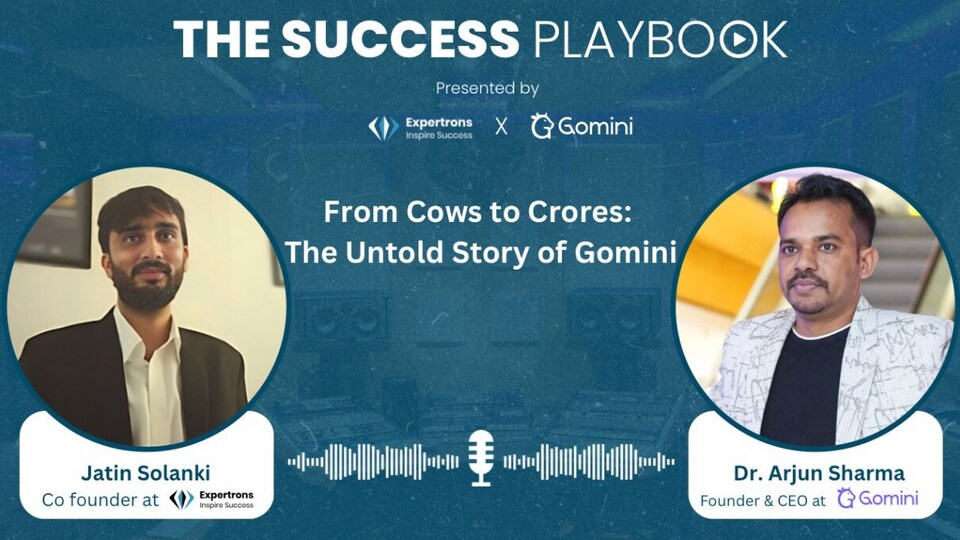
Gomini is positioning itself as India’s first platform to combine cow preservation with wealth generation using Blockchain, Internet of Things (IoT), and Artificial Intelligence. Unlike traditional dairy models, Gomini treats the cow as an investable asset class, using technology to track yield, health, and lineage transparently. Dr. Sharma, who transitioned from the technology sector to social entrepreneurship, described the venture as a necessary evolution for conservation. After visiting over 1,000 gaushalas (cow shelters) across India, he observed that reliance on charity was insufficient to protect indigenous breeds. "The sentiment without a business model will never save our cows," Dr. Sharma stated. "We realized we needed an economic engine with Dharma at its core". He humorously noted one of the funniest reactions he received to "digital cow ownership" was: "Will the cow come out of the Wi-Fi if I press the wrong button?
Central to Gomini’s strategy is a shift away from milk as the primary revenue source. The company creates over 150 SKUs from cow byproducts & natural farming, including bio-fertilizers and Ayurvedic goods derived from cow dung and urine. "Cow dung and cow urine have a larger economy than milk," Dr. Sharma explained. He noted that while milk remains a staple, the value-added products allow the company to generate significantly higher revenue per animal—averaging ₹3.5 lakhs annually per cow at scale. The model is critical for indigenous cow preservation and natural farming, as he noted that the number of distinct Indian breeds has declined dramatically since 1950. The model addresses a critical gap in rural finance. According to Gomini, farmers partnering with the platform have seen monthly incomes rise from approximately ₹2,000– ₹3,000 to between ₹15,000 and ₹20,000. For urban investors, the startup offers a comprehensive "hands-off" partner program. Investors can digitally own cows, with Gomini managing the physical operations, including land selection and maintenance. Dr. Sharma indicated that partners could expect annual returns in the range of 20% to 30%. "It’s a lifetime opportunity... You invest and you just watch your investment grow," he said, noting that the underlying asset—the cow—naturally multiplies, compounding the value.
Jatin Solanki, host of The Success Playbook, characterized the startup as a unique intersection of sectors that rarely overlap. "You’re building a movement at the intersection of tradition, technology, and prosperity," Solanki remarked during the broadcast. "It is not just about cow ownership; it is about connecting people to their roots while building a high-ROI business opportunity". Dr. Sharma summed up the company's ethos and his personal definition of success: "Serve your Dharma, take your bold bets, lift others up without constantly worrying about your EMI’s". As the company looks to expand its footprint, it bets that its transparent, tech-driven preservation model will become a standard for sustainable rural wealth.
Note to the Reader: This article is part of Hindustan Times' promotional consumer connect initiative and is independently created by the brand. Hindustan Times assumes no editorial responsibility for the content.


