
 E-Paper



Heart Matters - Preventing Heart Disease in Young India through Modern Innovations
Leading cardiologists spoke about why lifestyle, silent risk factors and delayed treatment are some of the biggest threats for Coronary Artery Disease.

 Prefer HTon Google


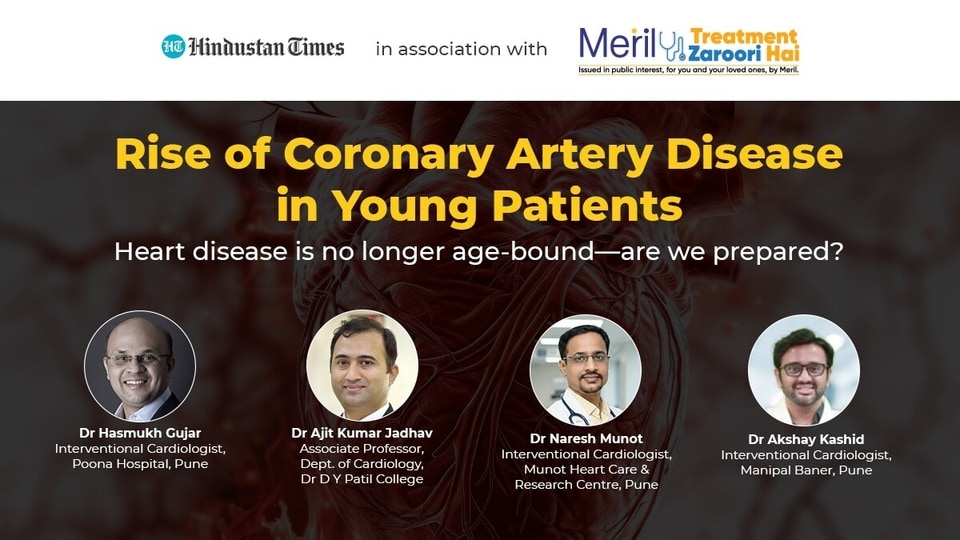
For a long time, heart disease was something we associated with age. It was a condition that showed up later in life after decades of accumulated risk. But that picture is clearly changing. Across Indian cities, a noticeable shift is being seen where more cases of Coronary Artery Disease (CAD) are being diagnosed in people in their 30s and 40s. This alarming trend was the focal point of a recent webinar under the Treatment Zaroori Hai (TZH) initiative, where leading cardiologists came together to decode this phenomenon and offer insights on how timely action can improve outcomes.
Why young Indians are at risk
The data from organisations like the ICMR highlights that Indians face a significantly higher risk of CAD compared to Western populations, often developing heart issues much earlier. Dr Hasmukh Gujar, Interventional Cardiologist at Poona Hospital, said that rapid urbanisation, sedentary lifestyles and faulty sleeping patterns have turned India into a global hub for heart disease.
This Indian phenotype often involves lean diabetes, where individuals appear thin but carry dangerous levels of visceral fat and high inflammation. “India has become a leading cause of death due to coronary disease, hitting the population five to ten years earlier than in the West due to urbanisation and unhealthy habits,” Dr Gujar said.
Dr Ajit Kumar Jadhav, Associate Professor at Dr DY Patil College, explained that Indians often possess a genetic predisposition characterised by higher oxidative stress and bad sleeping habits. This creates what he termed as a “perfect storm” for heart disease to develop, often without any obvious symptoms until a crisis occurs.
“We have lean diabetics with higher visceral fat and high inflammatory markers. Everything put together causes the younger population to develop coronary disease without obvious symptoms,” said Dr Jadhav.
Warning signs you should not ignore
One of the major challenges doctors face in treating younger patients is denial. Many mistake chest heaviness for a gym injury, a pulled muscle or chronic acidity. Dr Naresh Munot, Interventional Cardiologist at Apollo Hospitals felt that early recognition is the only way to prevent severe complications. He clarified the distinction between a heart attack – a circulation problem caused by a blockage – and a cardiac arrest, which is an electrical failure where the heart stops beating suddenly. “People often confuse cardiac chest pain with acidity or muscular pain. Early recognition can definitely help patients seek medical attention promptly and prevent severe complications,” Dr Munot said.
Dr Akshay Kashid, Interventional Cardiologist at Manipal Baner explained that while lifestyle changes are key, modern diagnostics are our best shield, especially for those at a high risk. He felt that risk factors often go unnoticed until the heart problem suddenly hits.
“The risk factors whisper into your ears, but the heart problems come with a loud bang. It is very important to timely diagnose and treat these factors to prevent disease,” said Dr Kashid.
Simple tests that can save your life
Prevention is about catching the “whispers” of risk before they become a “loud bang.” Beyond basic blood tests, a CT Coronary Angiography can now detect minor blockages non-invasively. Experts recommend that those with a family history or high stress should begin elective screenings as early as age 30 or 35. This is especially true for those whose parents or siblings have suffered early cardiac events.
“Screening helps a lot. Routine evaluation can identify abnormalities that are ongoing, even in individuals who may currently have minimal or no symptoms,” Dr Kashid further said.
In women, the risk profile changes significantly with age, especially when they approach perimenopause and menopause. Dr Munot pointed out that symptoms like unexplained sweating or nausea can be presenting signs. Once menopause sets in, the risk of heart disease in females equals that of males, making vigilance during the perimenopausal years essential.
“Post-menopause, the risk in females is significantly higher. We have to be very careful and not just dismiss sweating or chest heaviness as simple hormonal hot flashes,” he said.
Advancements to clear blockages
Technology has evolved far beyond traditional surgery. When blockages are found, doctors now have advanced tools like ultra-thin drug-eluting stents (DES) that prevent arteries from re-closing. Dr Gujar explained that diagnostic angiography has become much simpler, often performed through the radial artery in the wrist rather than the leg. If blockages exceed 70 per cent, intervention is usually required to restore proper blood flow.
“If you have symptoms of a heart attack, call for help first. Don’t just sit and wait.. get an ECG done immediately rather than waiting until the evening to see a doctor. And loosen your clothes and lie down,” said Dr Gujar.
In terms of treatment, some metal-less options are available. Dr Kashid discusses drug-coated balloons (DCB) that deliver medication directly to the vessel wall and are then removed, preserving the artery’s natural flexibility. Furthermore, bio-resorbable scaffolds offer a temporary support that dissolves over a few years, leaving no permanent metal behind.
Changes that can protect your heart
The panel outlined a specific roadmap for lifestyle modification, emphasising that healthy living must be a non-negotiable. Dr Ajit Jadhav suggested 150 minutes of moderate-intensity exercise per week to manage weight and BMI. The doctors also spoke about the importance of diet and recommended a high-protein, high-fiber diet rich in fruits, with a specific focus on eating a light dinner before 7 pm.
“Simple steps like a low-carbohydrate, high-protein diet and 150 minutes of moderate exercise per week will significantly improve your quality of life and heart health,” said Dr Jadhav.
Stress and sleep are perhaps the most underestimated risk factors. Dr Kashid pointed out that many young workers bring office anxiety home, leading to a rat race that physically damages the heart. He advised ensuring 6-7 hours of sound sleep and keeping stress levels at a bare minimum. Socialising with family and friends is also encouraged as a powerful natural “stress buster” to reduce the incidence of cardiac events.
Awareness is prevention
As the Treatment Zaroori Hai initiative reminds us, awareness leads to earlier action, and earlier action significantly improves outcomes. Heart health is a result of consistent, daily choices from what we eat to how we handle a stressful meeting. In an era where heart disease is no longer a “distant” threat for the young, regular screening and a proactive attitude toward symptoms are essential. In this case, prevention is indeed more powerful than the cure.
Watch the webinar now:
Note to the Reader: This article has been produced on behalf of the brand by HT Brand Studio and does not have journalistic/editorial involvement of Hindustan Times.


