
 E-Paper



Uttarakhand CM Dhami Marks Constitution Day, Stresses Need for Modern and Accessible Justice System
At a Constitution Day event in Dehradun, CM Dhami highlighted reforms aimed at making justice delivery more transparent, digital, and citizen-centric.

 Prefer HTon Google


Uttarakhand Chief Minister Pushkar Singh Dhami marked Constitution Day on Wednesday by administering the Preamble oath at the Police Lines in Dehradun and releasing the Prosecution Department’s annual publication. The event brought together senior officials from the police and prosecution wings to reflect on the Constitution’s role in shaping India’s democratic framework.
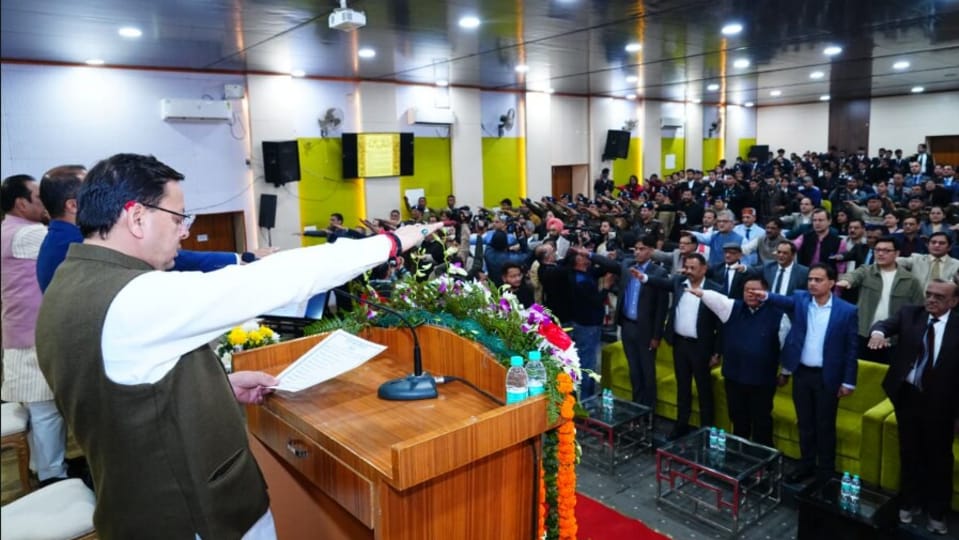
Addressing the gathering, the Chief Minister extended greetings on Constitution and Law Day and paid tribute to Dr. B.R. Ambedkar. He noted that November 26 holds a distinctive place in India’s constitutional journey, as the Constituent Assembly adopted the final draft of the Constitution on this day in 1949.
Dhami also recalled the evolution of Constitution Day from its earlier observance as Law Day. He pointed to the efforts of legal scholar Dr. L.M. Singhvi and the Supreme Court Bar Association in 1979, followed by the central government’s 2015 decision to formally celebrate the day nationwide.
At the event, Dhami underlined the importance of strengthening the justice delivery mechanism and outlined several steps aimed at improving administrative efficiency within the Prosecution Department. These include financial assistance for outreach on newly introduced criminal laws, support for digitisation initiatives, and a proposal to introduce awards for exemplary work. He also suggested training programmes to help officers engage effectively with communities across different linguistic regions of the state.
The Chief Minister described the prosecution service as a key pillar in ensuring fairness and transparency in the justice process. He said that nationwide legal reforms—including the Bharatiya Nyaya Sanhita, Bharatiya Nagarik Suraksha Sanhita and Bharatiya Sakshya Adhiniyam—reflect a shift towards a more contemporary, citizen-friendly legal framework. He added that provisions that recognise digital and electronic records as admissible evidence are expected to make investigations more scientific and reliable.
Dhami highlighted ongoing national-level initiatives such as e-courts, the National Judicial Data Grid, fast-track courts, and digital case management systems, which aim to reduce delays and enhance accessibility. He said these digital interventions are gradually reshaping how citizens interact with the justice system.
On the state front, Dhami said Uttarakhand is working to expand court infrastructure, improve the use of virtual hearings, and strengthen e-filing mechanisms. He noted that the government has introduced measures such as a stringent anti-cheating law and is pursuing reforms in legal education and mentorship for young advocates. Efforts are also underway to create safer and more supportive work environments for women lawyers.


