
 E-Paper



India-origin researcher creates a technology that heals organs, tissues and nerve cells
The new research that was published in the journal Nature Nanotechnology is a step ahead from what people commonly know as the gene therapy.


In what is seen as a breakthrough in the field of regenerative medicine, Indian-origin researcher in the US developed a technology that can repair organs, blood vessels and nerves by a single touch.
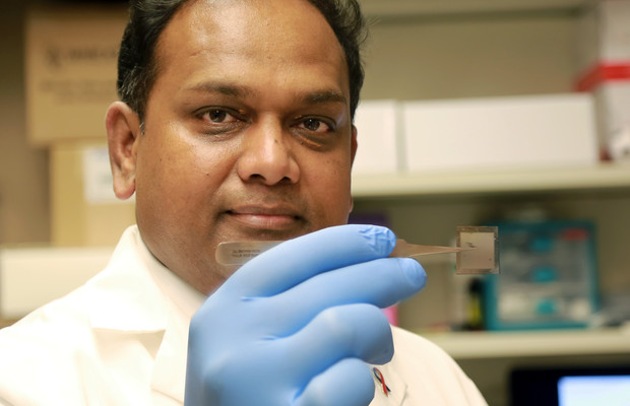
The technology, Tissue Nanotransfection (TNT), can generate any cell type of interest for treatment within the patient’s own body.
“It takes just a fraction of a second. You simply touch the chip to the wounded area, then remove it,” said Chandan Sen, director, center for regenerative medicine and cell-based therapies, The Ohio State University Wexner Medical Center.
Dr Sen co-led the study with L. James Lee, professor of chemical and biomolecular engineering, Ohio State’s College of Engineering in collaboration with Ohio State’s Nanoscale Science and Engineering Center.
It instantly delivers new DNA or RNA into living skin cells to change their function, with a small electrical charge that’s barely felt by the patient, thus aiding the speedy repair of injured tissue as well as restoring the function of ageing tissue, including organs.
In a series of lab tests, explains Sen on the university website, researchers applied the chip to the injured legs of mice that vascular scans showed had little to no blood flow.
“We reprogrammed their skin cells to become vascular cells,” he says. “Within a week we began noticing the transformation.”
By the second week, active blood vessels had formed, and by the third week, the legs of the mice were saved—with no other form of treatment.
The new research that was published in the journal Nature Nanotechnology is a step ahead from what people commonly know as gene therapy.
“This process only takes less than a second and is non-invasive, and then you’re off. The chip does not stay with you, and the reprogramming of the cell starts. Our technology keeps the cells in the body under immune surveillance, so immune suppression is not necessary,” says Sen.
Researchers plan to start clinical trials next year to test this technology in humans.
**Video courtesy: The Ohio State University Wexner Medical Center

Catch your daily dose of Fashion, Taylor Swift, Health, Festivals, Travel, Relationship, Recipe and all the other Latest Lifestyle News on Hindustan Times Website and APPs.


