
 E-Paper



December 6: What we know about Omicron variant so far
Before superspreader variants such as Alpha and Delta, it was estimated only about 20% of the cases were responsible for passing the virus on to the remaining 80% of infected people, which meant the uncertainty did not just manifest in symptoms, but also in how it spread.

 Prefer HTon Google


In the first half of 2020, the most pressing scientific mystery was why Sars-Cov-2 caused wildly inconsistent symptoms and outcomes. Close to half the infected people would remain asymptomatic and among a minority that was left, it led to severe disease and even death.
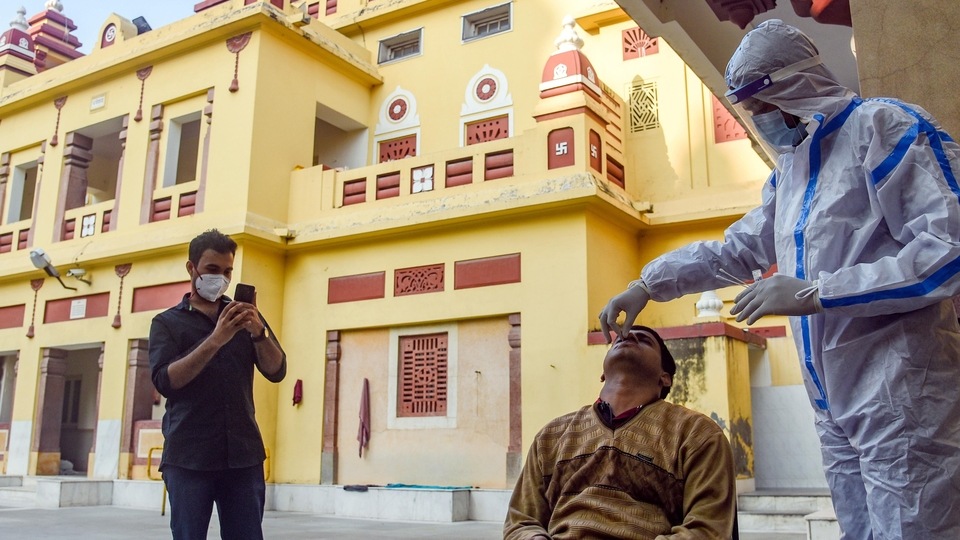
Before superspreader variants such as Alpha and Delta, it was estimated only about 20% of the cases were responsible for passing the virus on to the remaining 80% of infected people, which meant the uncertainty did not just manifest in symptoms, but also in how it spread.
Slowly, some of that mystery was traced back to differences in how people’s immunity reacts – specifically, the early phase of the immune response when the body’s defences spot the intruder and trigger a series of biological responses. For some people, this intricate choreography of immune cells was badly tuned, like an out-of-sync musical ensemble, allowing the virus to keep multiplying and spreading deeper into lung tissue. A panicked overreaction to flush out the intruder follows, and it is this – the hyper-inflammatory stage – that leads to deaths in Covid-19.
Immunity, back in focus
The Omicron variant is now bringing the focus back on the immune system. This time, scientists are racing to understand how the virus affects what is known as adaptive immunity, which over time keeps a biological sketch of all pathogens we encounter.
This memory is defined by details of a pathogen’s structure to which antibodies attach. These details are called epitopes. When the same pathogen intrudes again, the immune memory of these epitopes is used to create antibodies and killer cells that neutralise the threat.
Over time, scientists have identified the Sars-Cov-2’s epitopes. They have also identified how certain variants have changes in these epitopes.
A recent analysis by Italian scientists, shared on virological.org, has quantified how four variants known or suspected to be resistant to past immunity – Beta, Gamma, Delta and Omicron – have camouflaged some of these epitopes on the spike protein, the protruding component of the Sars-Cov-2 that plays the main role in infection.
Omicron, they contend, has the largest proportion of mutations in epitopes recognised by B cell (which turn into antibodies) at 30.91%, followed by Gamma at 15.34%, Beta 12.98% and Delta at 11.12%. In other words, it means Omicron has over twice the number of changes in a portion of its structure as Gamma and Beta, the two most resistant variants seen till now.
The optimistic way to look at this is that close to 70% of the epitopes to which our immune system remembers making antibodies for is unchanged, suggesting there will still be substantial protection, even if that protection is significantly reduced. In addition to B Cells, there are T cells, which turn into killer cells that destroy infected cells and stop them from making more copies of the virus. The Italian scientists said the mutations affect 27.3% of the epitopes recognised by T cells – again, significantly higher than the rest. But close to 73% of the T cell epitopes are still unchanged.
Other implications
The study also offers some scientific insight into how many of the epitopes they analysed have more implications than just immunity. The authors, from the Polytechnic University of Milan, note in their report that many of the mutations can also impact other traits of the virus, such as transmission, infectivity, virulence, and the stability of the virus’s spike protein itself. Many of the changes they see in Omicron are predicted to heighten or lower these traits.
This could, theoretically, explain why the virus can become more transmissible while also becoming less virulent (that is, cause milder disease). Over the coming week, watch this space for two key metrics that are likely to be available: the drop in neutralisation potency of antibodies resulting from vaccination or past infection, and hospitalisation trends.


