The government has raised the wage ceiling for mandatory Employees’ Provident Fund Organisation (EPFO) coverage to ₹25,000 a month from ₹15,000, with effect from September 17. The government expects this change to bring more than 5.1 million additional employees into the system.
What has changed?
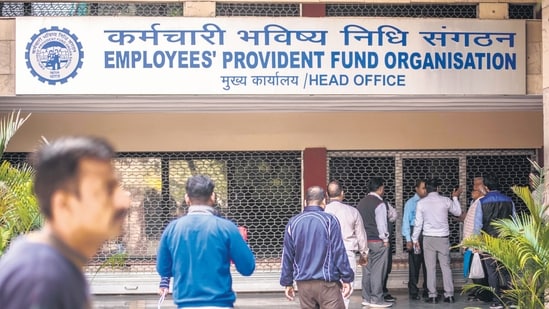
The main change is for people joining the EPFO for the first time. Since September 2014, an employee who joined an establishment covered by the Employees' Provident Fund (EPF) on wages above ₹15,000 was not automatically enrolled in EPF and the Employees’ Pension Scheme (EPS). With the ceiling now at ₹25,000, a new employee earning between ₹15,000 and ₹25,000 will come under mandatory coverage and, subject to the applicable rules, will get provident fund, pension and insurance benefits.
What if I earn ₹20,000 a month?
The change may matter most for this group. Under the old ceiling, a worker who joined a company on a basic wage of ₹20,000 a month was above the statutory limit and was not automatically covered. Because ₹20,000 is below the new ceiling, that worker now falls under mandatory coverage, subject to the applicable rules. Accordingly, the worker would get access to provident fund savings set aside for retirement, eligibility for a pension under EPS, and insurance cover under the Employees’ Deposit Linked Insurance (EDLI) Scheme.
What if I earn ₹10,000?
The announcement changes nothing for this group. Workers earning below ₹15,000 in an EPFO-covered establishment were already required to be covered under the applicable rules. They gain no new coverage from the decision, which only raises the upper limit from ₹15,000 to ₹25,000.
What if I earn more than ₹25,000?
{{/usCountry}}The announcement changes nothing for this group. Workers earning below ₹15,000 in an EPFO-covered establishment were already required to be covered under the applicable rules. They gain no new coverage from the decision, which only raises the upper limit from ₹15,000 to ₹25,000.
What if I earn more than ₹25,000?
{{/usCountry}}Existing PF members in this bracket could see a larger monthly deduction. Where contributions are capped at the statutory ceiling, the maximum employee contribution was 12% of ₹15,000, or ₹1,800 a month. At the new ceiling it becomes 12% of ₹25,000, or ₹3,000 a month, so the employee’s deduction could rise by up to ₹1,200. For these workers, that would mean less take-home pay each month and more money going into their PF savings.
Also read: ₹25k, more workers to benefit">Ludhiana: EPFO raises wage ceiling to ₹25k, more workers to benefit
Why has the government done this now?
The ₹15,000 limit was set in September 2014 and stayed unchanged for 12 years, a period in which both wages and minimum wages rose considerably. Government officials, who spoke on condition of anonymity, said the average regular salaried employee now earns about ₹23,000 a month and that minimum wages in several states have crossed ₹15,000. The government’s view is that the old ceiling no longer reflects what many regular workers earn, and it has raised the cut-off to ₹25,000 for that reason.
How many people will be affected?
The government estimates that more than 5.1 million employees will come under mandatory EPFO coverage. The EPFO currently has about 79.8 million contributing members. The government expects to spend about ₹11,339 crore a year on the expansion, and estimates the five-year cost at about ₹56,696 crore.