India and Pakistan mark their 80th Independence Day this week, 79 years since British rule ended — but not on the same date.
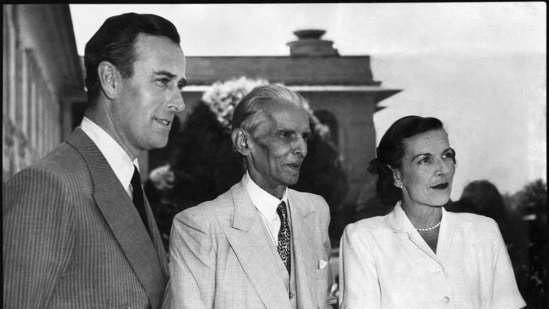
India observed it on August 15, 1947, when Independence formally took effect. Pakistan, born of the same act of Partition, celebrates a day earlier, on August 14, even though the documentary record shows both nations became free at the same moment.
Lord Louis Mountbatten, the last viceroy of India, signed off on the documents that created the two countries and partitioned Bengal and Punjab. He later said he settled on August 15 because it fell on the second anniversary of Japan's surrender in World War Two.
What history tells us
The Indian Independence Act, 1947, enacted towards the end of the British Raj, created the two dominions in law. It read: “As from the fifteenth day of August, nineteen hundred and forty-seven, two independent Dominions shall be set up in India, to be known respectively as India and Pakistan.”
On August 15, Pakistan’s founding father, Muhammed Ali Jinnah, told the newly formed nation in a radio address that it was the “birthday of the independent and sovereign state of Pakistan”. Other speeches, documents and books from the period bear this out. Philip Ziegler, Mountbatten’s official biographer, records the same date in Mountbatten: The Official Biography — that Pakistan, like India, came into being on August 15.
{{/usCountry}}On August 15, Pakistan’s founding father, Muhammed Ali Jinnah, told the newly formed nation in a radio address that it was the “birthday of the independent and sovereign state of Pakistan”. Other speeches, documents and books from the period bear this out. Philip Ziegler, Mountbatten’s official biographer, records the same date in Mountbatten: The Official Biography — that Pakistan, like India, came into being on August 15.
{{/usCountry}}A day earlier, on August 14 in Karachi, Mountbatten had already told Pakistan’s Constituent Assembly: “Tomorrow, the government of the new dominion of Pakistan will rest in your hands.”
Still, Islamabad marks its Independence Day the day before India’s.
Why August 14?
Mountbatten’s schedule offers the most widely cited explanation. He administered the oath of independence to Jinnah on August 14, during his visit to Karachi. As Ziegler notes, the viceroy administered Pakistan’s oath first, then travelled to Delhi to do the same for India the next day — so Pakistan’s date followed the viceroy’s itinerary rather than a deliberate political choice?
Pakistani historian K.K. Aziz makes a similar point in Murder of History. The Indian Independence Bill, introduced in the British Parliament on July 4, 1947, and passed into law on July 15, set the “dominions” free at midnight on 14-15 August.
Independence Day: HT full coverage
But power had to be transferred in person by the viceroy, the British king’s representative in India, who could not be in Karachi and Delhi at once. Nor could he hand over power to India first, on the morning of August 15, and then rush to Karachi — by then he would already have become governor-general of India, no longer able to represent the crown in Pakistan.
The only workable option was to transfer power to Pakistan on August 14, while he was still viceroy. “But that does not mean that Pakistan gained its independence on 14th August,” Aziz writes. “The Indian Independence Act did not provide for it.”
The University of Southampton’s Broadlands Archives, which hold Mountbatten’s papers, corroborate this sequence: a ceremony at Karachi’s Legislative Assembly on August 14, followed by one in Delhi on August 15. Mountbatten flew back to Delhi the same evening after the Karachi ceremony. Later that night, a resolution was passed proclaiming India’s independence and inviting him to be the country’s first governor-general.
Laylat al-Qadr and time zones
There’s a possible religious dimension too. The night of August 14-15, 1947 coincided with the 27th night of Ramadan in 1366 Hijri — revered by Muslims as Laylat al-Qadr, the Night of Decree, and believed to be the night the Quran was first revealed to the Prophet Muhammad.
For a nation founded as a Muslim-majority homeland, that coincidence could have carried weight.
A third theory turns to time zones. Pakistan’s clocks run 30 minutes behind India’s, which means that midnight in Delhi on August 15 was still 11.30pm in Karachi on August 14.
It was only in 1948 that Pakistan formalised August 14 as its Independence Day, during a cabinet meeting led by the country’s first prime minister, Liaquat Ali Khan.
No written minutes of that meeting are publicly known but Pakistani historians attribute the decision to three factors: the transfer of power in Karachi on August 14, 1947, its coincidence with 27 Ramadan, and Pakistan’s wish for a national day distinct from India’s.
Since then, Pakistan has marked August 14 as Independence Day every year. August 15, though, has not disappeared from the country’s history entirely – the date still features on Pakistan’s first commemorative postage stamps.