
 E-Paper



We've confused convenience with urgency - How Joymoti's airlifting redefined urgency
This article is authored by Vandana Kumari, author and columnist on environment, climate change, sustainability, and related ecological concerns.

 Prefer HTon Google


While modern technology has perfected hyper-speed for human trivialities, like sub-10-minute grocery delivery and corporate deadlines, injured wildlife has historically been left to suffer through bureaucratic delays and slow overland transit. Vantara’s groundbreaking rescue of Joymoti, a severely injured 53-year-old elephant, via India’s first-of-its-kind elephant air transfer from the Assam-Nagaland border. We have built entire industries around shaving minutes off things that, in the larger scheme of life, rarely needed to move that fast to begin with. And yet, for the creatures who share this planet with us, urgency has almost never existed at all.
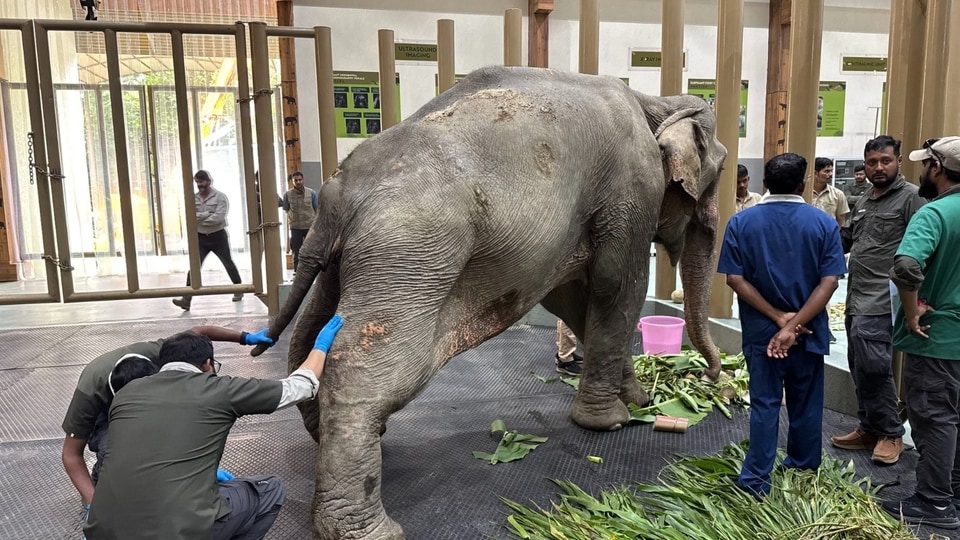
When a wild animal is caught in a flood, trapped by a collapsed forest, or injured beyond what its herd can protect it from, there has traditionally been no emergency line to call, no fast lane, no infrastructure built for speed. Nature has simply been left to take its course, and that course has too often ended in prolonged suffering, or death, for no reason other than help could not arrive in time. No shelter to retreat to. No ambulance. No triage. Just chance.
This is where Joymoti's story comes up as an example of what happens when animal welfare is met with urgency. Joymoti is a 53-year-old elephant who was caught in the devastating floods that swept through the Assam-Nagaland region, sustaining injuries serious enough that time became the deciding factor in whether she would survive. A journey by road, the conventional way an animal of her size and age would be moved, would have meant hours, if not days, of further strain on an already critical condition. Instead, Vantara chose to fly her out: reportedly the first of a kind emergency medical transfer in India for an animal.
That single decision, to treat an elephant's medical emergency with the same urgency an ICU transfer for a person might receive, is worth pausing on. It wasn't a small operational choice. Airlifting an animal of Joymoti's size and age takes infrastructure, trained handlers, veterinary teams on standby, and a willingness to spend on speed simply because a life was on the line. It is, in essence, quick-commerce logic, applied not to a food delivery, but to survival.
There is a lesson in that for the rest of us. We have spent the last decade building extraordinary systems to make sure nothing in our daily lives has to wait. But somewhere in that race, urgency became attached to convenience far more often than it became attached to need. A late package gets tracked in real time, escalated, refunded. A dying animal, historically, hasn't even had a system in place to notice it was dying.
Vantara's approach with Joymoti suggests a different question worth sitting with: what if the same innovation, the same logistics thinking, the same willingness to move fast that we've applied to commerce, was applied more often to conservation and animal welfare? What if urgency was measured not by how quickly a package reaches a doorstep, but by how quickly help reaches a life that has no way of asking for it?
This article is authored by Vandana Kumari, author and columnist on environment, climate change, sustainability, and related ecological concerns.


