
 E-Paper



Invisible second shift in India’s gig economy
This article is authored by Divyashree, professor, Alliance University and Anuradha PS, professor, Christ University, Bengaluru.

 Prefer HTon Google


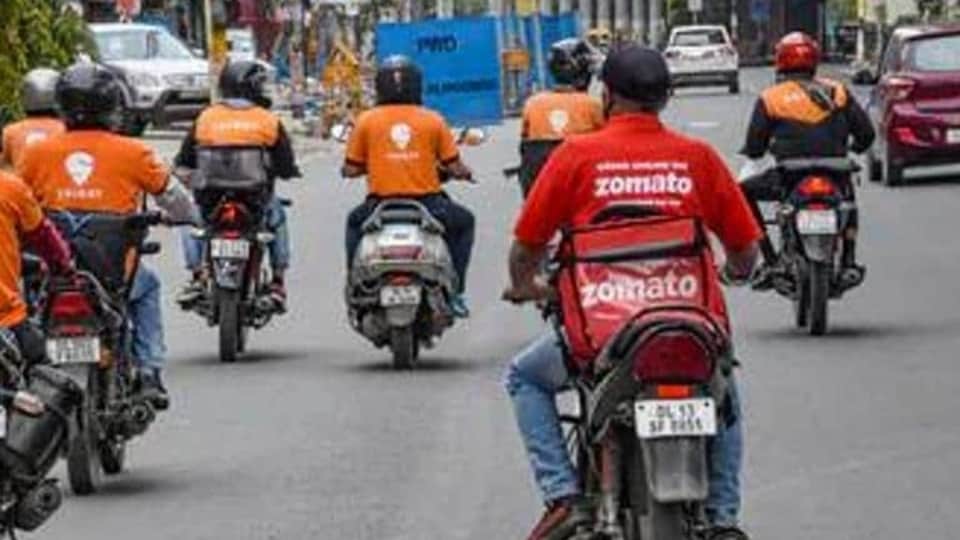
India’s gig economy likes to present itself as the future. It is fast, app-driven, and constantly as a symbol of modern aspiration. Food will be available in 10 minutes marketed; groceries will be available in 8 and taxis in 3. A start-up founder meets investors in the Bengaluru café while a freelance designer works at home in Pune. Platforms speak the language of flexibility, entrepreneurship and empowerment. But beneath this digital convenience lies an older economy that still runs quietly in the background.
In urban India, millions of women start their work early in the mornings, well before the office timings. School timetables are organised, medicines checked, clothes ironed, groceries planned for, and domestic workers supervised, all of which are done at breakfast time. Even when women themselves have paid jobs, they still have the tremendous responsibility for looking after others and managing the household. Many have already spent hours working, without a salary slip, before the formal workday even starts; these hours are not captured by economic statistics. This is the ‘second shift’ (unpaid domestic tasks done after and/or at the same time as working) that sociologist Arlie Hochschild has so aptly described. However, this second shift has not abated in the platform economy of India. It has simply adapted to the digital era.
The irony is that the gig economy often promoted as a sector that benefits women more as there is a possibility of flexible working hours, being able to work anywhere and low entry barriers. These are pitched as the solutions to India's stubbornly low female labour force participation rates. The platforms like Meesho, Urban Company and the different home-based digital marketplaces actively claim to be a tool for the empowerment of women. However, the offers of flexibility come with heavy cost. Women take up gig work because the traditional employment model is not suitable for their domestic duties which are still largely relegated to them.
An individual who is into remote work through online reselling, though she is economically active, still expected to be physically available to undertake household responsibilities throughout the day. Cooking, caring, picking up kids, caring for elders, managing emotions and other duties need to be organised around her paid work. In contrast to working time among males, where there is a social norm of protection, working time among females is constantly interrupted and is negotiable. This is the reality for the platform economy, and it does not necessitate a complete transformation. It diminishes the status of women and does not change the unequal domestic structure.
This imbalance was particularly noticeable during the pandemic and with the shift to remote working. At first people thought that work from home was a revolutionary equaliser to give professionals more flexibility and work life balance. Yet for a lot of women, home wasn't a place of liberation. It became a space where working women and homemakers were indistinguishable. It became a space where there were no distinctions between labour and domestic labour. Video calls occurred when children were asked to attend the online classes, preparing meals or looking after older family members. Gender hierarchies were not eradicated with the loss of offices. It just pushed them into the house.
The real issue is economic invisibility. The national income accounting system in India does not adequately capture unpaid domestic and care work. However, time-use surveys have always revealed that Indian women spend several times more hours on unpaid labour than men each day. This is not an insignificant lapse from the economic angle. This is a huge subsidy that allows the formal economy to operate.
Observe the structure of platform capitalism. One reason for a startup keeping highly productive male professionals is that someone else, typically a woman in the household, takes on the responsibility for keeping the household in order. Women continue to carry the mental burden of managing household consumption, and quick-commerce companies promise to make it easier for them. When work is outsourced using apps such as eating out, cleaning, delivery etc. then the behind-the-scenes planning, monitoring and coordinating work is still feminised. The economists describe the exhausting and unpaid responsibility of organising the life at home as a ‘mental load’.
The platform economy in this sense, an illusion of efficiency and externalises the real social costs. Convenience of one class comes at the cost of invisible labour work done by another. The more affluent families are also using digital platforms to outsource domestic work, but this does not get rid of gendered labour, it just shifts it to less affluent women. Those who are cleaning out houses through an app most probably end up cleaning their own homes for free. The second shift isn't gone. It has just been marketised at one end, unpaid at the other.
It also helps to understand why women are still stuck in gigs that offer low wages and are insecure. Domestic work, beauty services, care work and micro-enterprise activities are often the only ones women can pursue as informal work due to limited mobility and time availability. Such occupations generally do not offer social security, maternity leave, health insurance, or long-range job prospects. But the language of entrepreneurship hides the fact that many women do not start up their own businesses because informal labour markets are still not accessible for them due to prevailing social norms.
The repercussions are not just gender inequalities, but also economic inefficiencies. An economy that devalues care, systematically distorts labour markets and reduces productivity. This "time trap" caused by unequal domestic duties is an important factor to understand the low participation of women in the labour force in India. The economy is wasting a huge productive potential when women are forced into poorly paid, fragmented and insecure jobs due to their disproportionate unpaid labour.
But public policy persists in ignoring domestic labour as an economic matter. Social protection for gig workers in India is inadequate and lack cohesive coverage. Thus, the recognition of unpaid domestic work is not simply a symbolic feminist claim. An understanding of the real workings of the economy is very important.
The gig economy is a truly remarkable phenomenon in India in terms of its size and scope. But the celebrated success is often built on a foundation of uncompensated, unseen, socially expected, unpaid female labour. The efficiency of the digital economy often rests on domestic responsibilities that remain unequally distributed within households. The second shift never disappeared; the digital economy merely gave it a new form.
(The views expressed are personal)
This article is authored by Divyashree, professor, Alliance University and Anuradha PS, professor, Christ University, Bengaluru.


