
 E-Paper



Rural India’s changing landscape makes it key to $30 trillion economy
This article is authored by Jyotsna Krishnan, CEO and co-founder, EPIC World.

 Prefer HTon Google


India's path to becoming a $30 trillion economy runs through its villages. While development discussions often centre on urban growth engines and technology hubs, the real story of India's economic transformation is unfolding in rural areas, where nearly two-thirds of our population lives and generates approximately half of our GDP.
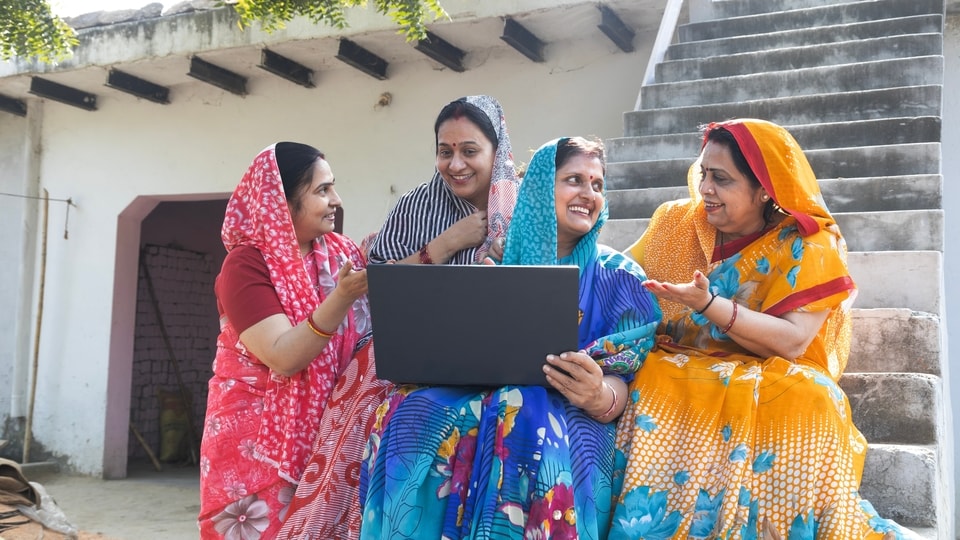
At the heart of this transformation are what we call entrepreneurial households--resilient economic units with multiple income streams and high aspirations, families who have redefined how we think about small business in India. In rural areas, these households, which operate over half of the country's micro, small, and medium enterprises (MSMEs), are driving a quiet revolution that could determine whether India achieves its ambitious economic targets.
One of the most profound changes happening in rural India today is the dramatic shift away from agricultural dependence. Agriculture now contributes less than one-third of rural household income. This isn't a story of agricultural decline--it's a story of economic diversification and entrepreneurial growth.
Rural households have systematically expanded into non-farm businesses, manufacturing, and services, with only a fifth of rural households fully dependent on farming. This diversification has broken the traditional narrative that rural livelihoods are inherently fragile and cyclical. The numbers tell a compelling story: rural consumption is growing at 7.1% annually, outpacing India's broader economic expansion of 6.5%. Manufacturing value added from rural areas has crossed 50%, demonstrating that rural India isn't just consuming more, it's producing more.
Parallel to this diversification, agriculture itself has undergone a remarkable transformation that often goes unnoticed. The sector has become significantly more robust and resilient, fundamentally altering its risk profile for rural households.
The expansion of irrigation has been transformative. The share of gross cropped area under irrigation has risen to over 50% by 2023, reducing dependence on monsoons and enabling year-round cultivation. This infrastructure development, combined with improved access to
fertilisers and modern farming techniques have made agricultural income more predictable and stable. This agricultural robustness doesn't just provide food security--it provides income security that enables rural households to take calculated risks in other business ventures, knowing they have a stable foundation to fall back on.
We can get a conversion scheduled. Our recent survey of 7,700 entrepreneurial households reveals the depth of this transformation. These households maintain an average of 2.7 income sources, with 86% having multiple revenue streams. This diversification isn't just about survival--it's about growth and ambition. According to our report, Reimagining Local Economies, an impressive 84% of these households are confident their income will increase over the next two years, translating this confidence into concrete spending and investment plans.
Manoj from Chikkaballapur district in Karnataka exemplifies this entrepreneurial energy. His household of four family members operates across multiple income streams: Manoj serves as CEO of a Farmer Producer Organisation (FPO), manages 4.5 acres of agricultural land, runs a dairy farming business, and operates an incense business, while his mother contributes through her sari business. This diversification across agriculture, manufacturing, and services mirrors the survey findings perfectly, demonstrating how rural households have moved beyond traditional farming to create resilient, multi-income enterprises.
"My dream is to build a good house for us and buy a car that can be used for any emergencies or any trips with my family," Manoj says. His aspiration to start an FPO for farmers in his village reflects the broader pattern of rural entrepreneurs thinking beyond individual success to community-wide economic development. The MSME sector, which contributes nearly a third to national GDP, depends heavily on this rural entrepreneurial energy. With half of MSMEs located in non-urban areas, these entrepreneurial households aren't just participants in India's growth story--they're driving it.
Despite this impressive foundation, entrepreneurial households face significant constraints that limit their full potential. Our survey data shows that over 60% of households lack access to quality health care and education within an hour of their homes. This infrastructure deficit extends beyond social services to include financial services and business products.
These gaps represent both a challenge and an enormous opportunity. Rural households have demonstrated their entrepreneurial capacity and growth ambitions. What they need now are the core services that can unlock their next level of growth. Financial products tailored to multi-income households, business services that understand rural contexts, and healthcare and education systems that support growing families and businesses.
The opportunity is clear: Delivering quality health care, education, financial services, and business support to rural areas will unlock tremendous economic potential. When entrepreneurial households have access to the tools they need to grow, they create employment, drive innovation, and contribute to GDP growth at a scale that urban centres alone cannot match.
Rural India's transformation from agriculture-dependent communities to diversified entrepreneurial ecosystems represents one of the most significant economic shifts of our time. Supporting this transformation isn't just good business--it's essential for India's economic future. The path to $30 trillion runs directly through India's entrepreneurial households.
This article is authored by Jyotsna Krishnan, CEO and co-founder, EPIC World.


