
 E-Paper



Sustainability needs a mix of planet, people and communities
The article has been authored by Rajiv Bhalla, managing director, Barco India, a global leader in digital projection and imaging technology.

 Prefer HTon Google


In her New Year address, Mette Frederiksen, prime minister of Denmark announced the Danish government is working towards making all domestic flights in the country fossil-fuel free by 2030. While she did admit solutions were not yet in place, the Nordic country which proposed to boost investments in green hydrogen in a big way aims to have the first domestic flights using green fuel up and running in 2025.
The Danish proposal is just a microcosm of what people, corporates and governments across the world are doing to reduce the carbon footprint. Already, over 70 countries accounting for 80% of carbon emissions and 90% of global Gross Domestic Product (GDP) have agreed to net-zero commitments. At the COP26 meet in Glasgow, India set a target to cut its net carbon emissions to zero by 2070; China has already set a 2060 deadline.
Carbon footprint is an environmental sustainability indicator. Sustainability is broadly defined as the ability to provide for the current generation using available resources without causing future generations any problem for their needs. The three pillars of sustainability are planet or environment, social or people, and profit or economics. Economic sustainability focuses on conserving natural resources that provide inputs for economic production. Environmental sustainability adds emphasis on life support systems that must be maintained for economic production while social sustainability focuses on human effects of economic systems.
The best means to remain sustainable is by drawing a plan to reduce the carbon footprint. According to the McKinsey report, The Net-Zero Transition, all carbon dioxide and methane emissions today come from seven energy and land-use systems—power, industry, mobility, buildings, agriculture, forestry and waste. It states, “Capital spending on physical assets for energy and land-use systems in the net-zero transition between 2021 and 2050 would amount to about $275 trillion, or $9.2 trillion per year on average, an annual increase of as much as $3.5 trillion from today.” That is approximately equivalent, in 2020, to half of global corporate profits, one-quarter of total tax revenue, and 7% of household spending.
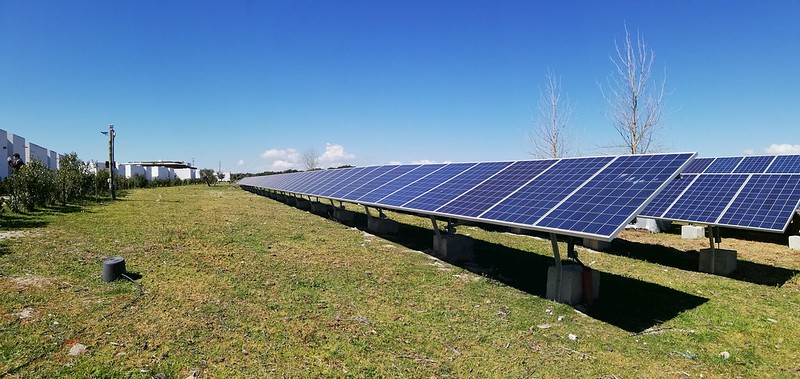
Even within the seven systems, power (generating electricity), industry and mobility account for 79% of carbon emissions. Power and industry contribute 60%. That’s where the focus on renewable power as opposed to the thermal power using coal comes in. India is on track to set up 500 GW of renewable power by 2030. Already 107 GW of renewable power is up and running in India. What Indian industry needs to do is gradually shift to renewable power from polluting thermal power.
The nearly two-year lockdown across large parts of the world due to the pandemic resulted in hardly any flights and limited travel. That helped people realise the benefits as pollution levels fell across the world. But one cannot live with hardly any mobility. As offices open up across the world, there is a greater focus on investing in sustainability and building inclusive workplaces. Corporates are designing physical spaces where employees can connect and collaborate. In fact, office buildings are one of the key direct emission sources impacting the carbon footprint.
Large corporates have also realised that reducing the carbon footprint over time leads to a better bottom-line, resulting in reduced operating costs, improved productivity which in turn leads to greater efficiency. The biggest push to net-zero commitments for business is coming from millennials and Gen Z who expect the current leadership to leave them with a better world.
If we are looking to provide a better world and future to the next generation, this is the time for the current generation of leaders –be it corporates or government—to take decisive action. As a sustainable community, we need to manage human, natural and financial capital in a way that we leave enough for future generations. If not, the price to pay will be huge.
The article has been authored y Rajiv Bhalla, managing director, Barco India, a global leader in digital projection and imaging technology.


