
 E-Paper



Closing the chapter on Left-wing extremism
This article is authored by Deepak Kumar Nayak, research associate, Institute for Conflict Management, New Delhi.

 Prefer HTon Google


India’s long battle against Left-wing Extremism appears to be entering its final phase, not as a sudden victory but as the outcome of sustained governance, administrative clarity, and coordinated State capacity. For decades, Naxalism thrived in spaces where governance was thin, infrastructure absent, and development uneven. The present moment reflects a significant shift: the problem is no longer treated solely as a security crisis but as a governance challenge requiring an integrated, long-term response. The emerging narrative is one of a state that has moved from reactive containment to proactive consolidation, blending force with development and political clarity with institutional coordination.
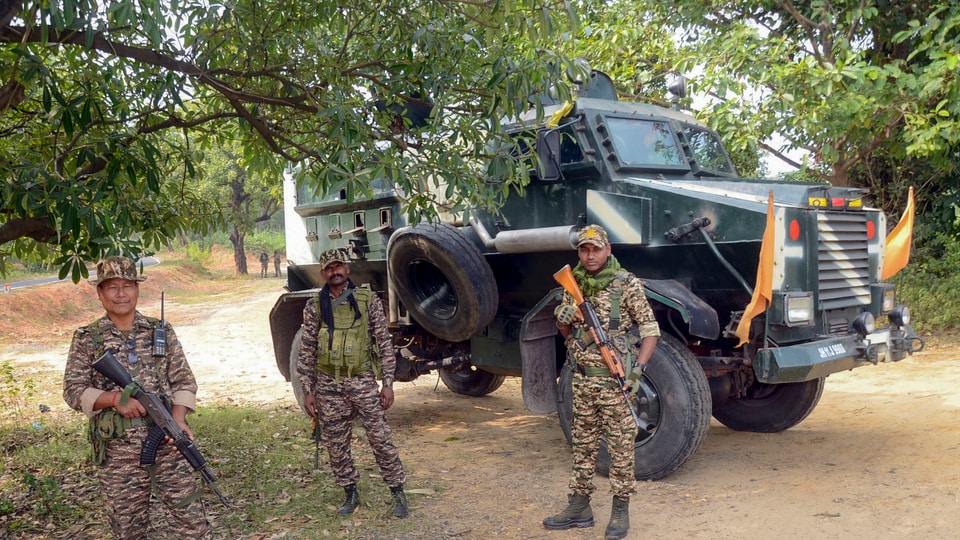
A defining feature of this phase has been the replacement of ambiguity with a clear policy framework under Union Home Minister Amit Shah. Earlier approaches often oscillated between negotiation, restraint, and sporadic force, creating mixed signals that insurgent groups exploited. Today, the government’s stance is more consistent: those willing to renounce violence are offered structured surrender and rehabilitation, while those persisting with armed struggle face sustained operational pressure. This clarity has enabled security agencies, state administrations, and local institutions to act with greater confidence and coordination, reducing the hesitation that once hampered efforts in affected regions.
The measurable decline in violence and territorial control underscores this shift. Over the past decade, incidents of Left-wing extremist violence have fallen sharply, and the number of districts affected has contracted dramatically. What was once a contiguous belt of insurgent influence stretching across multiple states has fragmented into isolated pockets. This contraction is not merely a military outcome but a reflection of governance expanding into areas where state presence was previously minimal or contested. Roads, communication networks, banking services, and administrative outposts have followed security operations, gradually restoring state visibility and accessibility in remote regions.
Strengthening the security architecture has been central to this transformation under Home Minister Amit Shah's guidance. Intelligence coordination, modern equipment, and improved logistical support have allowed security forces to operate with greater precision. Forward operating bases and fortified police stations have limited insurgent mobility, while technology-driven monitoring has enhanced situational awareness. Yet the emphasis has not been solely on force. The broader strategy recognises that durable peace depends on the state’s ability to provide services, opportunities, and institutional trust. Infrastructure expansion in tribal and forested areas, alongside welfare and livelihood schemes, reflects an effort to integrate marginalised regions into the national developmental framework.
Development initiatives have played a critical role in addressing the socio-economic conditions that once allowed insurgency to gain traction. Connectivity projects, rural development schemes, and targeted investments in education, health care, and employment have begun to alter the everyday realities of communities in former strongholds. By extending governance to these areas, the state is attempting to close the vacuum that insurgent groups historically filled. The aim is not only to weaken armed networks but also to build a more resilient social contract between the State and its citizens.
Rehabilitation policies have further contributed to the weakening of insurgent organisations. Structured surrender packages offering financial support, vocational training, and pathways to reintegration have encouraged many cadres to abandon violence. This approach reflects an understanding that counter-insurgency is as much about reducing recruitment and sustaining defections as it is about neutralising armed groups. By offering credible alternatives, governance seeks to convert former combatants into participants in local economies and civic life.
Equally significant has been the insistence that dialogue must follow disarmament. The government’s refusal to entertain negotiations under the shadow of violence signals a broader shift in policy: Engagement is possible, but only within the framework of constitutional order. This has removed the ambiguity that insurgent groups previously used to prolong conflict through intermittent ceasefire overtures. The message is one of consistency—peace is achievable, but only through renunciation of armed struggle.
The restoration of normalcy in many previously affected areas illustrates the cumulative impact of these efforts. Public events, administrative outreach, and renewed economic activity in regions once considered inaccessible indicate a gradual return of State authority. Improved security conditions have also opened the door for investment and local enterprise, linking stability with economic opportunity. The prospect of industrial and infrastructure development in these regions signals a transition from conflict management to long-term regional transformation.
As India moves towards what many see as the closing chapter of armed Naxalism, the broader lesson lies in governance itself. The decline of the insurgency reflects not a single policy or operation but the convergence of political will, administrative coordination, security reform, and development outreach. It demonstrates how sustained governance can gradually reclaim spaces once defined by conflict, replacing cycles of violence with frameworks of inclusion and institutional presence. While residual challenges remain and vigilance will continue to be necessary, the trajectory suggests that the state’s most effective tool against insurgency has ultimately been governance—steady, visible, and persistent.
This article is authored by Deepak Kumar Nayak, research associate, Institute for Conflict Management, New Delhi.


