
 E-Paper



Constitutional safety must extend to women feeders
This article is authored by Vishakha Shukla, founder, Nawabi Tails Rescue Foundation.

 Prefer HTon Google


In the last few days, the Supreme Court’s hearings on stray dogs have done more than revive a long-running debate on public safety--they have revealed an uncomfortable truth about whose safety is taken seriously. As arguments centred on dog bites, removal orders and urban inconvenience, a far more urgent concern was placed before the Court and quietly set aside: The growing harassment, assault and intimidation of women who care for community animals.
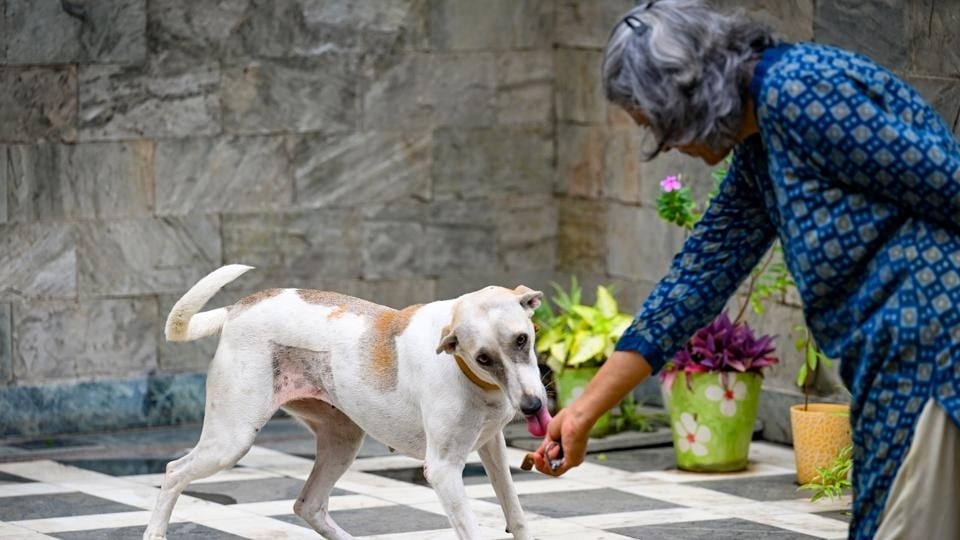
For women like me, who run animal shelters and spend our days and nights rescuing, feeding and treating community dogs, this debate is not theoretical. It is deeply personal. It is the fear of being followed home, threatened on the street, filmed without consent, abused online, labelled anti-national or anti-human just for doing work that municipal systems have historically failed to do. When these realities were brought before the Court during the recent proceedings, they were not denied. They were redirected: File FIRs, approach High Courts, seek remedies individually. The implication was clear: Violence against women caregivers, even when directly linked to the very issue under judicial consideration, does not warrant urgent or central attention.
What remains unspoken in courtrooms, but widely known on the streets, is that women have often felt safer around community animals, especially during late or early hours. For decades, familiar dogs occupying lanes and neighbourhoods have acted as silent sentinels by barking at unknown movements, accompanying women walking home, discouraging loitering and harassment. In cities where street lighting is poor and policing inconsistent, these animals have been an informal but real layer of safety. To remove them abruptly, without consultation or planning, is not just an animal-management decision but it also alters the lived safety landscape for women.
On November 7, there was an interim directive ordering the removal of stray dogs from schools, hospitals, railway stations and other institutional spaces, directing that they be sterilised and vaccinated but not returned to their original locations. This marked a clear departure from the Animal Birth Control Rules, which mandate that sterilised dogs be released back into the territories they belong to. Since then, repeated hearings have focused on numbers, monitoring technologies and enforcement mechanisms but with little acknowledgment of the human cost of such sweeping directives.
Public reaction has been polarised. While concerns about dog bites and child safety are genuine and deserve serious engagement, the discourse has rapidly slipped into vilification of animals, and of those who care for them. Women feeders and shelter owners have borne the brunt of this hostility. During recent submissions, senior advocates informed the Court of instances where women were assaulted, publicly humiliated and threatened. In response, the Court reiterated that harassment is a criminal offence and remedies exist.
Every night, women like me still step out with food bowls, medical kits and borrowed courage. We do so knowing that the dogs may be taken, the shelters may overflow, and the threats may follow us home. We do so without certainty that anyone will stand beside us when the street turns hostile. When institutions withdraw protection and call it procedure, they leave women to negotiate safety alone with fear, with resilience, with faith that compassion will not cost them their lives.
Justice, after all, is not only about removing risk. It is about distributing responsibility fairly. A society is judged not just by how it manages conflict, but by whom it chooses to protect in the process. Right now, in the name of safety, the women who protect India’s streets quietly, daily, without recognition have been left exposed.
This article is authored by Vishakha Shukla, founder, Nawabi Tails Rescue Foundation.


