
 E-Paper



How India became Naxal-free
This article is authored by M Rahmatullah, professor, Jamia Millia Islamia University, New Delhi.

 Prefer HTon Google


India’s decisive victory over Naxalism ranks among the most significant internal security achievements in recent decades. The eradication of Naxalism resulted from a clear vision, firm political resolve and sustained policy execution by the ministry of home affairs under the leadership of Amit Shah. What was once a deeply entrenched insurgency across the Red Corridor has been dismantled through a calibrated blend of security measures, development initiatives and rehabilitation efforts. This transformation marks not only the success of policy but also the rise of a governance model that has restored peace, stability and an effective State presence in regions long affected by Naxal violence.
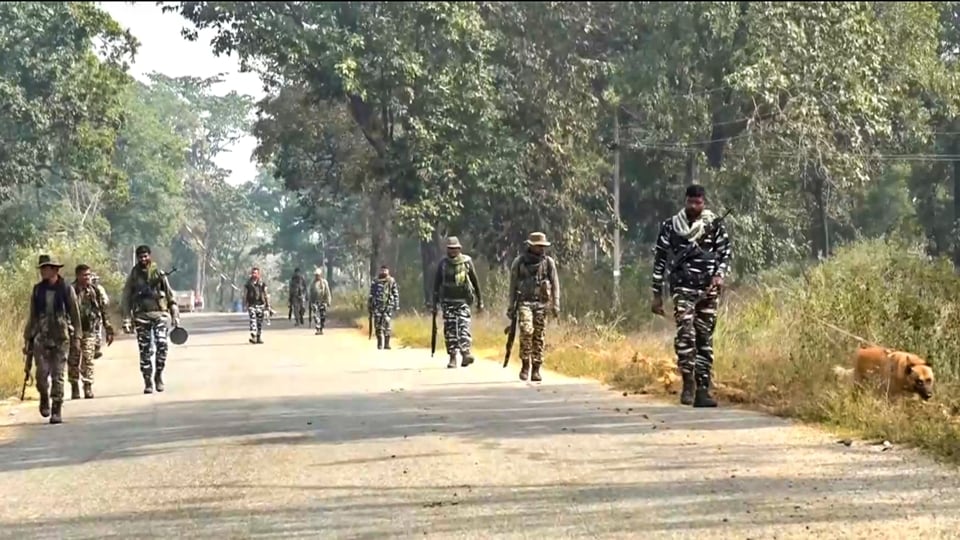
Unlike earlier fragmented approaches, the government adopted a unified, multi-dimensional policy built on the principles of dialogue, security and coordination. This clarity of vision ensured that security operations were not standalone actions but part of a larger framework aimed at restoring governance, enabling development and reintegrating affected populations. The goal of making India completely Naxal-free by March 2026 was ambitious, yet the outcomes indicate it has been achieved well ahead of schedule.
A key pillar of this success has been the government's surrender and rehabilitation policy. Rather than viewing Naxal cadres solely through a law-and-order lens, the government recognised the need to offer pathways back into mainstream society. The policy provides structured incentives: ₹5 lakh for high-ranking cadres, ₹2.5 lakh for mid- and lower-level operatives and a monthly stipend of ₹10,000 for up to 36 months during skill training. This is not merely financial assistance, it is a bridge to dignity, stability and inclusion.
The results were remarkable. In 2025 alone, nearly 2,000 Naxals surrendered, with hundreds more choosing to abandon violence in favour of livelihood opportunities. This surge reflects not just the effectiveness of incentives, but also the growing realisation among cadres that the ideological and operational backbone of the movement has collapsed. Rehabilitation programmes have ensured that former cadres are not left vulnerable but are equipped with skills, employment opportunities and social reintegration mechanisms. This humane approach by the government has played a crucial role in curbing fresh recruitment of cadres and weakening the organisational structure of Naxal groups.
Simultaneously, the government maintained relentless pressure through calibrated security operations. In 2025, 317 Naxals were neutralised, over 800 were arrested and top leadership was systematically eliminated. Operations such as Black Forest and sustained offensives in traditional strongholds like Bijapur and Sukma in Chhattisgarh broke the myth of Naxal invincibility. The liberation of areas like Budha Pahad and Chakrabandha after decades of control marked a psychological turning point. These successes were not isolated, they were part of a coordinated national effort.
Equally significant has been the financial choking of Naxal networks. Through coordinated action involving investigative agencies, assets worth over ₹92 crore were seized. A dedicated anti-Naxal vertical within the National Investigation Agency ensured faster prosecution and disruption of funding channels. This financial squeeze not only crippled operational capabilities but also eroded the morale of the insurgency and its urban support structures.
However, the most enduring impact has come from development-led interventions. The expansion of infrastructure, over 12,000 km of roads, 586 fortified police stations and 361 new camps, has redefined accessibility in previously isolated regions. Mobile connectivity, with more than 8,500 towers operational, has bridged communication gaps and strengthened intelligence networks. These developments have not only improved security response but also integrated remote communities into the national mainstream.
Financial inclusion initiatives further reinforced this transformation. The establishment of bank branches, ATMs and thousands of banking correspondents ensured that economic activity could flourish independently of Naxal influence. The opening of nearly 5,900 post offices across 90 districts brought essential services within reach of rural populations.
Education and skill development have been equally transformative. The Central Government has rolled out skill development initiatives across 48 LWE-affected districts, approving 48 Industrial Training Institutes (ITIs) with an investment of ₹495 crore and sanctioning 61 Skill Development Centres (SDCs). Of these, 46 ITIs and 49 SDCs are already operational, offering vocational training and employment opportunities to local youth. This has helped curb Naxal recruitment while facilitating the integration of remote communities into the mainstream economy.
What distinguishes this phase of India’s counter-Naxal strategy is not just its success, but its sustainability. The success of the rehabilitation programme stands as a testament to the power of inclusive governance. By giving former Naxals a stake in peace, the government has not only ended a violent conflict but also laid the foundation for lasting stability and development.
The home ministry has provided the political will and administrative coherence necessary for such a transformation. The integration of Central and state efforts, backed by substantial financial support and clear accountability, has ensured that policies translate into outcomes on the ground. India’s victory over Naxalism is not just a story of security success, it is a model of how determined leadership, humane policy and coordinated governance can resolve even the most deep-rooted challenges.
(The views expressed are personal)
This article is authored by M Rahmatullah, professor, Jamia Millia Islamia University, New Delhi.


