Every year as monsoon hits, India becomes vulnerable to severe floods, landslides, extreme rainfalls, and cyclones. Considering the intensifying climate change and severity of extreme weather events, disaster management is now no longer about the speed of relief after a calamity. It is about anticipating risks, preventing loss of life, and building a long-term resilience system.
Today India, under the leadership of Prime Minister Narendra Modi and the guidance of Union Home Minister Amit Shah, is undergoing a fundamental paradigm shift by transforming its disaster management architecture. The existing framework has evolved from a reactive, post-disaster rescue approach to a preventive, technology-driven and long-term resilience model. The overarching goal is to move decisively from "Minimum Casualty" to "Zero Casualty through preparedness, coordination and institutional capacity.
At the core of this transformation is the adoption of "Whole-of-Government" approach, where disaster management is no longer treated as an isolated administrative task but a seamless coordination between the Centre and the States. Over the past years, the government has maintained close coordination with affected states, ensuring timely deployment of central resources during every major disaster without administrative bottlenecks.
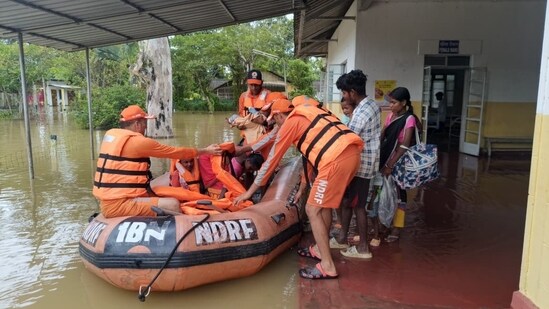
The recent floods and extreme weather events across Maharashtra, Gujarat, Kerala, Assam and Arunachal Pradesh — where central assistance was mobilised swiftly in support of state governments — demonstrates a collective governance framework in action. Moreover, the integration of several other agencies like National Disaster Response Force (NDRF), State Disaster Response Forces (SDRFs), the Indian Army, Indian Air Force, police and local administrations into this coordinated response system, has significantly enhanced the response time and effectiveness of rescue operations.
{{/usCountry}}The recent floods and extreme weather events across Maharashtra, Gujarat, Kerala, Assam and Arunachal Pradesh — where central assistance was mobilised swiftly in support of state governments — demonstrates a collective governance framework in action. Moreover, the integration of several other agencies like National Disaster Response Force (NDRF), State Disaster Response Forces (SDRFs), the Indian Army, Indian Air Force, police and local administrations into this coordinated response system, has significantly enhanced the response time and effectiveness of rescue operations.
{{/usCountry}}Tremendous efforts are underway to strengthen India's preparedness for a disaster. This is reflected in the extensive upgradation of the weather forecasting and early warning systems that have widened the forecast lead times from 3–5 days to 7 days in advance. This timely intimation provides authorities and communities valuable time for preparation ahead of an incoming disaster.
Moreover, a unified communication platform has been designed by the Common Alerting Protocol (CAP), launched in 2021, to transmit geographically targeted emergency alerts. From the outset, CAP has been leveraged to swiftly disseminate more than 17 billion alert messages to citizens through multiple media channels.
Further, recognising the increasing threat posed by glacial lake outburst floods in the Himalayan region, across Jammu & Kashmir, Ladakh, Uttarakhand, Himachal Pradesh, Arunachal Pradesh and Sikkim; Shah directed to integrate high-risk glacial lakes across these regions into expanding early warning networks, complemented by unified flood forecasting systems. This will enable seamless coordination between agencies, improving both preparedness and response.
Preparation, however, is only effective when there are institutional readiness and the infrastructure that executes it. The operational capacity on the ground has significantly strengthened through the deployment and strategic pre-positioning of NDRF across 68 strategic locations. This has drastically cut down the response times and saving more lives. A record of 1,038 operations were conducted by NDRF in 2024 alone, rescuing over 4,000 lives and evacuating more than 63,000 people to safer places. Further, multiple other Institutional reforms like increasing the operational NDRF battalions, developing national guidelines for various disasters, and integrating Dial 112 into emergency response system — have been undertaken to strengthen the disaster management ecosystem.
Recognising that local communities are always the real first responders, the Home ministry realised that empowering them considerably improves outcomes during the critical golden hours after disasters. Over one lakh community volunteers across 350 multi-hazard districts have been trained under the Aapda Mitra Scheme. Inclusion of digital innovation through mobile applications such as Mausam, Meghdoot and Damini, available in multiple Indian languages, has further enhanced accessibility to weather alerts. Simulatneously, the India Disaster Resource Network (IDRN) is digitally mapping the critical resources nationwide to facilitate faster mobilisation during emergencies.
The government acknowledged that institutional reforms alone cannot transform the system; they require sustained financial commitment to drive real impact. To ensure long-term resistance against climate risks, a dedicated National Disaster Mitigation Fund (NDMF) alongside State Disaster Mitigation Funds has been operationalised under his guidance. The sustained commitment to national resilience is further strengthened by increased budget allocations compared to the previous decade: the State Disaster Response Fund saw an approximately 4.3-fold rise, while the NDRF grew by 3.2 times.
Acknowledging the emerging risks, the Government also announced a ₹8,000-crore package supporting the modernisation of fire services, urban flood mitigation in seven major cities and a National Landslide Risk Mitigation Project across vulnerable states and Union Territories.
India's disaster management capabilities now extend far beyond its borders. Through rapid humanitarian operations such as Operation Dost following the devastating earthquakes in Türkiye and Syria, Operation Brahma in Myanmar or Operation Sagar Bandhu in Sri Lanka, India has established itself as a reliable first responder during international disasters.
Complementing these efforts are the international initiatives such as the Coalition for Disaster Resilient Infrastructure (CDRI), through which the nation is spearheading the global dialogue on climate-resilient architecture.
The rising frequency of climate-induced disasters calls for a proactive rather than reactive governance. India's transition from a relief-centric approach to one that prioritises risk reduction, preparedness and resilience is reflected in its evolving disaster management ecosystem. By blending cutting-edge technology, institutional reforms, increased financial investment, community participation and coordinated governance, the country is shifting towards a 'Zero Casualty' paradigm offering a scalable, life-saving model for a climate-threatened world.
This article is authored by Divya Dhingra, research scholar.