
 E-Paper



Lucknow's BrahMos facility, a strategic inflection point for airpower
This article is authored by Air Chief Marshal RKS Bhadauria (retd), former Chief of the Air Staff of the Indian Air Force.

 Prefer HTon Google


The inauguration of the BrahMos Aerospace production facility in Lucknow a while ago marks a watershed moment in India's defence trajectory—one that I believe will be studied in strategic circles for decades to come. Having witnessed the evolution of the BrahMos programme from its inception and championed its integration across all three services during my tenure, I can assert that this facility represents far more than industrial expansion. It is a strategic recalibration that positions Uttar Pradesh at the intersection of national security, technological sovereignty, and economic transformation.
During my years in service, particularly as Air Officer Commanding-in-Chief of the Southern Air Command and later as Chief of the Air Staff, I observed firsthand how geographical distribution of defence manufacturing capabilities directly impacts operational readiness. The concentration of critical defence production in peninsular India, while historically logical, created vulnerabilities that became apparent during crisis scenarios.
The Lucknow facility addresses this strategic asymmetry. Positioned in India's demographic and geographical heartland, it provides the Indian Air Force—and indeed all armed forces—with a production hub that is equidistant from both western and northern theatres. This is not merely about logistics; it's about operational resilience. In conflict scenarios, the ability to sustain missile production and maintenance away from coastal vulnerability zones could prove decisive.
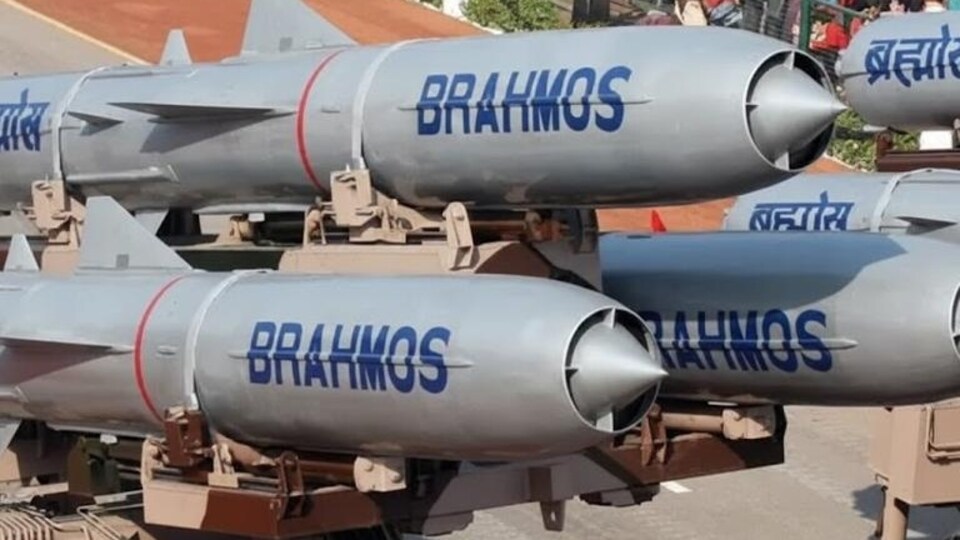
The BrahMos missile system, which I had the privilege of operationalising on multiple IAF platforms including the Sukhoi Su-30MKI, represents a quantum leap in India's strike capability. Its supersonic speed, precision targeting, and near-invulnerability to interception make it a cornerstone of our deterrence architecture. The Lucknow facility ensures that this capability can be sustained, expanded, and rapidly deployed across northern India's strategic depth.
Throughout my career, I have been a vocal advocate for indigenous defence manufacturing—not out of economic nationalism, but from hard operational experience. Import dependencies create strategic vulnerabilities that adversaries can exploit. Delays in spare parts, technology denials during crises, and the inability to customize systems to Indian operational requirements have repeatedly constrained our combat effectiveness.
The BrahMos programme, a joint venture with Russia, represents the gold standard of technology collaboration—genuine co-development with progressive indigenisation. The Lucknow facility takes this further by establishing deep manufacturing capabilities within India, specifically within the state’s emerging industrial ecosystem.
What excites me most is the technological spillover potential.
BrahMos production requires advanced metallurgy, precision engineering, sophisticated guidance systems, and complex propulsion technologies.
These capabilities don't exist in isolation—they create ecosystems. The presence of this facility will inevitably attract ancillary industries, component manufacturers, and R&D centres to Uttar Pradesh, creating a defence-industrial cluster that can support multiple platforms and systems.
The BrahMos facility, integrated within the broader Uttar Pradesh Defence Industrial Corridor, provides exactly such an opportunity. But let me be clear: this is not about low-skill assembly work. Modern missile production demands aerospace engineers, materials scientists, software developers, quality assurance specialists, and systems integrators—high-value jobs that can anchor a knowledge economy.
During my interactions with industry and academia, I have consistently emphasised that defence manufacturing must be linked to educational institutions. The presence of a world-class facility like BrahMos can catalyse curriculum reforms, industry-academia partnerships, and specialised training programmes that create a pipeline of defence-ready professionals.
The economic multiplier effects are substantial. Each direct job in aerospace and defence manufacturing typically generates three to four indirect jobs in supply chains, services, and support industries. For a state like UP, which has struggled with underemployment despite its demographic weight, this represents a pathway to sustainable, high-quality economic growth.
The strategic value of the Lucknow facility must be understood within India's broader defence modernisation trajectory. As Chief of the Air Staff, I oversaw the integration of BrahMos missiles on 40 Sukhoi Su-30MKI aircraft, creating the world's fastest supersonic cruise missile carrier combination. This capability fundamentally altered the strategic calculus in the Indo-Pacific region.
The facility will support not just production but also upgrades, variants development, and life-cycle management of BrahMos systems across services. The Indian Army's BrahMos regiments, the Navy's ship-based and submarine-launched variants, and the Air Force's air-launched versions all require sustained production, maintenance, and technological evolution.
Moreover, BrahMos has emerged as a significant defence export opportunity. Several nations in Southeast Asia, West Asia, and beyond have expressed interest. A robust production facility in Lucknow positions India to meet both domestic requirements and export commitments—a dual advantage that strengthens both our strategic autonomy and our defence-industrial base.
The security environment along India's northern borders has fundamentally changed. The events of 2020 in Eastern Ladakh demonstrated that we face a determined adversary with significant military capabilities and revisionist intentions. Our preparedness in the northern theatre—spanning from Ladakh to Arunachal Pradesh—requires not just forward deployments but also robust logistics and production capabilities in the hinterland.
The facility provides strategic depth to our northern defences. BrahMos missiles, with their precision strike capability and rapid deployment potential, are critical assets in mountain warfare and high-altitude operations. Having production and maintenance facilities within relatively quick reach of northern deployment zones enhances operational flexibility and reduces logistical vulnerabilities.
This is not about preparing for conflict—it is about preventing it through credible deterrence. The ability to rapidly produce, deploy, and sustain advanced missile systems sends a clear message about India's resolve and capability.
The facility represents the convergence of strategic foresight, technological ambition, and regional development—a combination that defines modern defence planning. For India, it reinforces our commitment to self-reliance in critical defence technologies while creating a model for how defence manufacturing can drive regional economic transformation.
This article is authored by Air Chief Marshal RKS Bhadauria (retd), former Chief of the Air Staff of the Indian Air Force.


