
 E-Paper



National superfund to clean up India’s urban landfills
This article is authored by Prodipto Ghosh, Gaurav Bhatiani and Priyanka Kochhar.

 Prefer HTon Google


India’s is urbanising rapidly, and the skyline is changing. But this transformation remains incomplete and inequitable due to a long-neglected challenge—millions of tonnes of legacy waste choking our metros.
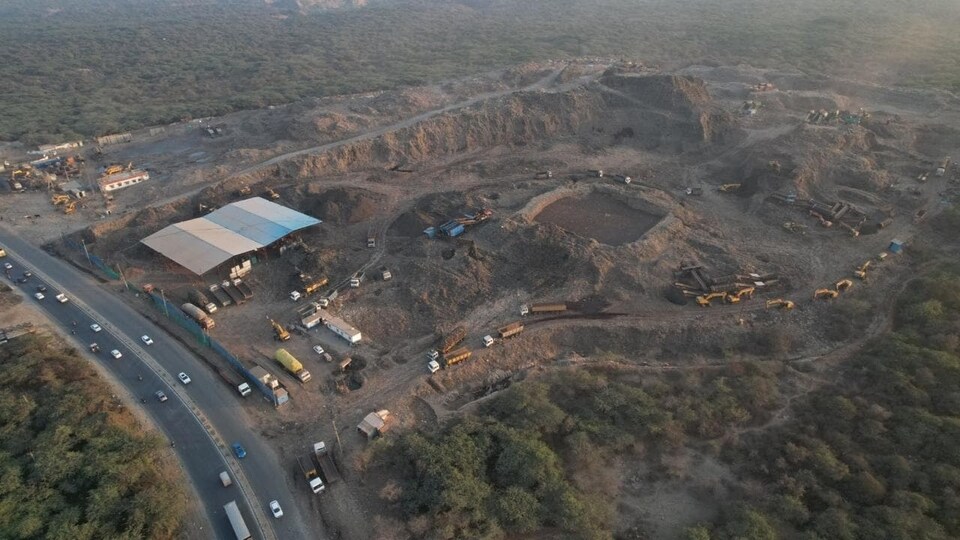
Enormous dumpsites in cities such as Delhi (Ghazipur, Bhalswa), Gurgaon (Bhandwari), Mumbai (Deonar), and Bangalore (Mavallipura) are not just unsightly; they are an environmental disaster and a breeding ground for vector borne diseases. These sites discharge leachate that pollutes groundwater, emit methane that is a potent greenhouse gas (clean fuel if captured), generate particulate matter that worsens air quality and accelerate diseases such as malaria, dengue, bird-flu amongst others.
Efforts have been made to clean-up through initiatives such as the Swachh Bharat Mission (SBM) 2.0, with an objective to make cities garbage-free by 2026, including scientific remediation of all legacy dumpsites. Unfortunately, the progress has been limited. As of December 17, 2024, out of 2,429 identified dumpsites, about a fourth had been fully remediated.
The land occupied by these dumps, often in prime urban zones, cannot be utilised to their potential. Regrettably, the poor and marginalised construct slums around them,and work in dangerous environments as rag pickers.
The scale and persistence of thesedump mountains signal the urgent need for a structural, centrally coordinated response. The United States’ Comprehensive Environmental Response, Compensation, and Liability Act (CERCLA), better known as the “Superfund,” offers a useful precedent.
Initiated in 1980, it created a federal fund to clean-up contaminated land and respond to environmental emergencies, with funds allocated competitively to capable contractors. India must adapt a similar model—tailored to its unique governance, fiscal, and waste management realities. We need to develop a centrally coordinated, mission-driven approach: the creation of a National Superfund for Dumpsite Remediation, backed by a statutory agency dedicated to the task.
The rationale is straightforward, urban governance and financing challenges constrain Urban Local Bodies (ULBs). Further, most ULBs lack the technical know-how, and institutional capacity to deal with legacy waste at the scale required. Although the SBM and other central schemes have enabled some progress, they are not designed to address the accumulated backlog. The problem is neither local nor recent; it is a cumulative failure of urban governance and management over decades. It, therefore, requires a national response.
The economic, social and political logic for a Superfund is compelling. Prime urban land currently buried under waste can be reclaimed for high-value use, generating public revenue and unlocking land for public infrastructure. The health benefits from reduced vector-borne diseases, improved air quality, and groundwater protection are substantial. Further, landfill methanecan be curtailed, aligning India’s urban policy with its climate commitments. Poor and marginalised groups may benefit by finding employment in the clean-up activity, and subsequent redevelopment projects. Some land may be allocated for low-cost housing, particularly for those living close by.
The design strategy of such a fund must ensure a robust institutional and financing mechanism that will align the interests of the centre and states, attract private expertise and demonstrate success on the ground in a reasonable timeframe. We suggest three pillars to enable and ensure sustained progress.
First, establish a National Superfund for Urban Dumpsite Remediation capitalised by central budgetary allocations, multilateral financing (e.g., World Bank, Asian Infrastructure Investment Bank), and CSR funding. An initial funding target of ₹100 billion may be considered. The fund must not be routed through state consolidated funds or municipal budgets, which are prone to delays. Instead, it should be independently administered and released on performance-based milestones.
Second, to establish a Central Urban Waste Remediation Agency (CUWRA)under the Ministry of Housing and Urban Affairs (MoHUA) with a singular mandate: legacy waste identification, prioritisation, and remediation. It would operate in a mission-mode with authority to coordinate with state governments, enforce timelines, and ensure compliance with environmental norms. It should be established with a 10-year sunset clause and include an advisory board comprising of the Chair of the Central Pollution Control Board (CPCB) and all state level pollution boards.
CUWRA must be empowered to oversee project execution, certify clean-up, and ensure post-remediation land reuse—for public housing, solar installations, urban forestry or other beneficial purposes. It will also act as a repository of technical expertise and standards, drawing from both domestic and global best practices and incorporate capacity development of ULBs as part of its mandate.
Third, all projects should be awarded to implementing agencies through a transparent, quality and cost-based competitive process. Contracts may be awarded based on a combination of quality (parameters such as technical design, technology to be used, timelines, warranties offered) and cost-efficiency. India has seen an emergence of specialised firms that handle bio-mining, bio methanation, waste-to-energy, and land reclamation.
This model would reduce fiscal burden through risk transfer, ensure faster execution, and encourage innovation. With clear project ownership, outcome-based payments, and third-party auditing, this process could catalyse a market for urban environmental remediation.
Success stories such as Indore demonstrate what’s possible. However, scaling-up such models nationwide requires a dedicated institutional architecture and dependable capital. The creation of a Superfund and CUWRA could be that catalytic reform. Parallels exist in other sectors. For example, the creation of the National Highways Authority of India in 1995, for implementation of Golden Quadrilateral project enabled a transformation.
It is time we recognised that our waste legacy is both a hazard and an opportunity. India’s next wave of urban reform must go below the surface—literally—to clean up its forgotten landfills. A national Superfund could be the instrument that delivers this much-needed transformation. Anchored by a dedicated central agency, it can convert our environmental liabilities into developmental assets. For policy makers, it is a low-hanging fruit whose economic, social, and political returns far outweigh the costs.
This article is authored by Prodipto Ghosh, distinguished fellow, TERI and former secretary, ministry of environment, forests and climate change, Gaurav Bhatiani, senior fellow, Ashoka Centre for a People-centric Energy Transition and visting professor, ISB and Priyanka Kochhar, CEO, The Habitat Emprise.


