
 E-Paper



Need to rethink cooling off period before arrest in family-related cases
This article is authored by RK Vij, former IPS officer.

 Prefer HTon Google


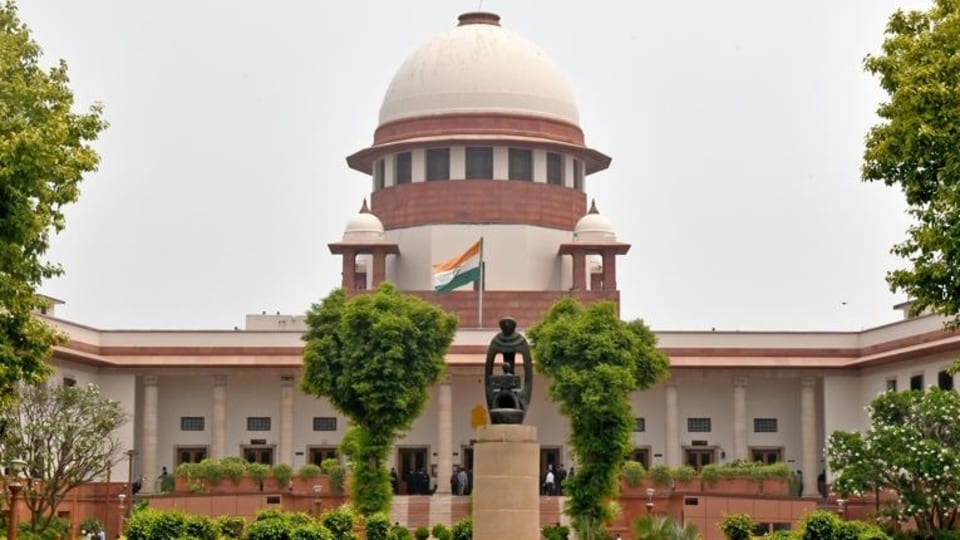
The Supreme Court (SC), recently, while disposing of a transfer petition in Shivangi Bansal versus Sahib Bansal and quashing a number of litigations related to a case of cruelty for dowry under section 498A of the IPC, said that ‘the guidelines framed by the High Court of Allahabad in the impugned judgment dated 13.06.2022 … vide paras 32 to 38, with regard to ‘Constitution of Family Welfare Committees for safeguards regarding misuse of Section 498A, IPC shall remain in effect and be implemented by the appropriate authorities.’ The SC did not discuss or analyse any of the above-mentioned guidelines in its judgment. These guidelines specifically direct the police authorities to comply with the mandatory cooling-period of two months before effecting arrest of the accused persons, and constitution and duties of the Family Welfare Committees (FWCs) in some cases registered under Section 498A of the IPC.
The directions by the two-Judge Bench of the SC are in direct contravention to the judgment of the three-Judge Bench of the SC in Social Action Forum for Manav Adhikar and another versus Union of India, Ministry of Law and Justice and others (2018) which overruled its own judgment in Rajesh Sharma and others versus State of U.P. and another (2017) and held that ‘the directions pertaining to constitution of a (Family Welfare) Committee and conferment of power on the said Committee is erroneous.’
The SC in Rajesh (supra) had issued some directions to prevent the misuse of Section 498A of the IPC. These directions included formation of one or more Family Welfare Committees in districts which would look into every complaint under Section 498A. The FWC shall look into such a complaint, may interact with the parties and submit a report to the authority (police or the magistrate as the case may be) within one month. No arrest shall normally be effected by the police till report of the committee is received. The FWC shall be constituted by the District Legal Service Authorities (DSLAs) and members could be out of para legal volunteers/social workers/retired persons/wives of working officers/other suitable and willing citizens. The Court also said that in cases where settlement is reached, the district and session judge or any other senior judicial officer nominated by him to dispose of the proceedings including closing of the criminal case.
The SC in Social Action Forum (supra) case held that such directions could not be issued by the method of interpretation of the CrPC. The ‘constitution of the FWCs by the DSLAs’ and ‘the prescription of duties of the Committees and further action … are beyond the Code and the same does not really flow from any provision of the Code.’ The Court clarified that the third agency had nothing to do with the Code and directions pertaining to no arrest till the receipt of the report from the Committee were out of scope of the Code. Since a criminal proceeding which is not compoundable can be quashed by the High Court under Section 482 CrPC, ‘the directions to settle a case after it is registered is not a correct expression of law’ the Court held.
Despite Rajesh (supra) being overruled by the SC in September 2018, the High Court of Allahabad issued similar directions as in the Rajesh case. Moreover, it directed that no arrest or police action to nab the named accused persons shall be made after lodging of the FIR or complaints without concluding the ‘cooling period’ which is two months from the lodging of the FIR or the complaint. During this period, the matter would be immediately referred to Family Welfare Committee in each district. All cases of 498A IPC ‘with, no injury 307 and other sections of the IPC in which the imprisonment is less than 10 years’ are required to be transmitted to the FWC, the High Court said. Thus, the High Court not only enhanced the period of ‘no arrest’ to two months but also enlarged the scope of inquiry into complaints as in Rajesh, the SC had said that ‘these directions will not apply to the offences involving tangible physical injuries or death’.
Thus, the directions issued by the SC in Shivangi Bansal (supra) case are in contravention to the SC judgment in Social Action Forum case. It is also a settled principle of law that misuse of law by itself cannot be a ground to repeal a penal provision or take away its teeth. With regard to arrest, the CrPC and BNSS clearly state that the police shall record reasons for effecting arrest. The arrest should not be effected in a routine manner without doing some investigation, as to the genuineness of a complaint. Differentiating between the power to arrest and justification for the exercise of it, the SC in Arnesh Kumar versus State of Bihar and another (2014) held that the reasons and materials which necessitate arrest must be forwarded to the magistrate.
In Lalita Kumari versus Government of Uttar Pradesh and others (2014), the Constitution Bench of the SC permitted to conduct preliminary inquiry in cases of matrimonial disputes to ascertain whether the complaint reveals any cognisable offence. The purpose is to see that there is no over implication of accused persons and the law abused. The Law Commission of India in its 243rd report recommended to make the offence under Section 498A, compoundable with the permission of court. But the Central Government did not make any changes in the provisions related to cruelty. Section 85 of the BNS is pari materia to Section 498A of the IPC.
This article is authored by RK Vij, former IPS officer.


