
 E-Paper



Afghanistan: Regional repercussions and India's strategic outlook
This article is authored by Soumya Awasthi, fellow, Centre for Security Strategy and Technology, Observer Research Foundation, Delhi.

 Prefer HTon Google


Afghanistan, historically known as the graveyard of empires, continues to occupy an unmatched position at the geopolitical crossroads of South Asia, Central Asia, and West Asia. Its landlocked geography positions it as a vital corridor for trade and energy pipelines, linking the Arabian Gulf to the Eurasian Heartland. Drawing from Mackinder’s Heartland Theory, Afghanistan may not be the pivot for global control, not just the southern gateway. According to Mackinder, “Who rules the Heartland commands the World Island; who rules the World Island commands the world.”
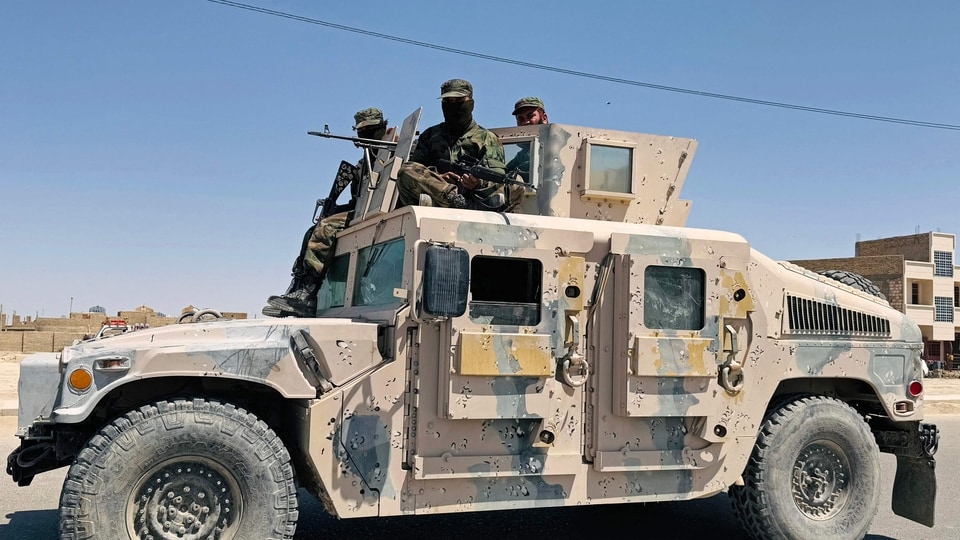
This grants the country enduring strategic relevance, which explains why regional and international powers, despite ideological misgivings about the Taliban, remain unable to detach themselves from Afghan affairs. In a world increasingly polarised between multipolar alignments and resource politics, Afghanistan’s stability or instability will profoundly influence regional connectivity, transnational trade, and global security calculations.
Since assuming power on August 15, 2021, the Taliban have pursued a centralised, ideologically driven form of governance, replacing the constitutionally-based republic with a Sharia-centric emirate. The Islamic Emirate’s administrative structure is overwhelmingly composed of Taliban loyalists, many of whom lack formal education or bureaucratic experience. Ministries were dissolved or repurposed, such as the ministry for women’s affairs being replaced by the ministry for the propagation of virtue and prevention of vice. Judicial mechanisms were reshaped around Islamic courts operating without a codified legal framework, leading to inconsistencies in rulings and erosion of due process. The Taliban have demonstrated some administrative discipline in revenue collection and border control. Yet, the absence of political pluralism, electoral processes, and civil society participation reveals a governance model marked by exclusion and ideological rigidity. Provincial governance remains opaque, and local disputes are often settled through traditional mechanisms, further blurring the line between religious authority and State function.
The initial months following the Taliban takeover witnessed economic paralysis—international aid, which formed nearly 75% of Afghanistan’s public expenditure, was abruptly halted. In the absence of central bank access and donor funding, the Afghan economy appeared destined for collapse. However, the Taliban have demonstrated a degree of fiscal resilience. Through taxation on customs and cross-border trade, as well as fees on mining, especially coal and lithium extraction, the regime has generated annual revenues exceeding $2 billion as of 2024. Nevertheless, the Afghan economy remains heavily informal, dollarised, and disconnected from global financial systems. Inflation has stabilised, but unemployment remains endemic, and the absence of a functioning banking sector continues to erode business confidence. Humanitarian assistance from the United Nations, Qatar, and a handful of regional partners, such as China and India, has been critical in mitigating starvation and providing basic health care. However, such aid remains insufficient and cannot substitute for systemic development, especially in education, infrastructure, and industrial revival.
One of the most radical transformations under Taliban rule has been in the education sector. Girls have been systematically excluded from secondary and tertiary education. Despite global condemnation, Taliban authorities insist that their policies reflect religious imperatives and cultural authenticity. While primary education for girls is allowed in some provinces, these instances are sporadic and vulnerable to reversal. In contrast, the growth of madrassas—religious seminaries—has surged. These institutions, often supported by private donations and state approval, focus overwhelmingly on Islamic jurisprudence, Arabic grammar, and memorisation of religious texts, with minimal emphasis on science or mathematics. The Taliban’s educational vision appears to prioritise doctrinal loyalty over employability, fostering concerns that a generation of Afghans is being trained in isolation from global knowledge systems. This ideological filtering of education is likely to deepen the country’s socio-economic stagnation and foster extremism over the long-term.
Afghanistan under the Taliban has regressed into one of the most gender-segregated societies in the modern world. Women are banned from most public employment, including humanitarian organisations, media, and government positions. They are restricted in movement without male accompaniment and are required to adhere to strict dress codes. Public lashings and extrajudicial punishments have returned in several provinces. The cumulative impact of these policies is a near-complete erasure of women from public life, violating multiple international human rights conventions to which Afghanistan was once a signatory. The Taliban continue to argue that their model safeguards women’s honour and familial roles, yet data indicates increasing mental health crises, economic dependency, and growing rates of child marriage. These developments are not merely human rights issues but are structurally undermining national resilience and productivity by sidelining half the population.
Despite widespread international rejection of formal recognition, the Taliban have engaged in a nuanced form of diplomacy often described as functional pragmatism. Delegations have visited countries such as Russia, Iran, China, Pakistan, and Uzbekistan, discussing trade, connectivity, border security, and humanitarian coordination. In return, several countries—including India—have re-established technical missions in Kabul, facilitating consular work and aid delivery without recognising the Islamic Emirate. The Taliban’s outreach appears aimed at establishing economic partnerships and easing isolation while avoiding commitments to reform. Notably, China has signed preliminary agreements on mineral extraction, and the Uzbekistan-Afghanistan-Pakistan railway corridor has received tentative political support. Yet, the absence of legal guarantees, transparency, and security assurances has limited these projects’ implementation. Recognition remains elusive as most States link it to inclusive governance, women’s rights, and counter-terrorism commitments, none of which the Taliban have met meaningfully.
The Taliban claim to have restored peace by ending decades of insurgency, and there is some truth to this within major urban centres. However, the broader security landscape remains volatile. ISIS-K continues to operate, launching high-profile attacks against both Shia minorities and Taliban installations. The presence of groups like Tehrik-i-Taliban Pakistan (TTP) in eastern provinces has inflamed tensions with Islamabad, occasionally leading to cross-border shelling. Furthermore, the Taliban’s ties to Al-Qaeda remain ambiguous, with UN reports suggesting continued contact between senior leadership. While the Taliban have demonstrated greater control over territory than the previous government, their refusal to dismantle terrorist networks has undermined international confidence and complicated regional security. This ambiguity suggests the Taliban are using their leverage over terrorist actors as both a deterrent and a bargaining chip in foreign relations.
India’s engagement with the Taliban regime has been pragmatic but cautious. After closing its embassy in August 2021, New Delhi reopened a technical mission in 2022 to oversee humanitarian delivery and maintain a minimal diplomatic presence. India has donated food grains, medicines, and Covid-19 vaccines, while simultaneously enhancing intelligence cooperation with regional actors. India’s principal concern remains the potential resurgence of Pakistan-backed anti-India groups in Afghanistan’s southern and eastern provinces. Despite ideological differences, India’s strategic community recognises that disengagement risks ceding ground to China and Pakistan. Thus, India’s policy has combined humanitarian outreach with hedging strategies, aiming to retain leverage without legitimising the Taliban.
Afghanistan today is a paradox—internally controlled but externally illegitimate, administratively active but economically anaemic, strategically central but diplomatically marginalised. The Taliban have demonstrated governing stamina, but their model is intrinsically limited by exclusion, rigidity, and religious orthodoxy. International actors must avoid normalisation without conditionality. Recognition must remain tied to tangible progress in gender rights, education, and counter-terrorism compliance. At the same time, humanitarian aid must be depoliticised to prevent famine and disease. Engagement should continue through multilateral platforms such as the UN, regional mechanisms like the SCO, and technical coordination on issues such as border management, connectivity, and health. Crucially, regional powers must adopt a unified position to avoid fragmented bilateralism that allows the Taliban to play one actor against another. The future of Afghanistan will be determined not by ideology alone, but by whether its rulers can evolve from fighters into statesmen—a transformation that remains far from assured.
This article is authored by Soumya Awasthi, fellow, Centre for Security Strategy and Technology, Observer Research Foundation, Delhi.


