
 E-Paper



Munir’s impossible choice on Gaza
This article is authored by Prabhu Dayal, former ambassador, New Delhi.

 Prefer HTon Google


"There is no such thing as a free lunch", is a popular adage meaning that it is impossible to get something for nothing. The saying originated from a 19th-century practise in American saloons where a "free lunch" was offered to customers who purchased at least one drink. The food was often very salty (ham, crackers, cheese) to make patrons thirsty so they would buy more beer. The price of the drinks was high enough to cover the "free" food, ensuring the saloon still made a profit.
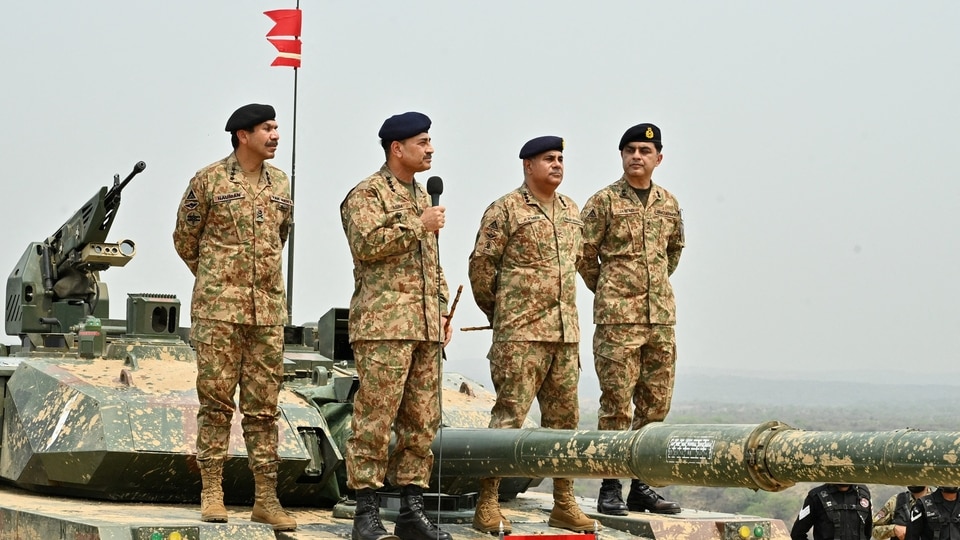
Recently, the phrase "there are no free lunches" has become a central theme in discussions regarding Pakistan’s army chief and first-ever chief of defence forces, field marshal Asim Munir. This sentiment largely stems from his unprecedented diplomatic engagement with US president Donald Trump. On June 18, 2025, president Trump hosted general Asim Munir for a private lunch at the White House. It was the first time a US president met a Pakistani army chief alone, without accompanying civilian leaders, who had not officially taken power through a coup.
Munir perhaps did realise that "there are no free lunches", and that the US would expect significant strategic concessions from Pakistan in exchange for this high-level recognition. The relationship between Trump and Munir began to turn transactional. While formal diplomatic concessions are often framed as strategic, many specific gestures have been characterised as "personal" or "private" deals that directly benefit the business interests of the Trump family or the personal status of Munir. One of the most notable concessions involves the Trump family’s business ventures. Pakistan signed a "letter of intent" to cooperate on blockchain and stablecoin adoption with World Liberty Financial, a cryptocurrency company founded by Donald Trump Jr. and Eric Trump.
Asim Munir then engaged with Trump using tangible assets that appeal to Trump’s preference for "flashy optics" and "tangible deals. During a White House visit in September 2025, Munir personally presented Trump with a box of rare earth mineral samples from Pakistan’s deposits, valued at $6 million according to the Pakistan government's assessment. Following this meeting, the US EXIM Bank approved $1.25 billion in financing for the Reko Diq copper-gold mining project. Analysts suggest this military-led "sales pitch" ensures the Pakistani military—not civilian institutions—oversees and protects American investment in the sector.
In the latter half of 2025, the transactional nature of the relationship has evolved into specific demands from the U.S. side which must surely have made Asim Munir quite uncomfortable. On September 29, 2025 Trump proposed a 20-point peace plan for Gaza. This includes the deployment of an International Stabilisation Force (ISF) composed primarily of troops from Muslim-majority nations. Trump’s plan envisions the ISF overseeing security, reconstruction, and the disarmament of Hamas during a transition period. He has emphasised that there will be no US "boots on the ground" for this mission.
The US reportedly started exerting pressure on Pakistan to contribute troops to a Gaza stabilisation force as part of Trump's Gaza peace plan. Trump has reportedly himself asked Asim Munir to contribute troops to the ISF. On December 19, 2025, US secretary of state Marco Rubio stated that Pakistan had "offered to consider" being part of the stabilisation force. He emphasised that Pakistan is "key" to the plan.
The Pakistani government has officially stated it has not yet taken a decision. Foreign Office spokespeople have clarified that while they are open to discussions, they have specific conditions, notably that disarming Hamas would not be the responsibility of Pakistani troops.
Sending troops to Gaza would be highly sensitive domestically. Public sentiment in Pakistan is strongly pro-Palestinian, and any involvement in a US-backed plan that could be seen as policing Gaza for Israel faces a potential backlash from Islamist parties.
Thus, the "no free lunch" aspect reflects domestic risks for Munir, for "saying yes" to US demands to send troops to Gaza could cause Pakistan to "implode" due to backlash from Islamist parties, while "saying no" could cause relations with Trump to "explode".
The US has characterised Pakistan's response as an "offer," the Pakistani government has clarified that a final decision is still pending. Pakistani officials, including foreign minister Ishaq Dar, have indicated they would participate in peacekeeping but would not support a mandate to forcibly disarm Hamas. The military leadership faces significant internal risks, as any perceived cooperation with Israel or the US in Gaza could spark a domestic political backlash. Clearly, it is a proverbial case of having to choose between the devil and the deep sea!
This article is authored by Prabhu Dayal, former ambassador, New Delhi.


