
 E-Paper



Pakistan's Gaza conundrum
This article is authored by Prabhu Dayal, former ambassador, New Delhi.

 Prefer HTon Google


On January 22, Pakistan formally agreed to join the the US-led Board of Peace and the International Stabilization Force (ISF) as part of a strategic effort to stabilize Gaza following a ceasefire agreement. The ISF is a proposed multinational peacekeeping force intended to secure Gaza, train Palestinian police, and assist in dismantling Hamas. Pakistan has expressed willingness to contribute 3,500 troops to it.
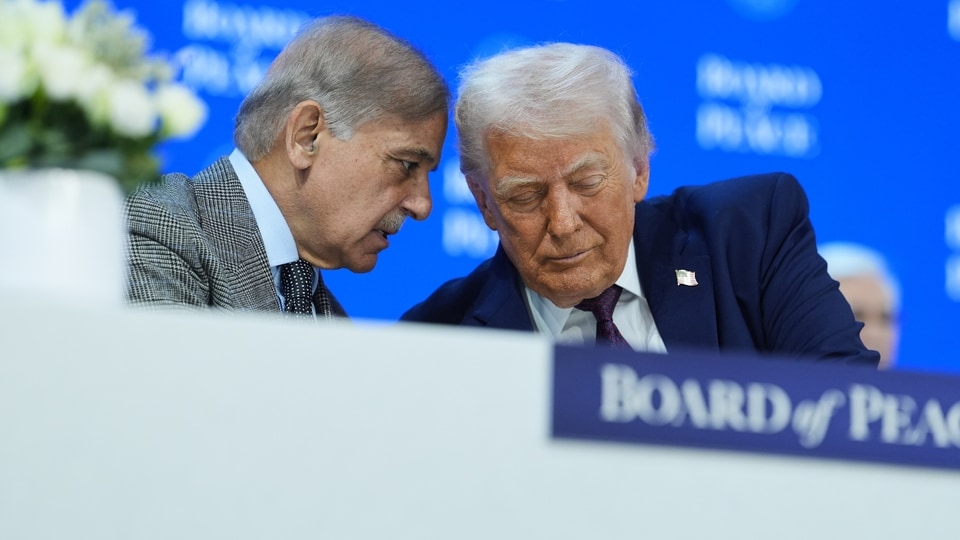
However, on account of the decision to join the ISF, Pakistan faces what has come to be called its Gaza conundrum. It refers to the strategic and domestic dilemma of participating in a proposed ISF for Gaza while maintaining its long-standing refusal to recognise Israel and its historical support for the Palestinian cause. Pakistan has been navigating a complex conundrum that balances deeply rooted public support for Palestine with the strategic necessity of maintaining close relations with the US and securing financial aid.
Pakistan's decision to participate is driven by several key strategic and diplomatic factors. Participation in the ISF is a central component of an effort to strengthen relations with Washington. Pakistan seeks to leverage its participation to secure deeper strategic engagement, including the potential restoration of its Major Non-NATO Ally (MNNA) status and the revival of military training and equipment programs. There are also economic and security imperatives. Islamabad is seeking to translate its military cooperation into tangible economic benefits, such as US investment in its minerals and energy sectors and continued support for its strained economy.
This move is seen as critical for maintaining Pakistan's standing within a transactional relationship with the Trump administration. Deployment of the troops is viewed as a way to secure US investment, security aid, and favourable treatment from the IMF. However, the decision faces significant internal opposition as the ISF will have the task of disarming Hamas. Critics in Pakistan argue that this aligns Pakistan too closely with Israel. Opposition parties, such as Imran Khan's PTI and Jamaat Ulema-i-Islam (F), have slammed the government for "following Trump’s diktat" and potentially operating alongside Israel on the Board of Peace. Experts warn that an unpopular deployment could trigger domestic rebellion given the high level of public sympathy for Gaza in Pakistan.
Pakistan has said it will participate in peacekeeping, but it has explicitly refused a role in peace enforcement, specifically the disarmament of Hamas. Foreign minister Ishaq Dar stated that disarming Palestinian resistance groups is not Pakistan’s responsibility and belongs to Palestinian authorities. However, there are concerns in Pakistan that it could be drawn into a framework supported by the US and then pressured to take on more coercive, "peace enforcement" duties after it is already committed. Critics in Pakistan argue that their country could become a "Muslim face" for a coercive security design, effectively doing the difficult work of disarming Hamas that Arab States avoid, and which could lead to clashes with Palestinians and damage Pakistan's image as a champion of their cause.
There are also fears in Pakistan of a domestic political backlash and demonstration of street power. The government has faced accusations from both religious and political circles of "abandoning the Palestinian cause" by even negotiating participation in a western-backed mission. Pakistan’s powerful Islamist parties and the general public are deeply pro-Palestinian and anti-Israel. Any deployment of troops in the ISF which is seen as assisting Israeli security or operating under a US-led plan risks massive domestic unrest.
Significantly, Israel has formally and categorically rejected any role for Pakistan in the proposed ISF for post-war Gaza. Israeli officials, including economy minister Nir Barkat, cited deep mistrust, accusing Pakistan of supporting terrorism and having links to Hamas. Consequently, Israel refuses to have Pakistani troops on the ground, favouring only trusted allies. Israel cited a lack of diplomatic ties and "terror" backing, listing Pakistan alongside Qatar and Turkey as unsuitable for the peacekeeping mission. Israel has also expressed deep concerns over links between Pakistan-based groups, such as Lashkar-e-Taiba, and Hamas. This decision confirms that Israel is actively shaping the composition of the security forces for Gaza to exclude nations it views as hostile, directly opposing Pakistan's involvement in the Trump-backed peace plan.
Summing up, the participation of Pakistani forces in the proposed ISF for Gaza becomes highly unlikely due to a mutual "trust deficit" and fundamental strategic disagreements between Israel and Pakistan. While the US has reportedly pushed for Pakistan's inclusion as a major Muslim military power, Israeli opposition and Pakistani operational conditions have created a stalemate that makes actual troop deployment unlikely in the current framework. Ironically, the Israeli veto may save Pakistan from a difficult domestic and foreign policy dilemma, as participation would be seen as supporting Israeli interests in the region.
This article is authored by Prabhu Dayal, former ambassador, New Delhi.


