
 E-Paper



Pakistan’s strategic ambiguity in the US-Iran war
This article is authored by Surya Prakash Noutiyal, doctoral candidate, Centre for West Asian Studies, Jawaharlal Nehru University, New Delhi.

 Prefer HTon Google


As the US-Israel war on Iran continues, Iran continues to attack the Arab Gulf countries. Saudi Arabia, the most powerful State in West Asia, has been under continuous drone and ballistic missile attack from Iran. In this backdrop, critics are questioning the reliability of the Saudi-Pakistan mutual defence agreement, which entered into force six months ago, as Pakistan is playing the role of a mediator amid the US-Iran war.
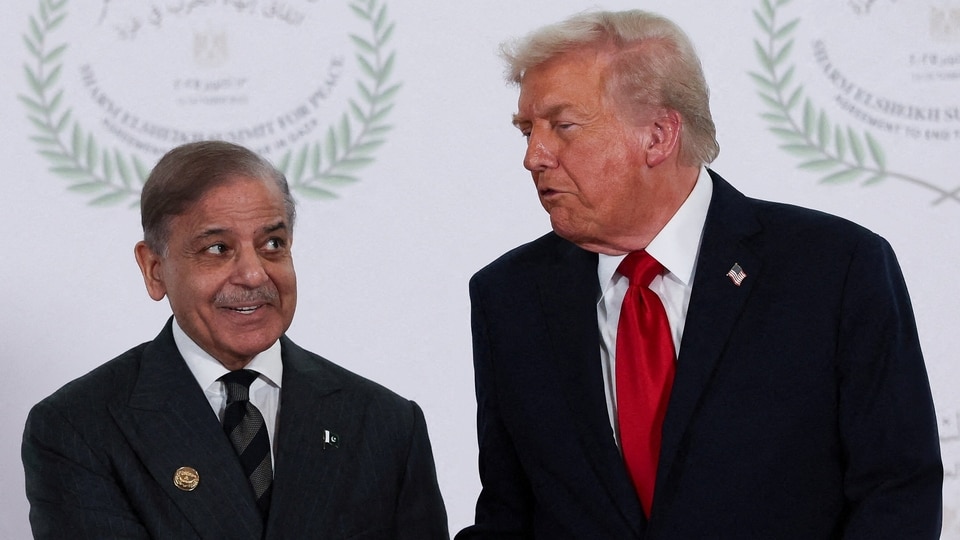
On September 17, 2025, Saudi Arabia-Pakistan entered into a strategic mutual defence agreement, which promises that an attack on Saudi Arabia will be responded to by a Pakistani attack on that state and vice versa. Pakistan’s military and democratic leadership have rushed to Riyadh after the war broke out between the US, Israel, and Iran, without providing any military support at the time of conflict which led to severe implications for the defence of the Kingdom.
Pakistan’s armed forces Field Marshal Asim Munir visited the Kingdom on March 7. It was followed by Pakistan’s Prime Minister (PM) Shehbaz Sharif’s visit March 12. PM Sharif has “expressed Pakistan’s full solidarity and support for the Kingdom of Saudi Arabia in these challenging times”. But his speech had no mention on Pakistan’s potential defence support to Riyadh in this conflict.
Iranian drones and ballistic missiles continue to attack US bases in Saudi Arabia. It has also targeted energy infrastructure and residential buildings. Despite a multilayer air defence system including Terminal High Altitude Area Defence (THAAD) and Patriot PAC-3, Saudi energy infrastructure, such as the Ras Tanura Refinery, Shaybah Oil Field, Prince Sultan Air Base, and other civilian infrastructure, is under attack. In addition to these, the closure of the Strait of Hormuz is hurting oil and natural gas exports from the Kingdom.
Since the start of the war on February 28, after the US and Iran negotiations failed to reach an agreement on the Iranian nuclear and ballistic missile programme, Pakistan has been trying to present itself as a neutral State in this conflict. On the one hand, Pakistan affirmed its solidarity to Iran, but on the other hand, its leadership visited Saudi Arabia and promised support for the war. Pakistan did not condemn the US for attacking Iran. Pakistan is the only country which has not been targeted by the Iranian missiles and drone strikes, even though Pakistan have strategic defence partnership with the US, as the other GCC States have, which are continuously targeted by Iran.
It is ironic that the same country, Pakistan, has signed a North Atlantic Treaty Organisation (NATO)- type defence deal with Saudi Arabia, yet the reliability of the Saudi-Pakistan defence deal has been in question.
As the Saudi-Pakistan defence partnership is dysfunctional, Pakistan is still getting support from Saudi Arabia. Dr Ali Awadh Asseri, former KSA ambassador to Pakistan, has argued that the current crises in Iran carry economic and strategic implications for Pakistan, including rising energy costs and the safety of millions of Pakistanis living across the Gulf. And in this context, the Saudi-Pakistan strategic mutual defence agreement becomes significant. Which means Saudi Arabia should support Pakistan during its time of crisis, but do not expect anything in return.
Dr Asseri failed to explain how Pakistan is supporting Saudi defence when Iran has violated the Kingdom’s sovereignty, attacked its territory and energy facilities. Neither the agreement was able to deter Iran from attacking Saudi Arabia, nor has it provided any military support to the Kingdom when it required the most. Clearly, there is no strategic foresight in this agreement.
Last year, Iran struck the US base in Bahrain after a 12-day war in June. In the context of international relations, it was a clear violation of Bahrain’s sovereignty. On the part of Saudi Arabia, it appeared very natural that it does not want to appear as an optionless in case its sovereignty is violated by Iran in a future conflict in the region. Through a NATO kind of deal with Pakistan, the Kingdom want to rely on its deterrent posture against any Iranian adventure in West Asia. Through a mutual defence agreement with Pakistan, the Kingdom wants a long-term defence partner to secure its interests in West Asia. However, the agreement with Pakistan was unable to deliver any deterrence to Iran to prevent an attack on Saudi Arabia.
The US-Israel war on Iran has brought Saudi Arabia to a crossroads, to rely on its own capabilities against an imminent attack from Iran. The US is an ally of the Kingdom, has brought Saudi Arabia into the face of war, but is not willing to provide long-term security to Riyadh.
In April 2015, Saudi Arabia asked for Pakistani support for its military campaign in Yemen. However, Pakistan declined. Currently, Islamabad is involved in a conflict with Afghanistan. Domestically, the Baloch Liberation Army (BLA) is also fighting with the Pakistani army over the decades of their developmental issues.
Pakistan is in desperate need of economic recovery to support its development and defence establishments. For Pakistan, Saudi Arabia is a vital player in supporting its crumbling economy and helping it to secure loans from international institutions such as the International Monetary Fund and the World Bank.
In reality, Pakistan cannot support Saudi Arabia militarily as this might antagonise the Iranian regime, and Pakistan may also face an Iranian attack from drones and ballistic missiles.
Riyadh, on the other hand, relies on its own defence capacity and security arrangement with the U.S. to defend itself against Iranian attack.
In the long-run, Saudi Arabia has to build its own strong defence forces and localise its defence industry. Iran remains a major security threat to Saudi Arabia in West Asia. Riyadh has to rely on trusted international partners for its long-term security goals. Pakistan cannot serve the security interests in the conflict-prone region. The current neutral stance on the conflict has proven Pakistan's unreliability. It remains a burden on Saudi Arabia to support it through huge financing, mediation with the Taliban and support its energy needs. Saudi Arabia must not rely on Pakistan’s military support and build its own indigenous industrial military system to strengthen its security in the conflict-prone region.
This article is authored by Surya Prakash Noutiyal, doctoral candidate, Centre for West Asian Studies, Jawaharlal Nehru University, New Delhi.


