
 E-Paper



Shifting dynamics in the Strait of Bab al-Mandab
This article is authored by Sanjay Turi & Surya Prakash Noutiyal, doctoral candidates, School of International Studies, Jawaharlal Nehru University, New Delhi.

 Prefer HTon Google


In retaliation for the Israeli attack on Iranian gas fields, Tehran has attacked the Aramco refinery in Yanbu city of Saudi Arabia. As the Yanbu-based refinery is one of the largest refinery hubs of the Gulf, the retaliatory attack on this port by Iran has possibly brought the crisis of the Strait of Hormuz to the Red Sea too. Given that the crisis in the Strait of Hormuz is likely to continue, the Strait of Bab al-Mandab in the Red Sea is an alternative to the global energy supply. As the Iran-backed Houthis located in Yemen have not yet started responding, the possible attack by them in the near future will create chaos in the region. In this context, Israel’s recent diplomatic recognition of the sovereign State of Somaliland has represented a significant geopolitical development with far-reaching implications in the Horn of Africa and the Red Sea Corridor. After Israel’s formal recognition, it marked the first-ever diplomatic mission to the country. This move elevates Somaliland’s strategic significance in the regional power dynamics. Somaliland was seeking international recognition after breaking away from Somalia in 1991. Somaliland has remained an unrecognised country for more than three decades. This recognition by Israel is likely to change the entire geopolitics of this region, provided that this diplomatic recognition happened at a time when Israel and the US were about to launch an attack on Iran, which is not merely a coincidence but possibly a well-calculated strategic move by Israel. Both the US and Israel were probably well aware of the fact that, post-Iranian attack, they would be witnessing retaliation from the Iranian proxies from across the region.
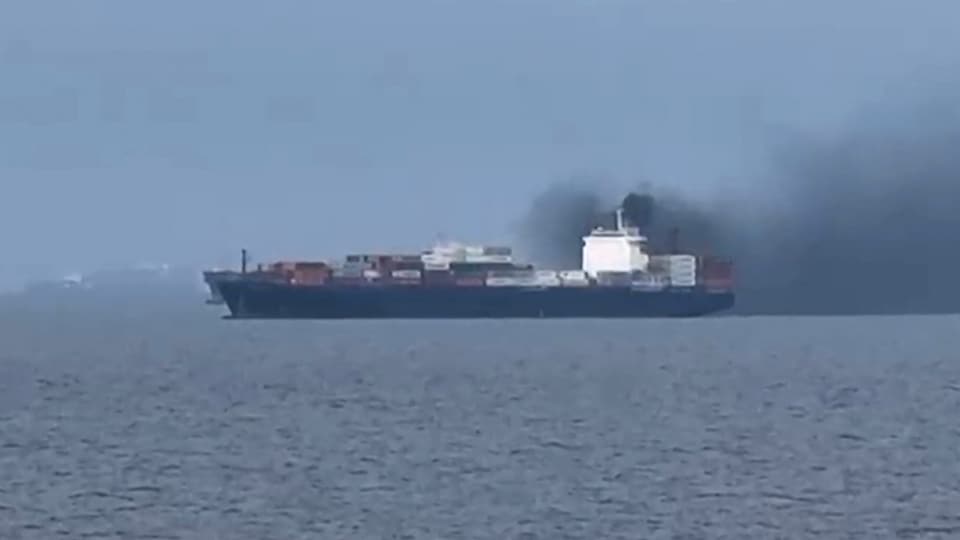
By formalising relations with Somaliland, Israel indicates its intent to strategically position itself near one of the world’s most critical maritime chokepoints, the Bab al-Mandab Strait. As a result, key powers in the Horn of Africa and West Asia are compelled to reassess their political, economic and security interests in the region. The recognition of Somaliland thus intensifies geopolitical competition in the Horn of Africa region. The Horn of Africa was already embedded in great-power competition due to its strategic location near the Bab al-Mandab Strait and its critical role in the global trade route. However, given the closure of the Strait of Hormuz in the wake of the ongoing war in Iran, the significance of the Bab-al-Mandab Strait has significantly increased in the recent changing geopolitics.
As the US-Israel’s calculation of fostering regime change in Iran has possibly failed, the completely violative and unilateral decision of the US and Israel to attack Iran has backfired. The way Iran is responding is absolutely phenomenal and unexpected. As both sides have opened multiple fronts against each other, the degree of lethality continues to increase every single day. While Iran has nothing left to lose in this war, except defending its existential crisis, the US and Israel’s global image of military superiority is neither letting them exit this war, nor have they reached any point where they could claim that they have really won this war. While Iran is using an asymmetrical warfare strategy to defend its sovereignty, both the US and Israel may have realised that it is not possible to defeat Iran militarily. As the US and Israel are not getting the support that they require to defeat Iran, the recent attack by the US on the Kharg Island, a primary oil export hub of Iran, can be interpreted as a strategy of the US to internationalise the issues of the shortage and the rising prices of crude oil. Doing so would certainly obstruct the shipping of non-American vessels carrying crude oil from the Strait of Hormuz, which Iran has selectively ordered not to give passage to enemy vessels through this strait. Hence, both sides continue to open new fronts every single day, willingly or unwillingly, as the airstrikes continue to rock the targets of both sides. In this context, Israel’s engagement with Somaliland is likely to play a vital role in opening another front of this war, which will possibly lead to the closure of the Bab-al-Mandab Strait and a new crisis in the Red Sea too.
A recent statement issued by Abdul-Malik al-Houthi, a leader of the Yemen-based Houthis working as an Iranian proxy against Israel, says that Houthi militias are well prepared to participate in the Iranian war against the US and Israel. He said that the Houthis militia’s hands are already on the trigger, and they will soon be opening a new front against Israel, depending on the circumstances arising from the ongoing American-Israeli strikes on Iran. In this context, Israel’s recognition of Somaliland, which is located in the Horn of Africa, is likely to play a significant role for Israel to politically and militarily keep an eye on the Iranian proxy, Houthis, in Yemen.
Reports are coming out that Israel is considering building a military and intelligence outpost in Somaliland to target the Houthis from the region, which has sparked a new wave of criticism of Israel, as this step by Israel may drag eastern Africa into a larger West Asia conflict. As Somaliland has officially not yet ruled out this claim, it clearly shows that Somaliland may be maintaining strategic silence on this matter. Given that the world is already facing skyrocketing energy prices post-Strait of Hormuz crisis, the upcoming possible confrontation between Houthis and Israel in the Horn of Africa may also fuel this war, giving another setback to the disruption of another supply chain route and further paving the way for exponentially rising energy prices worldwide.
Somaliland, geo-strategically located in the Horn of Africa near Bab al-Mandab, is a narrow waterway connecting the Gulf of Aden with the Red Sea. This passage is the most critical chokepoint to connect Asia with Europe. This waterway is significant for global trade, and around 20% of global container shipping passes through the region. Hence, Bab-al-Mandab Strait remains important, but vulnerable to attack from the Houthis militia of Yemen.
Israel’s recognition of Somaliland has immediately triggered criticism from 20 West Asian and African countries. The United Nations Security Council (UNSC) held an emergency meeting to discuss Israel’s diplomatic recognition of Somaliland. Multiple Security Council members and regional States have warned against this provocative step, which could potentially inflame tensions in the Horn of Africa. The Somali federal government view sovereign Somaliland as a threat to its territorial integrity. Its allies in the region, Djibouti, Egypt, Saudi Arabia and Türkiye, rejected the Israel-Somaliland agreement. The African Union has warned that the recognition of Somaliland could set a dangerous precedent, potentially threatening the continent’s peace and security. However, criticism apart, Israeli recognition of Somaliland weeks before the Iranian attack is a well-calculated strategic move of Israel to counter Iranian proxies in the region. As the reports are coming out that Iran, as a retaliatory attack, has now started targeting the energy infrastructures located on the Red Sea coast.
Israel’s strategic aspirations in the Red Sea Corridor and the Horn of Africa are motivated by regional power balancing, checking security threats, and safeguarding maritime trade in the area. As Israel wants to counter the Houthis’ threat arising from Yemen, its possible military base in Somaliland would counter the security threat emanating from Yemen. Hence, Israel’s historic move to recognise Somaliland will show its military presence in the region, aiming to offset Iranian dominance in the Red Sea forever.
The Horn of Africa is central to India’s maritime and trade security. Due to the regional instability arising from possible confrontation between Houthis and Israel in this region, this diplomatic step by Israel will significantly disrupt another supply chain route, badly hampering India’s energy imports transiting through this route. This instability will also translate into higher premiums/insurance costs and naval securitisation, forcing India to recalibrate its maritime policy on a broader scale.
While Israel’s recognition of Somaliland may potentially temporarily hamper India’s security and economic interests in West Asia, it will also provide an opportunity to India to reshape its West Asia policy with reference to China. Nevertheless, to counter China’s increasing footprint in the region, India, as a core member of I2U2, may benefit significantly from Israel’s diplomatic and military presence there in the region. Therefore, given the geopolitical sensitivity of this region as a key gateway to energy security, India must play smart and maintain a low-profile neutral stance, formally advocating dialogue and regional stability.
This article is authored by Sanjay Turi & Surya Prakash Noutiyal, doctoral candidates, School of International Studies, Jawaharlal Nehru University, New Delhi.


