
 E-Paper



The fallout on the EU of the Russia-Ukraine war
This article is authored by KV Ramesh, senior journalist, Bengaluru.

 Prefer HTon Google


During a telephonic call in February 2014 with American ambassador Geoffrey Pyatt in Kyiv, Victoria Nuland, then US assistant secretary of state for European and Eurasian affairs, burst out with an expletive against the European Union (EU). Nuland’s reply was in response to Pyatt’s ruminations about how the European leaders would react to their plan for a regime change in Ukraine.
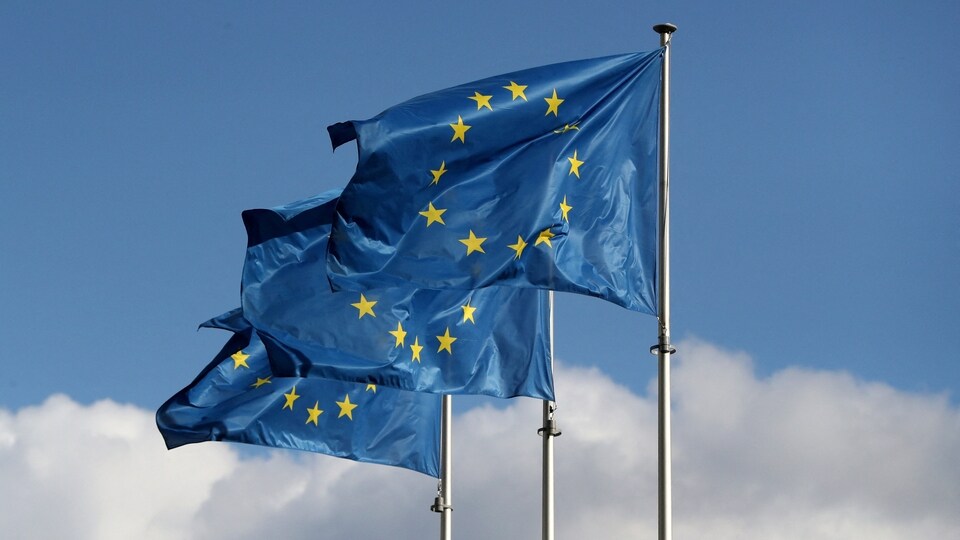
The EU, if current events are any indicator, is out of the loop on the US initiative to end the Ukraine war. The European leaders are frozen out of the negotiations between the US and Russia. The Europeans, who have armed and financed Ukraine to the tune of $170 billion so far, and plan another $50 billion to fight the war, have found that the US, provider of security for them for eight decades since the end of World War II, has abandoned them.
The Europeans prospered for close to three quarters of a century under the security umbrella provided by the US, but now President Trump has made it clear that it was time they pay for their own security. The US is willing to accept the Russian demand that Ukraine not join the NATO, and that the war-torn country be ‘de-Nazified’, shorthand for getting rid of the elements that have been glorifying the Nazi past of Ukrainian ultra-nationalists.
The Europeans have not been able to come up with a substantive plan of their own to end the war, and save whatever is left of Ukraine. The European concept is a blueprint for the continuance of the war, which will be ignored by both the US and Russia.
The Europeans have been forced by the US to increase their defence expenditures to high percentages of their national budgets. That has led to recession in all major western European economies. Germany, the main driver of European growth post-WW II, is facing deindustrialisation, with giants like Siemens, Volkswagen and Mercedes Benz planning relocating to the US.
But the leaders of Europe have themselves to blame for their plight. When the Soviet Union was crumbling, in 1991, they offered no resistance to a triumphant Clinton administration that refused to let Russia, the successor State, to join the NATO or the EU. Secretary of State James Baker’s promise to Gorbachev to not let NATO “move an inch” eastwards, was violated. Moscow dissolved the Warsaw Pact and agree to the reunification of Germany, which the Soviet Union had defeated at the cost of lives of 30 million of its citizens, but NATO was expanded.
Then came the reunification of Germany in 1989, without security guarantees to the Soviet Union, the main victim of the Nazi regime. Hosting at Ramstein, the biggest American air base outside the US, Germany became the spearhead of the NATO forces.
The expansion of NATO in violation to promises made to Gorbachev, admitting virtually all of Eastern Europe, convinced Moscow that the western powers, mainly resource-starved Europe, wanted to break up Russia, and secure its immense natural resources including oil, gas, gold, diamonds, precious metals and rare earths. With the exit of 15 of its constituent republics, Russia wilted and was on the path to become a failed State.
In 1999, Vladimir Putin succeeded Yeltsin, and set about draining the swamp. But the former KGB officer, born in St. Petersburg, was by instinct a Europhile. In 2007, addressing the Munich security conference, Putin made a passionate appeal for integrating Russia into Europe, something which was not acceptable to the western power elite.
Europe’s refusal to address Russia’s concerns over Kyiv’s attempts to erase Russian language and culture in the Russian ethnic majority Don Basin provinces of Donetsk, Lugansk, Zaporizhya and Kherson, enraged Moscow. The destruction of Soviet monuments to celebrate the victory over Nazi Germany, deepened the anger. Ukraine’s attempts, encouraged by NATO and the EU, to join the western defence alliance and the economic union, provoked Russia into launching its Special Military Operation (SMO) in February 2022.
A two-decade détente between Russia and Germany, the latter’s economic engine driven by cheap Russian gas and oil, broke down. The mysterious blowing up of the Nord Stream gas pipeline deprived Germany of cheap Russian gas, forcing it to import LNG from American suppliers across the Atlantic. That drove many German industrial giants to relocate to the US, a trend intensified by the Trump tariffs on German machinery, automotive and chemical industries. The price has been steep. GDP growth rate is now down to 0.03%. In the third quarter of 2025, the growth rate was net zero. The growth rates in the other two big European economies, France and Britain were no better at 0.5% and 1.3% for Britain.
Even after the war broke out in February 2022, the European leaders could have ended it early. Within weeks of the war beginning, representatives of Russia and Ukraine met at Istanbul and agreed in principle to end the hostilities. But British Prime Minister Boris Johnson dashed to Kyiv, and, according to many accounts, convinced President Zelensky to fight on, promising him western money and arms. The result was the loss of a million lives, Ukrainian and Russian, a million injured or maimed, tens of thousands missing, and 1.5 million Ukrainians becoming refugees in Europe.
The losers were also the people of Europe, who are saddled with higher food and energy bills, and worse, have suffered cuts in social welfare, which has led to widespread protests. Public anger is voiced by politicians on both the Right and Left, and NATO and EU, once invincible, are facing existential questions.
Russia, in the meanwhile, has occupied 20% of Ukraine. President Putin, whose defeat and ouster by an internal coup was predicted by the western leaders and media, is firmly in the saddle. The US has now deserted Europe, leaving them floundering in a mixture of fear, confusion and a sense of betrayal.
This article is authored by KV Ramesh, senior journalist, Bengaluru.


