
 E-Paper



Varanasi and Jerusalem: Cities that outlived empires
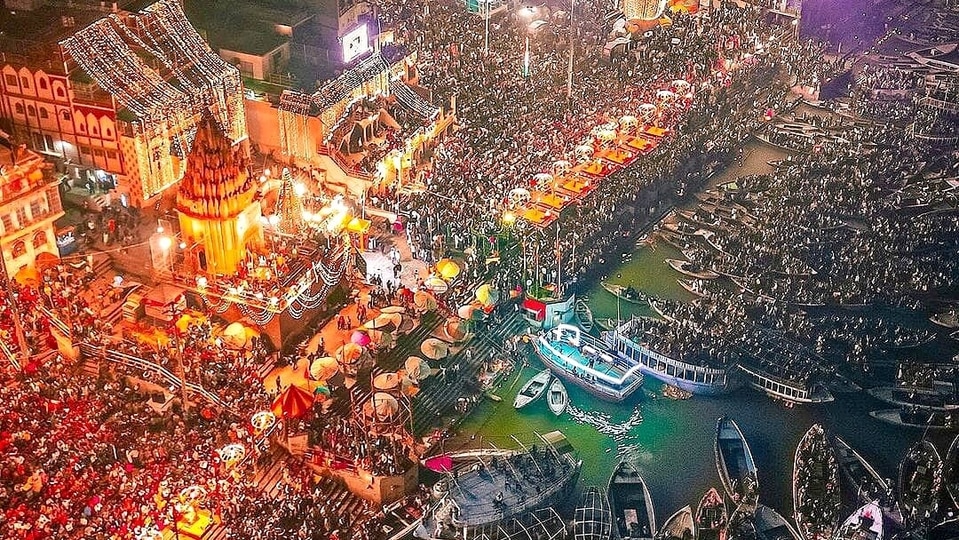
During this auspicious festival season, the ghats of Varanasi come alive with wicker baskets swinging from tall bamboo poles over the river.

 Prefer HTon Google


During this auspicious festival season, the ghats of Varanasi come alive with wicker baskets swinging from tall bamboo poles over the river. At dusk, a clay lamp is placed into each basket and raised again. These are akashdeep, sky lamps, kept burning through Kartik as offerings to departed souls. The light, it is believed, shows the souls of ancestors the way to heaven.
Another city in the west has its own lights for the departed: Jerusalem. On the anniversary of a loved one’s passing, Jewish families light a yahrzeit candle that burns for a full day, drawing on the verse in Proverbs: “The spirit of man is the candle of the Lord.” On the Mount of Olives lie 3,000-year-old graves placed there in the belief that redemption will begin on that very slope.
Both cities keep lamps lit for lives that have passed. In 70 CE, Titus’s legions burned the Temple in Jerusalem, and Rome seemed eternal. In 1669, Aurangzeb ordered the Vishwanath temple in Kashi pulled down. Rome fell, and Mughal rule ended. Jerusalem and Varanasi are still here.
Mark Twain, who saw Varanasi in 1896, put it less carefully and more memorably. The city, he wrote, was older than history, older than tradition, older even than legend.
Both cities predate every state that has governed them, and their survival is often attributed to deep cultural reverence. The more precise answer, we would argue, is final rites. These are places people journey to for their final union with the divine, or to be laid to rest on holy ground, with prayers thousands of years old.
My own engagement with these two cities has been shaped by very different, yet equally memorable experiences. Varanasi has always held a special place in my heart, drawing me repeatedly towards its ghats, temples, narrow lanes and the continuity of its spiritual traditions. Jerusalem, on the other hand, revealed itself to me through journeys on foot. Walking through its ancient streets and sacred landscapes, I became conscious of how different civilisations, faiths and memories coexist within the same urban space. These encounters have made me see the two cities as living repositories of humanity's relationship with life, death and the eternal.
In Kashi, final rites are the reason many come at all. Hindu belief holds that anyone who dies within the city is released from the cycle of rebirth, and that Shiva himself whispers the taraka mantra into the ear of the dying. Charitable houses like the Kashi Labh Mukti Bhawan have long received the gravely ill who want to spend their last days there. Diana Eck, whose Banaras: City of Light remains the standard work on the city, records that among all the things said of Kashi, one is simply that Kashi is famous for death.
Jerusalem’s version lies across the Kidron Valley from the Old City. The Jewish cemetery on the Mount of Olives has received burials for close to 3,000 years. The prophet Zechariah placed the Messiah’s feet on that mountain on the day of redemption, and the belief that those buried nearest will rise first has drawn the devout there ever since. Jews who die far away have long had a little earth from the Land of Israel placed in the grave with them, much as Hindu families carry ashes back to the Ganga.
This is perhaps why neither city was ever truly destroyed. The Vishwanath temple was pulled down and rebuilt several times between the 12th and 17th centuries. Narayana Bhatta, who helped raise it again, argued that a holy place keeps its sanctity even when its temple lies in ruins. Ahilyabai Holkar of Indore built the present shrine in 1780. Jerusalem lost its Temple first to Babylon and then to Rome. The Psalmist made a vow that Jews have repeated for centuries: “If I forget thee, O Jerusalem, let my right hand forget her cunning.”
The bond is now being put through a milder trial. Since the Kashi Vishwanath Dham corridor opened in December 2021, the temple precinct has witnessed an extraordinary increase in visitor numbers. Improved access, wider pathways and expanded pilgrim facilities have transformed the experience of visiting the temple. Yet some of the old riverside houses that once took in the dying have been turned into hotels. Jerusalem has its own pilgrims to manage. It also has a harder problem: Every layer of soil belongs to more than one people’s story, so even routine archaeology has to tread carefully.
Varanasi will keep changing, as it always has. The hope is that, in the rush to welcome the living, it keeps room for the dying. Their presence is not a peripheral aspect of the city's identity; it is central to its spiritual philosophy. A Varanasi that keeps its pilgrims and loses its dying would be a smaller place than the one Twain saw.
Imperial Rome is a ruin, and the Mughal court is a chapter in a textbook. In Kashi this evening, a pyre will be lit at Manikarnika, and somewhere on the Mount of Olives a family will be standing to bid adieu to their loved one. That is how these cities and cultures have outlived empires, and how they will go on doing so.
(The views expressed are personal)
This article is authored by Prof. Vasant Shinde, former vice chancellor, Deccan College, Deemed University, Pune.


