
 E-Paper



Preventing a repeat of the Covid-19 second wave oxygen crisis in India
The study has been authored by Amit Thadhani.

 Prefer HTon Google


Medical oxygen is the single most important intervention for moderate and severe cases of Covid-19. Without it, patients can suffocate and die. In India, in the past one and a half years of the pandemic, both hospitals that treat Covid-19, and those that do not, suffered a shortage of medical oxygen. The problem was noted during the peak of the first wave in September 2020, and recurred on a much larger scale during the peak of the second wave, in April and May 2021. Some trackers have estimated that as many as hundreds of lives were lost across the country due to oxygen shortage or denial. The reason is not a lack of medical oxygen, per se, but the inadequacy of the distribution network of tankers to transport liquid oxygen from the point of manufacture, to the hospitals.
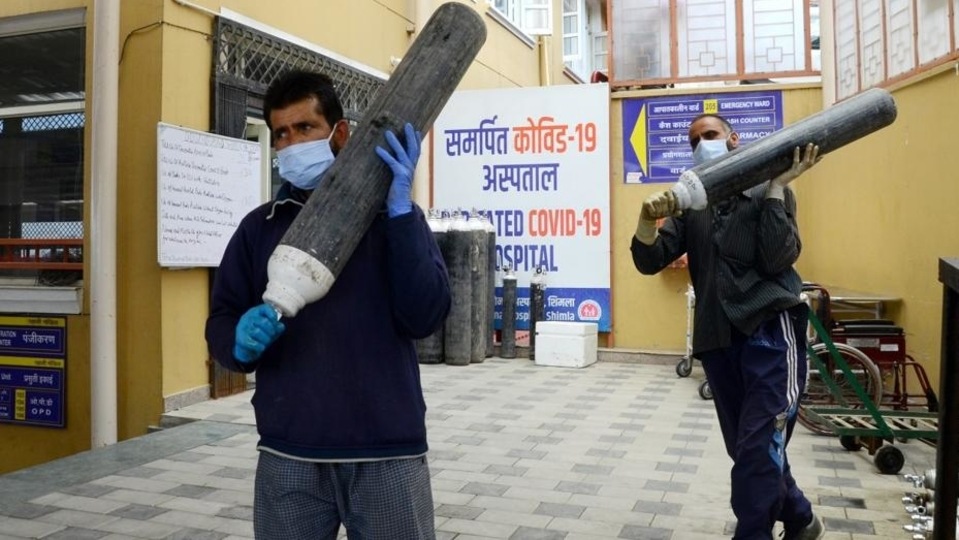
Indeed, the distribution of medical oxygen is a complex endeavour. Large hospitals are usually supplied directly by manufacturers that use tankers to transport the oxygen. Meanwhile, medium and small hospitals, as well as nursing homes, rely primarily on intermediaries: The manufacturers supply liquid oxygen to filling stations, again via tankers; gas agencies, who own cylinders, then get them filled in filling stations and thereafter supply them to the nursing homes either via “jumbo cylinders” (gaseous oxygen) or “dura cylinders” (containing liquid oxygen that expands 860 times to gaseous form).
This entire supply chain was severely disrupted at multiple levels due to the steep and sudden rise in demand across the country—from 3,842 MT per day on 12 April 2021 to 8,400 MT per day by 25 April, and further up to 11,000 MT per day by the beginning of May—before gradually reducing as the number of fresh cases declined. At the time of writing this report, the demand has gone down to normal levels and supplies are adequate once again.
The study can be accessed by clicking here
(The study has been authored by Amit Thadhani.)


