
 E-Paper



West Bengal’s looming retinopathy crisis
This article is authored by Dr Subrata Dutta, director, Regional Institute of Ophthalmology, Kolkata.

 Prefer HTon Google


When 48-year-old Gargi, a mother of three from a small village near Balurghat, began to lose her vision, she thought it was just tiredness from long hours at the sugar factory. She had been living with diabetes for nearly eight years, taking her pills when she could, and never missing a day of work. But she had no idea that diabetes could affect her eyes — that the very disease she thought she was managing was silently damaging her retina.
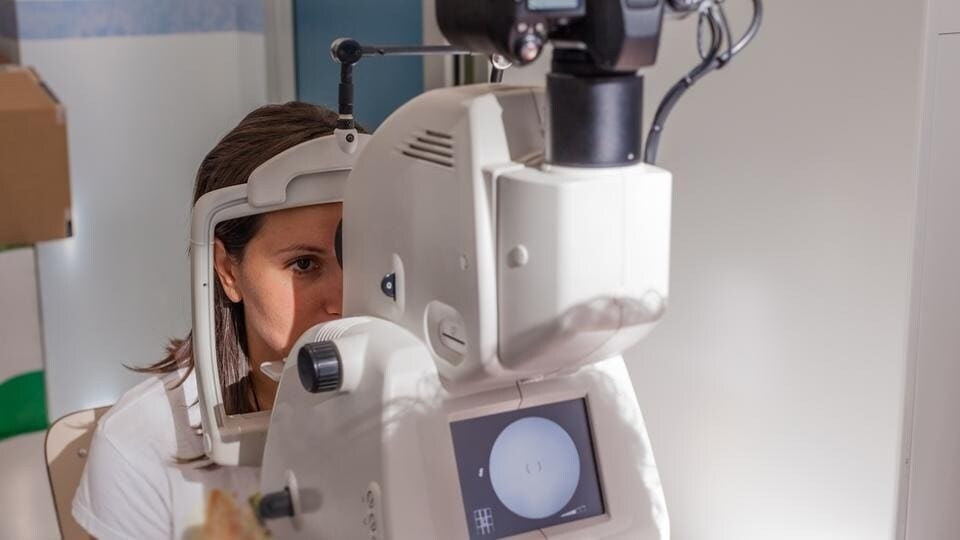
By the time her vision became severely blurred, it was too late. The nearest eye hospital was 40 kilometres away, and every trip meant lost wages and expensive transport. Without awareness, without screening, and without access to specialised care, Gargi slipped into permanent darkness. She can no longer see her children’s faces — the faces she worked so hard for.
Gargi’s story is not an isolated one. It reflects the painful reality of thousands of diabetic patients across India and West Bengal who lose their sight each year to Diabetic Retinopathy (DR) — a preventable but progressive complication of diabetes that damages the retina and can lead to blindness.
By any measure, DR is India’s next big eye-health emergency. India now has 101 million people living with diabetes, placing huge number of people at risk of DR. Current estimates suggest that around 12.5% of people with diabetes already have DR, and 4% have vision-threatening DR (VTDR) — translating to roughly 10 million people living with DR and four million at immediate risk of blindness.
Unlike cataract, which is treatable through surgery, DR is a “silent” disease. In its early stages, it causes no symptoms — vision remains clear even as damage progresses. Without routine screening, most patients only seek care when vision blurs by which time the disease is advanced, treatment is more complex, and outcomes are poorer.
West Bengal mirrors the national crisis but with sharper disparities between urban and rural regions. In a large, multi-district study screening 1,553 diabetics across 14 districts, DR prevalence was found to be 21.5% overall. The difference between rural and urban areas was stark: 26.6% in rural belts versus 13.9% in cities.
This gap tells an important story that diabetic eye disease is no longer an “urban lifestyle” problem. It is spreading into villages and small towns, where awareness is low and access to eye care is limited. Alarmingly, one-third of participants in the study did not even know that diabetes can cause blindness.
West Bengal’s strong public health network has made remarkable progress in cataract care and refractive services, but diabetic eye health has not yet received the same structured attention. This must change urgently.
Despite being preventable, timely diagnosis and treatment for diabetic retinopathy (DR) remain a major challenge in India, particularly in states like West Bengal. The barriers are multiple and deeply layered. Awareness remains strikingly low, with many patients assuming that “clear vision” means “healthy eyes.” As a result, they seek help only when symptoms appear — by which time, significant and often irreversible damage has already occurred.
Managing diabetes itself feels overwhelming for most individuals, leading eye checks to fall off their list of health priorities. For those living in rural areas, additional hurdles such as travel distance, loss of daily wages, and associated costs further discourage routine eye examinations. Myths and fears around eye dilation, lasers, and injections add to this hesitation. Systemic gaps also persist — regular retinal screening is yet to be integrated into routine diabetes management.
Many diabetologists do not refer patients for annual retina examinations, and weak referral linkages between physicians and ophthalmologists often result in missed opportunities for early detection. Even when DR is diagnosed, access to treatment is largely concentrated in Kolkata and district headquarters. Advanced services such as Optical Coherence Tomography (OCT), fundus imaging, laser therapy, and intravitreal injections remain less opportunities in smaller districts like Malda, Purba and Paschim Medinipur, Dakshin and Uttar Dinajpur and Jhargram, leaving vast populations underserved.
While India’s National Programme for Control of Blindness & Visual Impairment (NPCBVI) and NCD initiatives provide a broad framework, diabetic eye disease needs sharper focus. District-level implementation varies, and diagnostic devices such as handheld fundus cameras and OCT machines are still scarce.
The Swasthya Sathi scheme — West Bengal’s flagship health insurance program — does cover intravitreal injections for retinal diseases, but treatment access is currently limited to a handful of private hospitals and medical colleges. Most patients receive only first-line therapies, while non-responders are left without advanced options in rural areas.
Moreover, awareness campaigns in regional languages are minimal, leaving a large portion of the population unaware of DR or the need for annual eye exams. Given Bengal’s high rural population and dependence on informal healthcare touchpoints such as local chemists and general practitioners, opportunities for early detection are routinely missed.
To prevent thousands of people like Gargi from losing their sight, West Bengal as a pioneer state must take decisive steps to integrate diabetic retinopathy (DR) screening and treatment into its broader health system. The state can begin by leveraging its existing Chokher Alo (Light for the Eyes) programme — launched in 2021 to provide free cataract surgeries, spectacles, and school eye screenings — by including DR screening through mobile units and primary health centres to enable early detection at the community level. Expanding the Swasthya Sathi scheme beyond a few urban hospitals to cover diagnosis, treatment, and follow-up for DR across districts, along with mandating annual eye check-ups for all diabetic patients, would significantly strengthen care continuity with the help of teleophthalmology. Statewide awareness campaigns in Bengali, in collaboration with ophthalmic bodies such as VRSI, AIOS, and the Ophthalmological Society of West Bengal, can spread vital messages like “Diabetes can cause blindness — get your eyes checked every year.”
Finally, harnessing AI-based retinal screening tools such as AI-DRSS, which have demonstrated over 90% accuracy, can help scale early detection by empowering non-specialist healthcare workers in district and primary care centres to identify and refer high-risk cases promptly.
As a retina specialist, I have seen too many patients walk in when it’s already too late. Most could have been saved with a simple annual eye check-up. Vision loss does not just affect one individual; it affects families, livelihoods, and communities.
The story of diabetic retinopathy is not only about disease; it is about inequality, access, and awareness. Bengal has a proud legacy of leadership in public health — from smallpox eradication to cataract control. It can lead again, this time by ensuring that no person loses sight to a preventable cause.
For millions living with diabetes, blindness is not inevitable, but prevention must begin now. Gargi’s story should not be repeated in another home, another district, or another generation. Because no mother should lose her sight for lack of awareness, and no state should accept avoidable blindness as fate.
This article is authored by Dr Subrata Dutta, director, Regional Institute of Ophthalmology, Kolkata.


