The Armed Forces Special Powers (Assam and Manipur) Act (AFSPA) has come into focus recently even as Manipur has made an advance in its case against Irom Sharmila, who has been on an indefinite hunger strike demanding the repeal of the AFSPA. Even as a Manipur court finds prima facie evidence of attempt to commit suicide against her we have an occasion to ponder over the AFSPA, over its necessity or the lack thereof and its relevance to a democratic country like ours.
For, the AFSPA, like many other elements in the legal framework of our country, has a colonial lineage. The Armed Forces Special Powers Ordinance was promulgated by our erstwhile British rulers in 1942 with a view to subduing the Quit India movement. In 1958, the government of independent India revived it in the shape of the Armed Forces Special Powers Act (Assam and Manipur) in order to contain the Naga autonomy movement in the region. The Act empowers these states, concurrently with the Centre, to proclaim areas under them as ‘disturbed’ and sanctions the armed forces to arrest, detain and interrogate anyone living in these areas upon mere suspicion and even legalises shootings with the intent to kill.
In short, the AFSPA is a State endorsement of nearly unlimited military intervention in civilian life with little accountability attached. As such it belongs to the category of undemocratic, unilateral use of force by the State and should, for this reason, be used sparingly, with extreme caution and in the rarest of occasions. But in reality what has happened is a sustained and decades-long use of this weapon of subjugation.
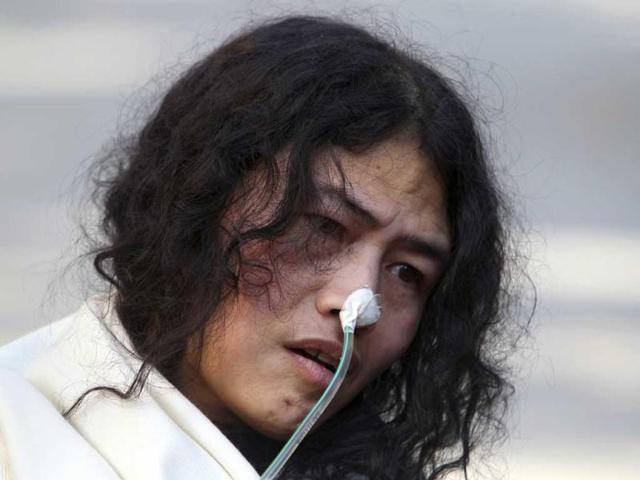
The disruption of order and secessionism in the North-East invited the use of the Act, but excesses carried out by the armed forces under the cover of this Act have ended up alienating the people, thereby triggering more disruption of peace and more strident secessionism. In such a milieu Sharmila has stood firm in her posture of protest and resistance, withstanding 13 long years’ imprisonment while being forcibly nose-fed on a solution of nutrients. But while Anna Hazare got his due cognisance from the State — his demands were met after just 12 days — all Sharmila has got is a protracted case for attempted suicide against her.
{{/usCountry}}The disruption of order and secessionism in the North-East invited the use of the Act, but excesses carried out by the armed forces under the cover of this Act have ended up alienating the people, thereby triggering more disruption of peace and more strident secessionism. In such a milieu Sharmila has stood firm in her posture of protest and resistance, withstanding 13 long years’ imprisonment while being forcibly nose-fed on a solution of nutrients. But while Anna Hazare got his due cognisance from the State — his demands were met after just 12 days — all Sharmila has got is a protracted case for attempted suicide against her.
{{/usCountry}}‘One India, Great India’ is the slogan of the new government at the Centre. Will this government, then, rectify the mistake of its predecessors and do a rethink on the AFSPA? If a total repeal of the Act is not immediately possible it can be reined in and made more nuanced and responsible. In the very least, the case against Sharmila can be withdrawn. Sharmila is an activist, not a criminal and her cause — endorsed by Amnesty International — seems more than just. National integrity and blind military power do not sit together. We had better realise this, even if belatedly.
Suparna Banerjee a researcher and writer based in Kolkata
The views expressed by the author are personal