
 E-Paper



Housekeeper of Hauz Khas
For 20 years, Kamni has been working as a housekeeper to scores of one-room pads in Hauz Khas Village, rented mostly by single people pursuing all sorts of occupations. Most of her employers went back home after the Covid-19-triggered lockdown started, because of job losses or salary cuts, leaving Kamni with less income.

 Prefer HTon Google


Her husband makes a very good version of chicken curry. “But we haven’t had it for a long time,” says Kamni, who only goes by her first name. Her reason is simple enough. “I no longer earn as much as I used to before the lockdown so we can’t afford maas-machhi.”
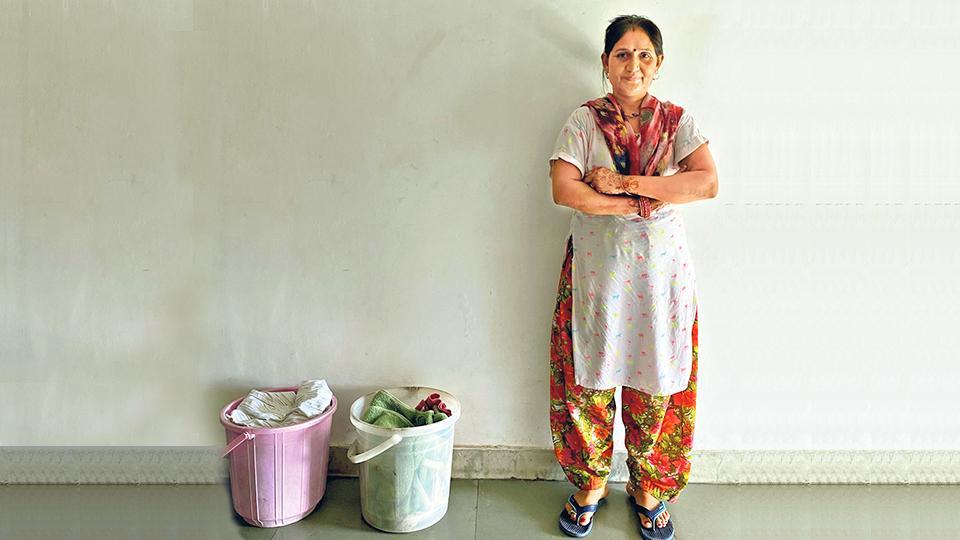
For 20 years, Kamni has been working as a housekeeper to scores of one-room pads in Hauz Khas Village, rented mostly by single people pursuing all sorts of occupations: some are documentary filmmakers, some are shop assistants, and a few are even musicians. She herself lives in the same village with her family, her home a walking distance from the places where she works.
Most of Kamni’s employers gave up their accommodations not long after the Covid-19-triggered lockdown started, because of job losses or salary cuts, leaving Kamni with less income. “I used be responsible for more than a dozen rooms... now just 3 or 4,” she said.
ALSO SEE | Photos: Stories told in photographs from a capital in lockdown
It’s a sultry August afternoon. She has just finished cleaning the home of a “didi,” a woman living on the third floor of an apartment block that overlooks Hauz Khas’s 14th century monuments. Sitting on the staircase, Kamni shows the mehendi that she applied on her hands a few weeks ago. She isn’t sure of her age but she is parent to two college-going children. She regrets that she hasn’t been able to buy them any new dresses or shoes due to the money crunch, but she isn’t worried about her own sense of style. “Corona could not affect my fashion,” she said, laughing. Covering her unmasked face with her henna-dyed hands, she says that each year she gets a pair of salwar suits stitched for herself from a tailor in Yusuf Sarai. “That’s my only personal expense, and everything else goes into the education of children.”
Despite the massive changes that the pandemic has inflected in people’s life, Kamini’s schedule hasn’t been affected. She still wakes up at the unearthly hour of 4 in the morning and heads straight to a residential block whose roofs, corridors and staircases she has been cleaned for many years now.
The only difference now is that her workday ends by noon, rather than 2 pm as it did in March.
“These days I reach home early, yes, but my husband still makes lunch for the family.” Born in the hills of Pauri Garwhal in Uttarakhand, Kamni came to Delhi not long after marrying Chander Mohan, who adds to the household income by cleaning private cars in the village.
Leaning against the staircase’s railing, Kamini gradually grows sombre. “So many people I worked for have left. Everyday I pass in front of those empty rooms.” “I hope they are fine wherever they are.”
Work done, she will walk home, or sit on a bench for a while. “Around this time, before the lockdown, I would be so busy,” she said.


