
 E-Paper



Fell down the K-pop rabbit hole? Here’s a handy lingo guide
As K-pop’s soft power cements itself in social feeds and group chats, here is a guide to the must-know lingo that every newbie must know.

 Prefer HTon Google


K-pop is more than a music genre; it's a global phenomenon that can often leave new fans curious and a little dazed. With catchy vocals, cool choreography, trendy insider terms, and eye-popping style, K-pop is only expanding its worldwide influence. As its soft power makes its way to Instagram memes, WhatsApp group chats, and Snapchat DMs, here is a glossary of essential K-pop lingo if you are a new fan.
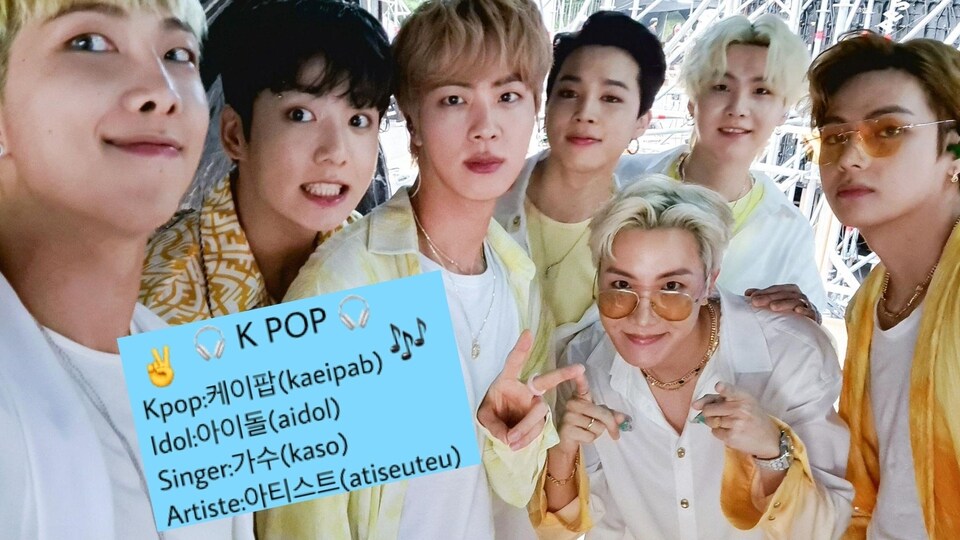
1. Idol
The term refers to any South Korean celebrity or K-pop artist. An idol can be a soloist or a member of a K-pop group who has debuted and is no longer a 'trainee.' Practice makes perfect, and K-pop needs perfect. Trainees are often recruited at a young age, and they undergo rigorous vocal, dance, language, and media training before they can debut. For instance, f(x) member Krystal became a trainee under SM Entertainment at the age of 12. She debuted 3 years later in 2009 after intense training.
2. Maknae
In Korean, 'maknae' means the 'youngest sibling.' In K-pop, it refers to the youngest member of a K-pop boy band or girl group. Examples include BTS' Jungkook, who is often referred to as the Golden Maknae (golden here refers to him being an all-rounder) or Yeri in Red Velvet. A maknae brings a youthful joy to the group, often treated as the youngest sibling who is doted on by other members.
3. Bias
It is usually the first term a new fan gets acquainted with. 'Bias' refers to a fan’s favourite member in a group. 'Ultimate bias' or 'ult bias' is another term used for a fan’s favourite idol among all the groups they are a fan of. What are the chances a fan may bias Yugyeom in GOT7 but consider Irene of Red Velvet as their ult bias? One may never know.
Personally, Jungkook from BTS is my bias and ult bias. Who can resist this meme king? Not me, that is for sure!
4. Main and Lead
Let’s clear up two of the K-pop terms that are most subject to confusion.
'Main' — the Main Vocal, Main Dancer, or Main Rapper — is the artist who has the best vocal skills, is the best dancer, or flows in the group.
Meanwhile, 'lead' (Lead Vocal, Lead Dancer, or Lead Rapper follows closely behind, and is usually the second best to the Main.
In BLACKPINK, Rosé is the main vocalist, Jennie and Jisoo are two lead vocalists, while Lisa is the main rapper and dancer of the group.
5. Center
In K-pop, a 'center' is usually considered the face of a group. They are the member who holds the most prominent position in group performances. They are typically positioned in the middle and draw the most attention with strong stage presence, charisma, and visual appeal. Unsurprisingly, this member is the first one to grace your mind when you think of the group.
Take BTS, for instance. Jungkook is often praised as the center for his incredible vocals and dancing skills.
6. Comeback
In non-K-pop terms, a comeback refers to an artist’s return after a long hiatus or controversy. However, in K-pop terms it holds a significant meaning. For an idol or a group, a comeback marks the release of a new song or album that touches upon new themes and concepts. Some significant comebacks include BLACKPINK’s latest single, Jump, released this July, and BTS’ long-anticipated one in spring 2026.
7. Fanchant
It is a synchronised cheer that fans shout to hype idols up before they perform. Unique to each K-pop group, they usually include all group members’ names. Fanchants are also incredibly loud, highlighting the fans' strong love and support. SEVENTEEN is a popular boy band of thirteen members — and before you ask — yes, you chant all thirteen names. But a struggle shared by your idols is a struggle worth the pain!
8. Aegyo
Pronounced as "eh-gyo" or "egg-yo”, it is a popular K-pop term derived from two Chinese characters, “ae” meaning love, and “gyo” meaning beautiful. It refers to one's cuteness and can be expressed through cute facial expressions, voice, or gestures. In K-pop, Sana from TWICE is quite popular for her aegyo.
9. Sasaeng
Derived from the Korean word 사생 (sasaeng), which translates to 'private' or 'personal life,' In K-pop, it holds a far more infamous connotation than one would think. Sasaeng fans are those whose admiration can take an obsessive turn, and they might indulge in harmful behaviours like invading their idols' privacy through stalking or harassment, all in a bid for attention.
Recently, the members of the boy band ENHYPEN faced a disturbing incident when sasaengs broke into their dormitory and filmed them without consent.
10. The Big Three
This term refers to the three big entertainment companies that dominate the K-pop industry and have had a track record of backing some of the most successful acts: SM Entertainment (EXO, Red Velvet), JYP Entertainment (TWICE, Stray Kids), and YG Entertainment (BLACKPINK, Big Bang).
Story by Pragati Vishwakarma


