
 E-Paper



Book review: This author's retelling of Ramayana captures Sita’s reflections after Ayodhya
Pragya Agarwal’s The Renunciation retells the Ramayana through Sita's character. Probing love and agency, uneven at times, it ends with her rise to autonomy.

 Prefer HTon Google


The story of Ramayana is quite a familiar one — Ram kills Ravana — and symbolises the victory of good over evil. But author Pragya Agarwal begins the story of the novel, The Renunciation, from where the epic supposedly ends. So what you get to read in the 289 pages is actually the after story of the epic where the characters can certainly not be painted as black and white as the main saga.
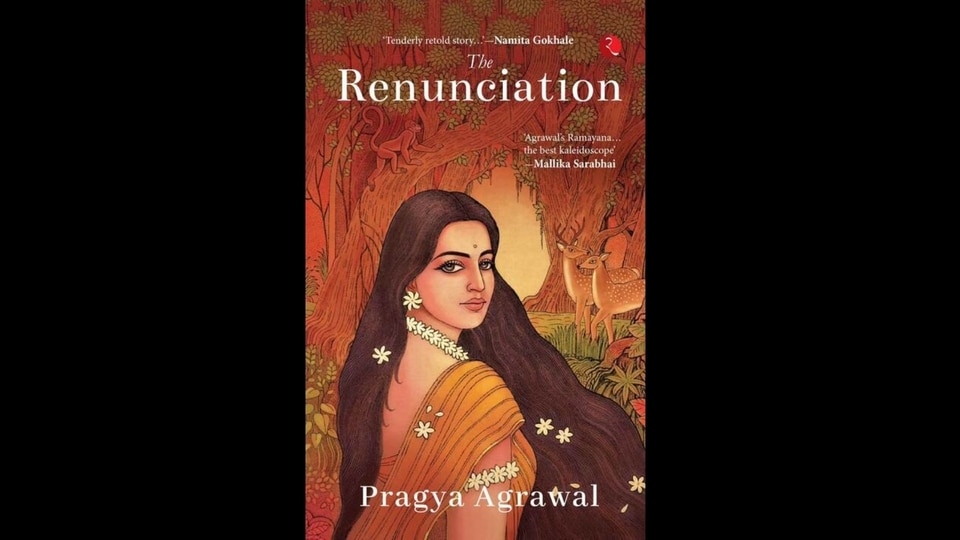
Pragya presents the age-old narrative through a fresh lens, one that’s narrated through Sita’s eyes. But knowing that this isn’t the first attempt to narrate the Ramayana through this perspective, it becomes important to delve further into the writing and find out how much justice is done to history’s one of most popular female characters!
The non-linear narrative is based on a plot that majorly revolves around Sita’s life, as Vandevi, after she is banished from Ayodhya by her husband, Ram. Hiding her true identity, she brings up her sons, Luv and Kush, in Valmiki’s hermitage, who then learn the Ramayana documented by their guru, and when they get to visit Ayodhya and happen to sing it in front of Ram, unbeknownst to the fact that the king is their father, is when the drama heightens. Running parallel to the main scheme of events is the version that’s through Sita’s perspective; which is narrated in flashback. In fact, what clicks with this reader is that unlike any other traditional retelling of the epic, this writing focuses more on Sita’s relationship with her husband and the delicacy with which the author handles moments of tenderness, the sensory imagery, the familiar ups and downs of a married woman’s life.
Moving far and beyond the elements of honour, duty, morality, and righteousness, this novel also portrays love in its greyest shades, depicting how cracks creep in even the greatest of love stories. Giving Sita’s thoughts a voice, the tale yet again questions the true meaning of a ‘hero’ and what it costs to be one. At times, however, this very storytelling turns patchy, with nothing new to offer, while hanging on Sita’s thought process as she continues to question the men, the norms, and the laws. But this won’t feel like a breath of fresh air to everyone, as some remain limited and without much substance. The narration, in certain parts, thus feels forced and unnecessary. More often than not, the chapters end without a strong cliffhanger, making it harder to retain one’s attention.
But this mythological fiction gathers itself with a powerful ending. In fulfilling her roles and divine purposes as a daughter, wife and mother, as Sita reclaims agency -- turning what once felt like passivity into a source of autonomy - the writing also turns compelling. One, however, must credit the writer for not just revisiting a familiar tale through more reflective eyes but also nudging the timeless questions.
Title: The Renunciation
Author: Pragya Agrawal
Publisher: Rupa Publications
Price: ₹395
Story by Subhalakshmi Gautam


